

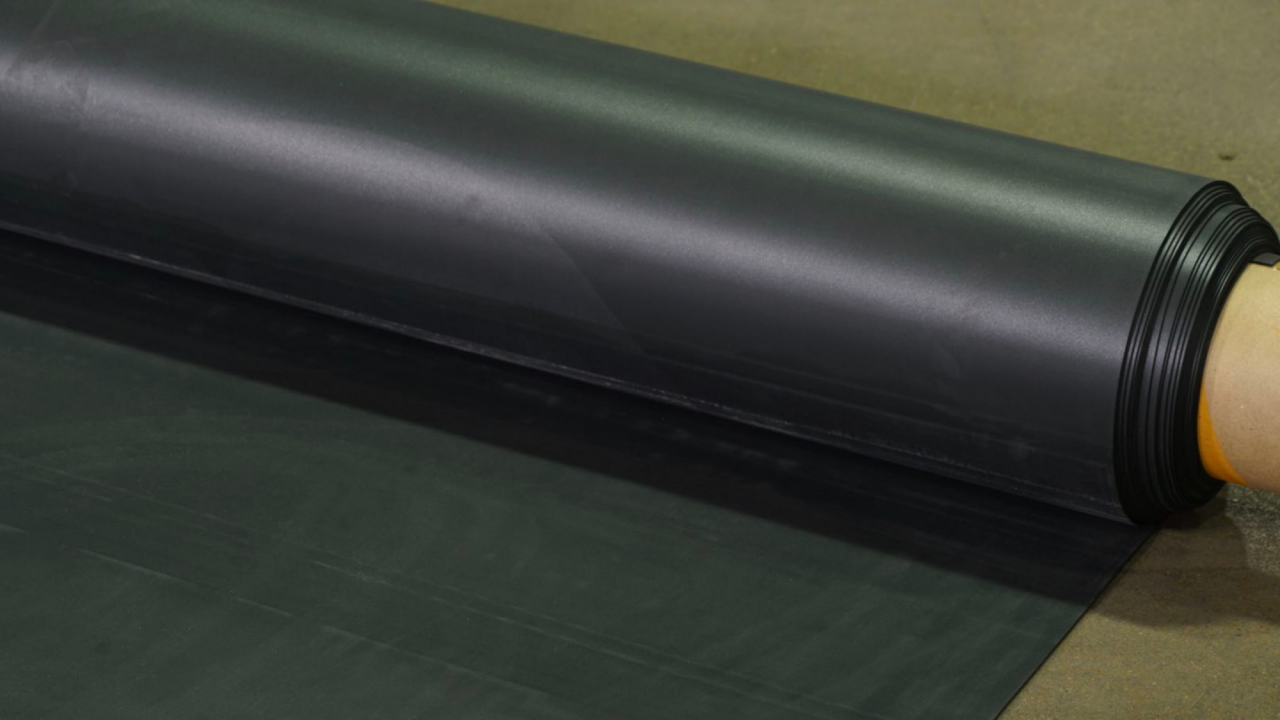
EPDM Roof Systems
EPDM commercial roof system installation and replacement for Charlotte industrial, warehouse, and high-traffic rooftop applications - 60-mil fully adhered and mechanically attached systems with documented warranty closeout.
Commercial Roofers Charlotte
EPDM Roof Systems decisions should account for roof traffic, drainage, substrate condition, chemical exposure, warranty goals, and ownership horizon.
Ethylene propylene diene monomer rubber has a forty-year track record on commercial flat roofs and a specific advantage over thermoplastic membranes in Charlotte industrial applications: it tolerates heavy foot traffic, petroleum-based contaminants from rooftop mechanical equipment, and wide thermal cycling better than any single-ply alternative at equivalent cost.
EPDM was the dominant commercial single-ply specification on Charlotte's industrial and warehouse buildings through the 1990s and into the 2000s. The generation of 45-mil EPDM installed in that era is now well past its warranted life on most buildings - but 60-mil EPDM installed correctly in Charlotte's climate carries a realistic 30-year service life with proper maintenance, and it remains the right specification for a specific category of Charlotte commercial buildings where TPO's vulnerability to petroleum contamination and mechanical traffic creates long-term problems.
The buildings where we specify EPDM over TPO in Charlotte are industrial: the Westinghouse Boulevard manufacturing and distribution facilities near CLT airport, the older South End and Belmont industrial buildings with dense rooftop mechanical equipment, and the Steele Creek corridor warehouse buildings where rooftop forklift and maintenance vehicle access is part of normal operations. In those environments, EPDM's rubber chemistry resists petroleum-based lubricants and cleaning solvents that would degrade a TPO membrane over time. It also punctures harder under mechanical impact - which matters when an HVAC technician is dragging equipment across a roof surface with no padding underneath.
Charlotte's legacy EPDM stock - the 45-mil ballasted and mechanically attached systems on the 1990s-era buildings across Arrowood, the Westinghouse corridor, and the older South Boulevard industrial strip - is at or past the end of its warranted life. We see more mid-field seam lap failures and drain-ring failures on these buildings than any other failure mode, driven by adhesive degradation over time and Charlotte's summer UV load on exposed seams at the edge of ballast fields.
For occupied buildings, staging, access, odor control, and tenant communication are part of the roof plan before crews arrive.
For portfolio owners, the goal is consistent documentation across properties, not a one-off opinion that cannot be compared later.
The first visit produces a practical roof record: current conditions, visible failure points, drainage notes, access concerns, and the repair or replacement path that fits the building.
Owners get a written scope that separates urgent water-control work from longer-term capital planning, so the roof decision is not made from guesswork.
The closeout package keeps the next decision clear with before photos, after photos, material notes, warranty coordination, and recommended maintenance timing.
EPDM System Configurations
Fully adhered 60-mil EPDM is the standard specification for new Charlotte commercial EPDM installation. The membrane is bonded directly to the insulation substrate using EPDM-compatible bonding adhesive, giving it the strongest wind-uplift resistance of any EPDM attachment method. Fully adhered systems perform better in high-wind events - Charlotte's tornado corridor and the coastal hurricane remnants that track up the Piedmont produce wind events that have peeled ballasted EPDM fields off buildings in Cabarrus and Iredell Counties in recent spring outbreak seasons.
Mechanically attached EPDM with covered plates and seam-integrated fasteners is the alternative for steel deck applications where the fastener pattern can be engineered to current ASCE 7-22 requirements. Mechanically attached systems install faster than fully adhered on large Charlotte warehouse buildings and carry the same 20-year NDL warranty options from major manufacturers. The tradeoff is seam detail complexity - the membrane must be lapped and either adhered or tape-welded at every fastener row.
EPDM Seam Repair and Replacement's Climate
EPDM seams are the most common failure point across Charlotte's existing EPDM inventory. Older EPDM laps were made with neoprene-based contact adhesive that degrades with UV exposure and thermal cycling - the Piedmont's summer heat accelerates that degradation. Seam failures on 25-year-old Charlotte EPDM buildings are typically running along the original lap edge, not through the membrane field. Our repair protocol tapes or adheres a new EPDM flashing strip over the failed lap after cleaning and priming the underlying surface - but we assess whether the total failed-seam count on a building justifies repair-by-repair or argues for a full membrane replacement with new seam tape throughout.
Drain ring failures are the second most common EPDM failure mode in Charlotte. The drain ring seals the EPDM membrane to the drain body - when the ring's adhesive deteriorates or the drain body shifts due to deck movement, the membrane pulls away from the drain and water enters the insulation assembly at the lowest point of the roof. Charlotte's concentrated summer rainfall means drain ring failures produce interior water damage quickly once they open. We inspect drain rings on every EPDM building we assess and pull a core at each drain to determine whether moisture has already entered the insulation below.
Comparing EPDM and TPO for Charlotte Industrial Buildings
For a Charlotte warehouse or manufacturing building with routine rooftop mechanical access and petroleum contamination exposure, EPDM's chemistry advantage over TPO is real and documented. TPO is a thermoplastic - petroleum-based solvents soften its surface over repeated exposure, and once the surface is softened, UV degradation accelerates at the seams. EPDM is a thermoset rubber - it does not soften under petroleum contact and it does not lose its dimensional properties under thermal cycling the way thermoplastic membranes can.
For an office building, medical office building, or retail strip center in Charlotte where foot traffic is controlled and petroleum contamination is not a factor, TPO carries a cost and reflectance advantage that makes it the right specification in most cases. EPDM's dark surface absorbs more solar heat than white TPO - which increases cooling load on a building's HVAC system and can disqualify the building from cool-roof incentive programs that require minimum solar reflectance. We specify EPDM where its material properties justify it, not as a default.
How long does 60-mil EPDM last on a Charlotte commercial building?
Properly installed and maintained 60-mil fully adhered EPDM carries a realistic 25-to-30-year service life in Charlotte's Piedmont climate. The failure modes that shorten that life are seam failures from adhesive degradation and drain ring failures from movement - both of which are detectable in annual inspection before they cause interior damage. Charlotte buildings that went 10 or more years without a documented EPDM condition assessment are the ones that show surprise interior damage when the building is finally inspected.
Is EPDM less energy-efficient than TPO for Charlotte buildings?
Standard EPDM is black, which absorbs solar heat and increases cooling load - a relevant consideration for a Charlotte building that runs HVAC year-round in summer ambient temperatures of 90F or above. White-coated EPDM and white-surface EPDM membranes from some manufacturers close the reflectance gap with TPO, but white EPDM is a different product than standard black EPDM and requires specific installation conditions. If energy code compliance or cool-roof incentive eligibility is a factor, we specify the right product for that requirement rather than defaulting to standard black.
Can old EPDM on a Charlotte building be recovered rather than replaced?
Yes, in the right conditions. If moisture cores show dry insulation, the deck is sound, and the EPDM membrane is intact enough to bond to, a recover with a new adhered EPDM or TPO membrane can be the cost-effective path. We pull cores in a grid across the field before specifying recover - the decision is driven by data, not by which option has the lower bid price.
EPDM scope, inspection, or replacement for a Charlotte building?
Our project managers walk the roof, inspect drain rings and seam conditions, pull moisture cores where the recover-vs-replace decision requires it, and produce a written EPDM scope for any Charlotte industrial, warehouse, or commercial building. Call 704-710-8487 or reach us at Uptown Charlotte.
Request a Written Scope