

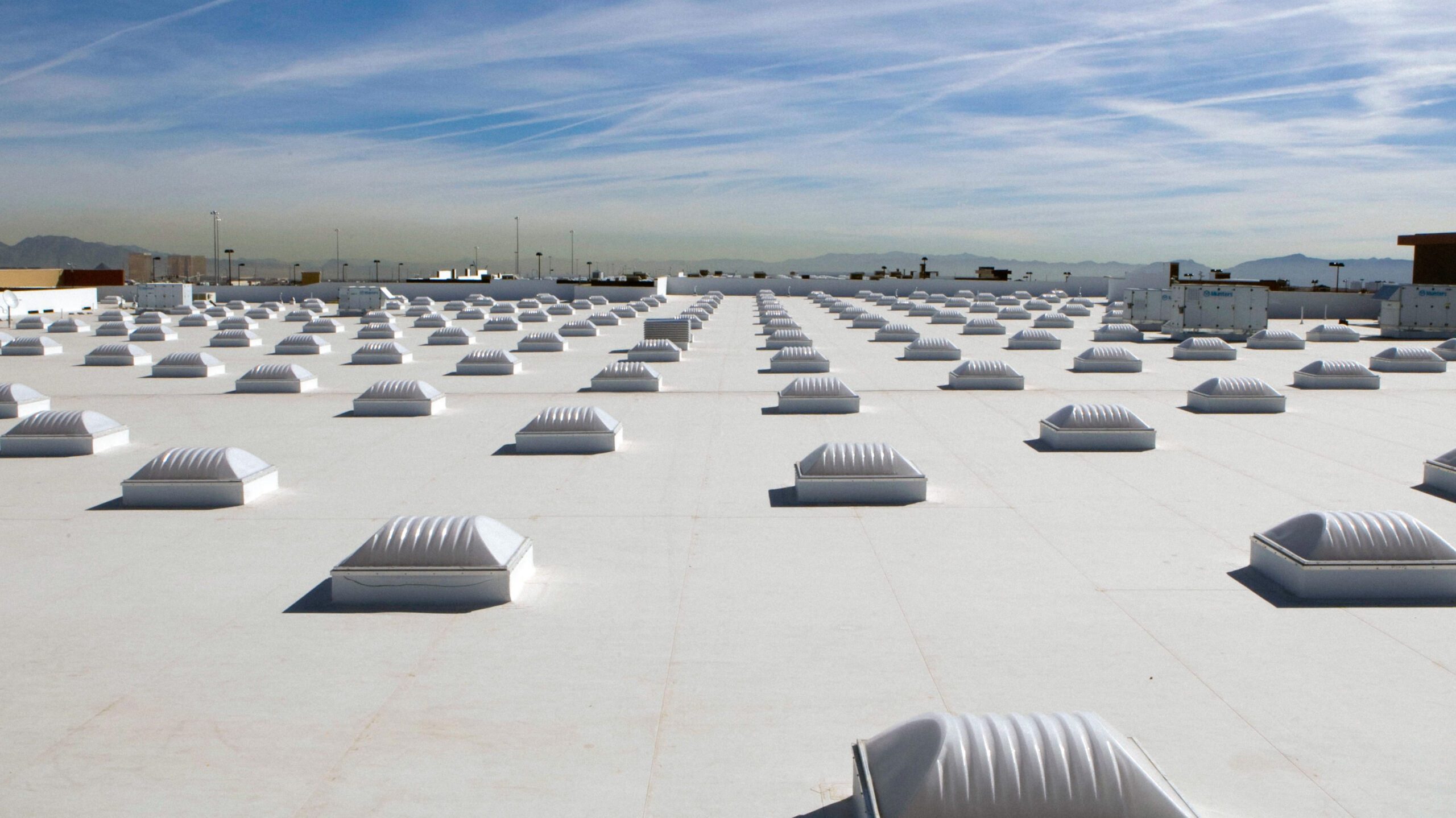
Cool Roof Systems
Cool roof specifications for Charlotte commercial buildings - white TPO, white EPDM, silicone coating, and reflective metal systems that reduce cooling loads and meet NC energy code minimum
Commercial Roofers Charlotte
Cool roof specifications for Charlotte commercial buildings - white TPO, white EPDM, silicone coating, and reflective metal systems that reduce cooling loads and meet NC energy code minimum reflectance requirements for low-slope commercial roofs.
Cool Roof Systems decisions should account for roof traffic, drainage, substrate condition, chemical exposure, warranty goals, and ownership horizon.
Charlotte experiences a genuine urban heat island effect. The tree-canopy corridors that give the city its distinction - the mature hardwood canopy in Myers Park, Dilworth, and the Elizabeth neighborhood - are largely commercial. The commercial districts are lower-canopy and higher-surface-area: the Ballantyne corporate campuses, the Steele Creek warehouse corridor, the Uptown surface parking deck roofs, and the University Research Park buildings all run dark-surface conventional roofing over significant square footage. Every square foot of dark membrane is absorbing solar radiation that has to be removed by the building's HVAC system.
The 2021 North Carolina Building Code sets minimum cool-roof requirements for low-slope commercial buildings: solar reflectance of 0.65 and thermal emittance of 0.9 for roofs with slope at or below 2:12, using the Cool Roof Rating Council (CRRC) test standard. That requirement applies on new construction and on replacement projects - a Charlotte building replacing a dark EPDM or modified bitumen roof with a new system is required to meet the 2021 NCBC reflectance threshold unless a documented exception applies.
Cool-roof compliance in Charlotte is not complicated - white TPO, white EPDM, white-coated metal, and white silicone coatings all The more useful framing for a Charlotte building owner is the energy performance implication: a white-membrane TPO system at SRI 104 versus a black EPDM system at SRI 10 on a 100,000-square-foot Charlotte warehouse produces a meaningful reduction in cooling load. How meaningful depends on the building's HVAC configuration, insulation level, and occupancy. We do not overstate the energy savings, but we do include reflectance specification in every new and replacement project scope where the building owner's energy benchmarking program makes it a documented input.
The closeout package keeps the next decision clear with before photos, after photos, material notes, warranty coordination, and recommended maintenance timing.
For occupied buildings, staging, access, odor control, and tenant communication are part of the roof plan before crews arrive.
For portfolio owners, the goal is consistent documentation across properties, not a one-off opinion that cannot be compared later.
The first visit produces a practical roof record: current conditions, visible failure points, drainage notes, access concerns, and the repair or replacement path that fits the building.
Owners get a written scope that separates urgent water-control work from longer-term capital planning, so the roof decision is not made from guesswork.
Cool-Roof-Compliant Systems Available
White TPO 60-mil and 80-mil: Every major manufacturer's white TPO membrane carries a CRRC-rated solar reflectance of 0.77-0.83 and thermal emittance of 0.90 or better new, with reflectance retention values above 0.65 after three years of weathering - the weathered reflectance is what the 2021 NCBC specifies. White TPO is the standard cool-roof specification on new Charlotte commercial construction and on replacement projects. It is the same product as standard TPO with a white titanium dioxide-pigmented surface - no premium for cool-roof compliance over standard specification.
White EPDM: White-surface EPDM membranes are available from Carlisle and Versico with CRRC ratings that meet the 2021 NCBC threshold. White EPDM is the correct specification for Charlotte industrial applications where EPDM's chemistry advantage (petroleum resistance, thermal cycle tolerance) is needed and cool-roof compliance is required. It is a more limited product line than white TPO - fewer manufacturers, fewer formulation options - but it is a real product with warranted performance data.
Silicone restoration coating on existing dark membrane: This is the most common cool-roof upgrade path for Charlotte buildings that have an existing black or dark-gray membrane in serviceable condition. A white silicone coating applied at 20-mil DFT over a clean, primed, moisture-free existing system delivers CRRC-rated reflectance of 0.80 or better and costs a fraction of full replacement. The critical qualifier is the moisture assessment - the existing membrane must be dry before coating is applied.
Reflective metal panel systems: Kynar-coated Galvalume standing seam in light-reflective color formulations meets or exceeds CRRC cool-roof ratings for steep and low-slope applications. Some Charlotte commercial and institutional owners specify reflective metal on visible rooflines for aesthetic and energy reasons combined - the Kynar 500 paint system provides the reflectance and the 40-year color warranty simultaneously.
Energy Code and Incentive Context
North Carolina's 2021 NCBC energy code applies statewide, including Charlotte and Mecklenburg County. For low-slope roofs (slope at or below 2:12) on commercial buildings, the minimum cool-roof standard is CRRC-rated aged solar reflectance of 0.55 or SRI of 64. Most white single-ply membranes exceed this threshold by a meaningful margin. Dark-surface membranes - standard black EPDM, granulated modified bitumen - do not
Charlotte utility incentive programs for commercial cool roofs have varied over the years - utility corridor Carolinas and utility corridor Progress have offered demand-response and energy efficiency incentives for commercial building envelope improvements including cool roofs in some program years. We advise building owners to verify current program availability with their utility account representative before scoping a cool-roof project for incentive qualification, as program terms change annually.
Cool roof specification on Charlotte buildings near CLT airport: The airport's solar glare analysis has occasionally been a constraint on highly reflective roofing materials on buildings in the CLT flight approach corridors. For buildings within approximately 3 miles of the airport perimeter, we verify the current FAA Advisory Circular guidance on solar glare before specifying a high-reflectance system - not because FAA prohibits reflective roofing near airports, but because the documentation is part of a thorough scope on any aviation-adjacent building.
How much does cool-roof specification add to the cost of a Charlotte commercial roof replacement?
For white TPO versus dark-surface EPDM, the cool-roof compliance cost adder is essentially zero - white TPO is the standard specification, not a premium product. For a silicone coating cool-roof upgrade on an existing dark-membrane building, the cost is the coating application itself, which is significantly less than replacement. For a dark-surface EPDM building that needs replacement and wants to move to cool-roof compliance, the specification change is the product selection - white EPDM or white TPO over tear-off, not a cost adder.
Is the cool-roof energy savings real's climate?
Yes, measurable and real - but context-dependent. Charlotte's heating season is real; a highly reflective roof reduces passive solar heat gain in winter as well as summer, which can marginally increase heating load in winter months. For a Charlotte commercial building that is air-conditioning-dominated - warehouse, retail, office with high internal heat load - the summer cooling savings exceeds the winter heating penalty by a meaningful margin. For a building in a cold-storage or refrigerated warehouse application where roof solar heat gain is already managed, the savings calculation is different. We do not apply a blanket percentage savings figure - the actual benefit depends on the building.
Cool-roof specification or energy code compliance for a Charlotte building?
We specify cool-roof-compliant systems that meet the 2021 NCBC reflectance requirements and document CRRC ratings at closeout for any Charlotte commercial building - new construction, replacement, or restoration. Visit Uptown Charlotte or call 704-710-8487.
Request a Written Scope