

Commercial Roof Recover Systems
Commercial roof recover systems for Charlotte buildings - membrane-over-membrane installation with moisture survey, manufacturer warranty path, and capital-efficient alternative to full tear-off for Mecklenburg County commercial properties.
Commercial Roofers Charlotte
Commercial Roof Recover Systems work starts with a documented roof walk and ends with a scope owners can use.
Installing a new roof system over an existing membrane - without tear-off - is the right scope for Charlotte commercial buildings where the existing insulation is dry and the deck is sound. We verify both conditions with a documented moisture survey before any recover scope is specified.
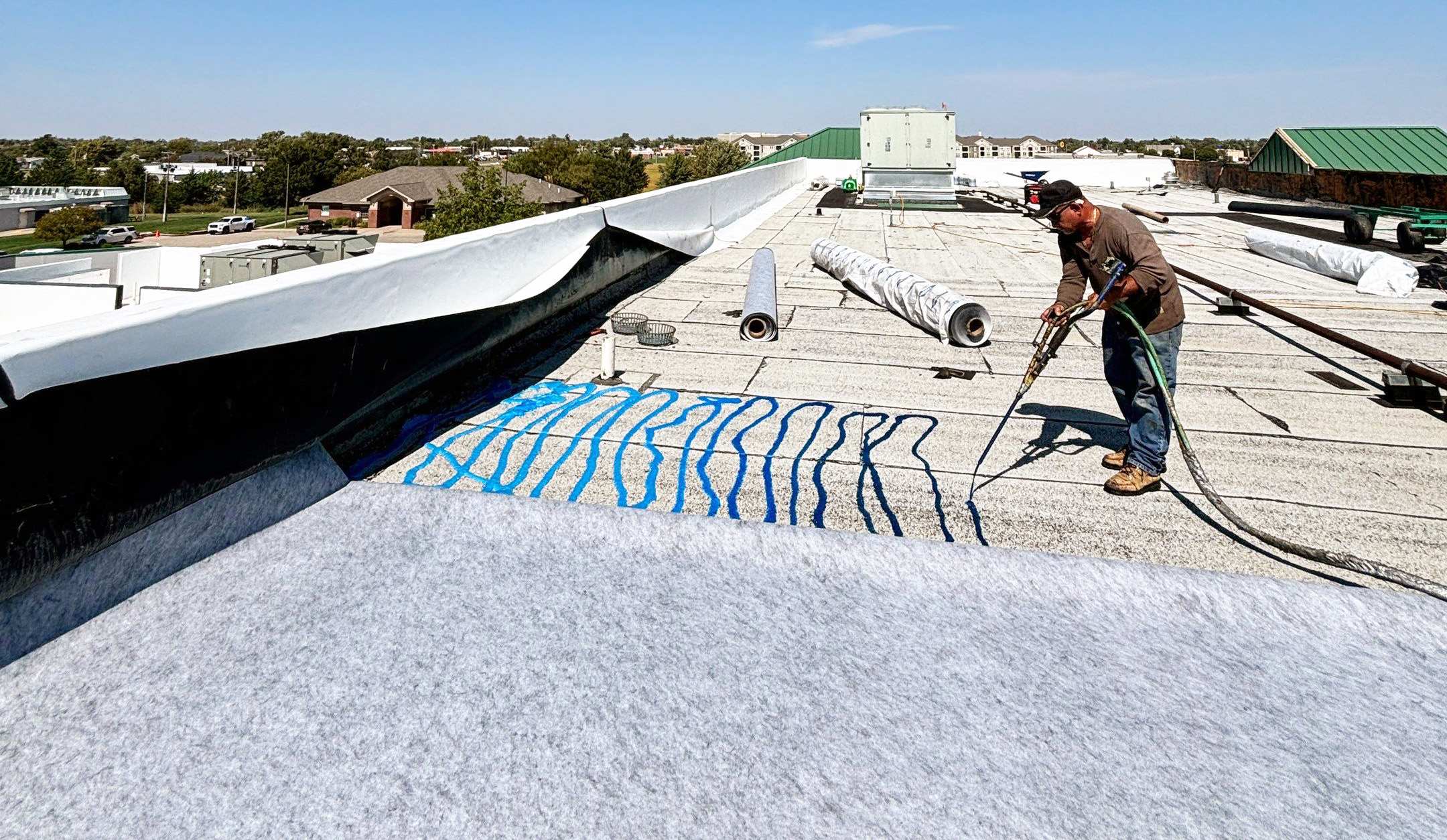
A roof recover installs a new membrane system - TPO, EPDM, PVC, or modified bitumen - directly over the existing roofing assembly without removing the existing membrane. The recovered building avoids tear-off cost, avoids landfill disposal of the old membrane, and avoids the noise, disruption, and debris of full tear-off. The recovered system carries a manufacturer warranty - typically 15 or 20 years - provided the recover is specified and installed to the manufacturer's published recover requirements.
The decision between recover and tear-off is data-driven, not cost-driven. The most important variable is insulation moisture content. If the existing insulation is wet - whether from current leaks, past leaks, or long-term vapor migration - recovering over it is a scope that fails. Wet insulation beneath a new membrane creates vapor pressure that works against the new system's adhesion and promotes corrosion of steel deck components. We pull moisture cores before writing any recover scope for a Charlotte commercial building. If the data supports recover, we scope a recover. If it supports tear-off, we scope a tear-off and explain the finding.
Recover systems are common across the Charlotte metro on the 1990s and early 2000s commercial building stock - the generation of buildings that installed first-generation TPO and EPDM at 45-mil thickness and 15-year warranty terms. Those warranties are expired. Many of those buildings have dry insulation and sound deck because the original membranes, while at end of warranted life, have not yet failed systemically. Recover is the capital-efficient path for this building generation when the moisture survey confirms dry conditions.
Owners get a written scope that separates urgent water-control work from longer-term capital planning, so the roof decision is not made from guesswork.
The closeout package keeps the next decision clear with before photos, after photos, material notes, warranty coordination, and recommended maintenance timing.
For occupied buildings, staging, access, odor control, and tenant communication are part of the roof plan before crews arrive.
For portfolio owners, the goal is consistent documentation across properties, not a one-off opinion that cannot be compared later.
The first visit produces a practical roof record: current conditions, visible failure points, drainage notes, access concerns, and the repair or replacement path that fits the building.
Recover Substrate Requirements and What We Check
Common recover substrate requirements include: maximum two existing roof systems below (most jurisdictions and manufacturers prohibit a third roof layer), maximum existing insulation thickness (to keep the recover system within the manufacturer's height-above-drain tolerance), required existing membrane surface condition (no blistering larger than a specified diameter, no more than a threshold percentage of failed seams), and required cover board specification (high-density polyiso or gypsum board over the existing membrane before the new membrane is installed). We identify any condition that does not
The North Carolina Building Code has its own requirements on roof recover: a building cannot exceed two layers of roofing without removing the existing systems. For Charlotte commercial buildings that already have two layers - typically a BUR original system with a 1980s or 1990s modified bitumen recover - the only compliant scope is tear-off. We check the building permit history and existing layer count during the initial assessment and advise the building owner of the code situation before any scope is proposed.
Recover System Options for Charlotte Buildings
TPO recover over existing single-ply: 60-mil or 80-mil TPO installed mechanically or fully adhered over a high-density cover board, which is installed over the existing membrane. The cover board is required to provide a smooth, stable substrate and to achieve the required thermal break. This is the most common recover configuration on Charlotte commercial buildings - TPO over first-generation EPDM or TPO that has reached end of warranty life. The 20-year NDL warranty path is available on this configuration from every major TPO manufacturer.
EPDM recover: 60-mil EPDM fully adhered over the existing membrane via cover board. EPDM recover is specified for industrial buildings where chemical resistance or flexibility over complex geometry is required, and for buildings where the existing EPDM system is being recovered by the same manufacturer - which sometimes produces a more direct warranty path than a cross-manufacturer recover.
Modified bitumen recover: Self-adhered or torch-applied APP or SBS modified bitumen recover over existing BUR or modified bitumen, via cover board. The most common configuration on Charlotte's older Uptown and South End commercial buildings where the existing BUR system has dry insulation and a sound poured concrete or structural steel deck. The modified bitumen recover system can carry a 15-year warranty from the major manufacturers and is significantly lower in installed cost than a single-ply recover on the same building type.
Hybrid recover: In some Charlotte commercial buildings, the existing membrane condition is mixed - dry field with localized wet areas at drains or flashings. A hybrid recover scope tear-offs the wet zones (typically less than 25 percent of the roof area), installs new insulation in those areas, and recovers the remaining dry field. The result is a single new membrane over a mixed-age substrate. The manufacturer warranty applies to the entire recovered area provided the tear-off zones are built to the manufacturer's new-construction specification.
Recover Sequencing and Charlotte Weather Planning
A recover project does not require daily dry-in sequencing the way a tear-off does - the existing membrane provides temporary weather protection for the area not yet covered by the new system. This is a significant scheduling advantage in Charlotte's summer thunderstorm season, where afternoon storms can build within 45 minutes. On a recover project, if an afternoon storm cuts production short, the building is protected by the existing membrane. On a tear-off project, any uncovered area must be dry-in'd before the crew leaves.
The Ballantyne corporate campus buildings - where tenant operations require minimal disruption and where property managers often have strict protocols for contractor staging and work hours - benefit from recover scheduling flexibility. We can sequence recover projects in sections across consecutive weeks, with each section fully covered at day's end, rather than requiring the concentrated mobilization that tear-off projects demand.
Cover board installation is the most weather-sensitive phase of a recover project in Charlotte's climate. Polyiso cover board must be kept dry during installation - wet cover board can delaminate and lose thermal resistance. We store cover board on pallets elevated from the deck surface and cover with tarps when any precipitation risk exists. In Charlotte's summer humidity, we also monitor cover board installation for condensation on the board surface before the new membrane is set.
How do you determine if a Charlotte commercial building qualifies for a recover vs. needs tear-off?
Moisture survey - we pull cores in a grid across the roof field and read moisture content at each core location. If under 25 percent of the field shows moisture in the insulation, and the deck is sound at every core pull location, the building is a recover candidate. If over 25 percent of the field is wet, or if the deck shows structural compromise at any core location, tear-off is the required scope. We provide the core data and our recommendation in writing before any scope is contracted.
Can you recover over a roof that has had multiple prior layers?
Only if the building currently has one existing roof system above the deck. North Carolina Building Code and most manufacturer specifications prohibit a third layer of roofing. If the Charlotte building already has a BUR system plus a modified bitumen recover - two layers - any new work must start with a full tear-off to the deck. We check existing layer count during the initial site assessment and advise the building owner of the code situation before proposing any scope.
Recover or tear-off - let the data decide for your Charlotte building.
We pull moisture cores, check deck condition, and produce a written recover vs. tear-off recommendation for any commercial flat roof in Mecklenburg County or the Charlotte metro - before any scope is contracted.
Request a Written Scope