

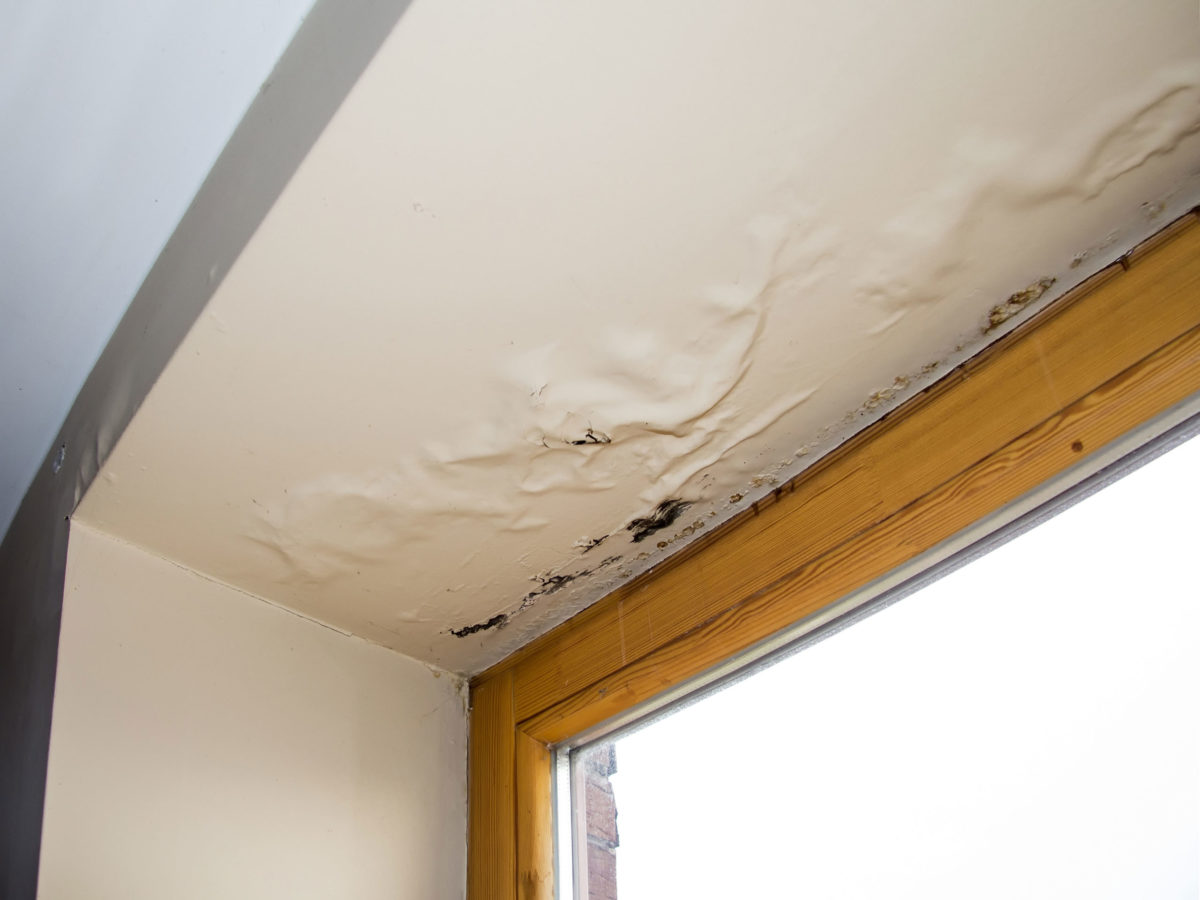
Humidity & Moisture Damage Roof Repair
Humidity and moisture damage roof repair in Charlotte, NC. We diagnose trapped moisture, blistering, ridging, and saturated insulation from interior humidity and failed vapor barriers, then fix the
Commercial Roofers Charlotte
Humidity and moisture damage roof repair in Charlotte, NC. We diagnose trapped moisture, blistering, ridging, and saturated insulation from interior humidity and failed vapor barriers, then fix the cause.
Humidity & Moisture Damage Roof Repair work starts with a documented roof walk and ends with a scope owners can use.
The leak that never came from the sky Some of the most frustrating roof problems we are called to in Charlotte never started with a single drop of rain getting in.
The membrane is intact, the flashings are sound, and the roof still has wet insulation spreading across it, blisters rising in the field, and a steel deck quietly rusting from the top side.
Warm, moisture-laden air from the conditioned space below pushes up into the roof assembly, meets a colder surface, and condenses inside the insulation where nobody can see it.
By the time a facility manager near the I-77 South Park corridor or out in the University Research Park calls us about a soft spot underfoot, the moisture has often been accumulating for a year or more.
We treat this as a building-physics problem, not a patching problem.
That is the only repair that actually holds in a climate as humid as Charlotte's.
Why Charlotte's humidity is hard on commercial roofs Charlotte sits in a hot, humid Southeastern climate where summer dew points routinely sit in the seventies for weeks at a stretch.
Inside a building, that same humidity is being managed by HVAC, which means there is almost always a vapor-pressure difference trying to drive moisture up through the roof.
Those buildings generate moisture indoors all day, and the roof is the lid sitting over all of it.
We see this constantly on older buildings in NoDa and South End that were re-roofed without anyone reconsidering the vapor control, and on warehouses where a low-permeance membrane was installed over a deck with no vapor retarder underneath.
Pockets of moisture trapped between layers turn to vapor when the roof heats up, and the pressure lifts the membrane into bubbles that grow and eventually split.
Insulation boards swell and lose dimension as they absorb water, and the membrane telegraphs that movement as ridges running along the board joints.
The leak that never came from the sky
Some of the most frustrating roof problems we are called to in Charlotte never started with a single drop of rain getting in. The membrane is intact, the flashings are sound, and the roof still has wet insulation spreading across it, blisters rising in the field, and a steel deck quietly rusting from the top side. That is humidity damage, and it works from the inside out. Warm, moisture-laden air from the conditioned space below pushes up into the roof assembly, meets a colder surface, and condenses inside the insulation where nobody can see it. By the time a facility manager near the I-77 South Park corridor or out in the University Research Park calls us about a soft spot underfoot, the moisture has often been accumulating for a year or more.
We treat this as a building-physics problem, not a patching problem. Sealing the surface over wet insulation just traps the water and guarantees a callback. Our job is to find where the moisture is, figure out how it is getting into the assembly, and fix the path as well as the damage. That is the only repair that actually holds in a climate as humid as Charlotte's.
Why Charlotte's humidity is hard on commercial roofs
Charlotte sits in a hot, humid Southeastern climate where summer dew points routinely sit in the seventies for weeks at a stretch. Inside a building, that same humidity is being managed by HVAC, which means there is almost always a vapor-pressure difference trying to drive moisture up through the roof. Certain occupancies make it far worse: food production and cold storage in the Steele Creek industrial zone near the airport, laundries and kitchens, indoor pools, manufacturing with wash-down processes, and healthcare facilities that run high interior humidity by design. Those buildings generate moisture indoors all day, and the roof is the lid sitting over all of it.
When the assembly was not detailed to handle that vapor drive, the moisture has nowhere to go but into the insulation. We see this constantly on older buildings in NoDa and South End that were re-roofed without anyone reconsidering the vapor control, and on warehouses where a low-permeance membrane was installed over a deck with no vapor retarder underneath.
How the failure shows itself
Blistering. Pockets of moisture trapped between layers turn to vapor when the roof heats up, and the pressure lifts the membrane into bubbles that grow and eventually split.
Ridging and buckling. Insulation boards swell and lose dimension as they absorb water, and the membrane telegraphs that movement as ridges running along the board joints.
Saturated insulation. Wet insulation stops insulating, so heating and cooling costs climb and the roof feels spongy when you walk it.
Deck corrosion. On a steel deck, constant top-side moisture rusts the flutes from above, and on a wood or gypsum deck it rots or softens. This is the failure that turns a repair into a replacement.
Finding the moisture before we cut anything
We never scope a humidity repair by guessing. The first step is an infrared moisture survey, which we fly or walk during the cool-down window after a warm, dry day. Insulation that is holding water carries more of the day's heat than the dry roof around it, so after sunset the wet zones read warmer through the thermal camera and map out as distinct areas. On a large low-slope roof, that map shows us exactly where the problem lives instead of forcing a tear-off across the whole field.
We confirm every thermal anomaly with a physical core cut. The core tells us how deep the water has gone, whether the deck below has begun to corrode, and just as importantly, where the vapor retarder sits in the assembly and whether it is doing anything. A core that comes back with wet insulation directly over a clean, dry deck is a different repair than one that comes back with a rusting deck, and we will not price the work until we know which one you have.
Fixing the cause, not just the symptom
Once we know where the moisture is and how it is getting in, the repair has two halves. First, we remove the wet material. Saturated insulation never dries out in place to any useful degree, so it comes out down to a sound, dry substrate, the deck gets inspected and treated or replaced where it has corroded, and new dry insulation goes back in tied into a properly welded or adhered membrane patch. Second, and this is the part that separates a lasting fix from a temporary one, we address the vapor path that let the moisture in.
In Charlotte's climate, vapor generally drives upward from the warm interior, which means a vapor retarder belongs low in the assembly, near the deck, not up under the membrane where it traps condensation. If the existing assembly has the vapor control in the wrong place, or has none at all over a high-humidity space, we say so and design the repair or recover to correct it. Recovering over a misbuilt assembly without fixing the vapor management simply rebuilds the same trap, and we will not put our name on that.
Repair, recover, or replace
The moisture map decides this, not a sales target. When the wet zones are discrete and the surrounding field is dry, a targeted cut-and-patch is the right, cost-effective answer. When the survey shows water across a large share of the roof, or the deck has corroded over multiple cycles of trapped moisture, patching good money into a failing assembly makes no sense and we will lay out a recover or full replacement with corrected vapor control instead. You get the survey, the core findings, and a straight comparison of the options.
Controlling moisture from below
A roof repair is only half the story when the building itself is pumping humidity at the deck. We walk the interior side too, because the roof can only do so much when there is an unaddressed moisture source underneath. Open process areas with no make-up air, missing or torn vapor retarders at the deck, unsealed wall-to-roof transitions, and HVAC that is not pulling humidity out of the space all keep loading the assembly no matter how well the membrane is detailed. Where we see those conditions, we flag them and coordinate with the owner's mechanical and envelope people so the fix actually addresses where the water is coming from.
How can my roof be wet inside when it has never leaked?
Because the water is not coming from rain. Humid indoor air drives up into the roof assembly and condenses inside the insulation when it meets a cold surface. The membrane stays intact while moisture quietly accumulates below it, which is why the damage often goes unnoticed until the roof feels soft or energy costs climb.
How do you find moisture you cannot see from the surface?
We run an infrared survey during the post-sunset cool-down, when wet insulation holds the day's heat and reads warmer than the dry roof around it, mapping the saturated zones. Then we confirm each flagged area with a core cut that shows depth of moisture, deck condition, and where the vapor retarder sits.
Can the wet insulation just be dried out?
No. Saturated commercial roof insulation does not dry back to a useful state once it is wet, and leaving it traps water against the deck. The reliable fix is to remove the wet material down to a dry substrate, treat or replace any corroded decking, and rebuild with new insulation and a properly tied-in membrane.
Request a Written Scope