

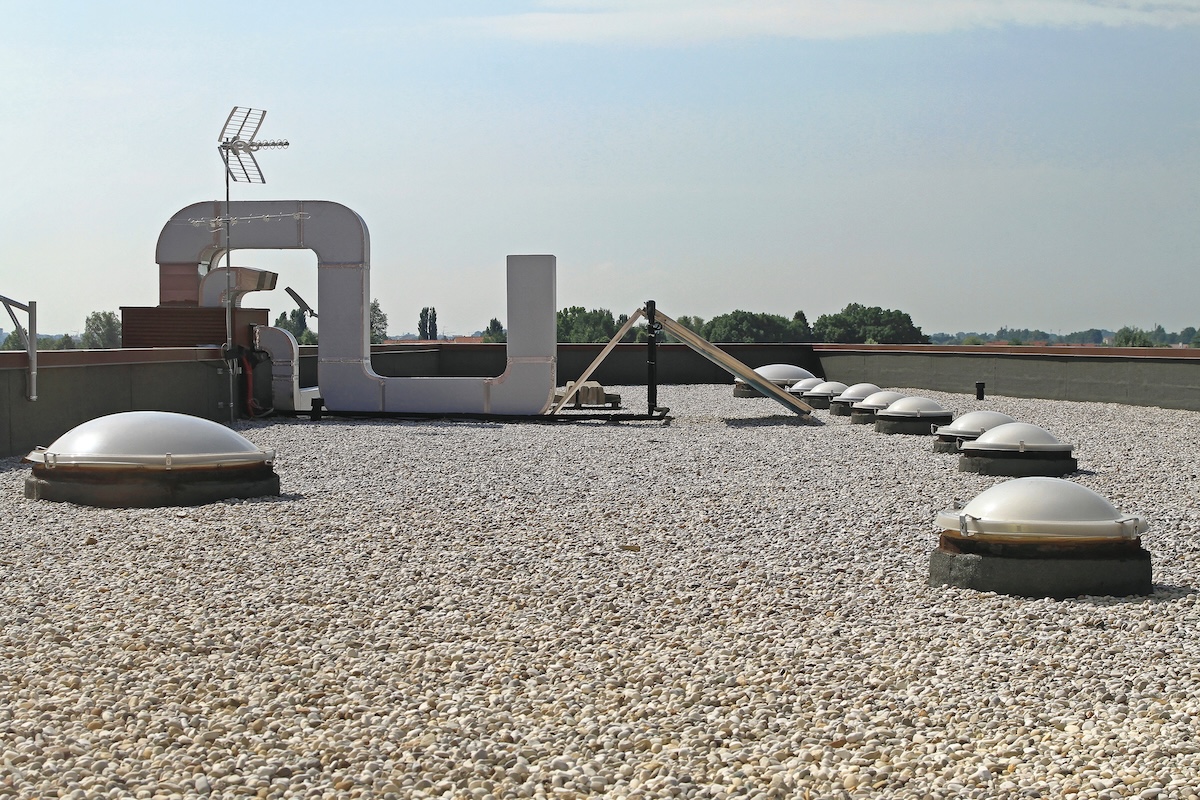
Built-Up Roofing BUR
Built-up roofing assessment, repair, and recovery for Charlotte commercial buildings - BUR systems on older Uptown, South End, and NoDa buildings entering second reroof cycles with documented moisture
Commercial Roofers Charlotte
Built-up roofing assessment, repair, and recovery for Charlotte commercial buildings - BUR systems on older Uptown, South End, and NoDa buildings entering second reroof cycles with documented moisture survey before any scope is specified.
Built-Up Roofing BUR work starts with a documented roof walk and ends with a scope owners can use.
Charlotte's oldest commercial building stock - Uptown, South End, NoDa, and the 1970s industrial corridors - runs built-up roofing systems that are approaching or have passed second reroof cycles. We assess, repair, and recover BUR systems with a documented moisture survey before any scope is written.
Built-up roofing is a multi-ply system: alternating layers of bitumen - coal tar or asphalt - and reinforcing felts, topped with aggregate surfacing or a mineral cap sheet. The systems installed on Charlotte commercial buildings from the 1960s through the mid-1980s are reaching the end of their serviceable life. The BUR systems that were recovered with modified bitumen in the late 1980s and early 1990s - after Hurricane Hugo forced a wave of emergency roof work across the Charlotte metro - are themselves now entering replacement cycles.
We encounter BUR on three building categories in Charlotte: the older Uptown office buildings constructed before the BofA and financial district towers reshaped the skyline, the adaptive-reuse buildings in South End and NoDa where former industrial structures have been converted to office, restaurant, and creative-use occupancies, and the scattered 1970s light-industrial buildings along the Statesville Avenue and West Boulevard corridors that have not yet been converted or replaced. Each category has a different scope profile, and the most important variable is always the same: how much moisture is in the existing insulation assembly.
We do not specify a BUR recover or replacement scope without a moisture survey. We pull cores - hand-cut or rotary - in a representative grid across the roof field, and we read the insulation at each core location for moisture content. The core data determines whether the existing assembly can be recovered or must be torn off. Recovering over wet insulation is a scope that fails the building twice - once when we do the work, and again when the new system fails prematurely because the trapped moisture migrated upward.
The closeout package keeps the next decision clear with before photos, after photos, material notes, warranty coordination, and recommended maintenance timing.
For occupied buildings, staging, access, odor control, and tenant communication are part of the roof plan before crews arrive.
For portfolio owners, the goal is consistent documentation across properties, not a one-off opinion that cannot be compared later.
The first visit produces a practical roof record: current conditions, visible failure points, drainage notes, access concerns, and the repair or replacement path that fits the building.
Owners get a written scope that separates urgent water-control work from longer-term capital planning, so the roof decision is not made from guesswork.
BUR Conditions We Find on Charlotte Buildings
Surface alligatoring: BUR systems surface-age from UV exposure. Asphalt oxidizes and contracts, producing the cracked reptilian surface pattern called alligatoring. In Charlotte's UV environment - over 220 sunny days per year on the Piedmont - unprotected BUR surfaces alligator more aggressively than in northern markets. Surface alligatoring alone does not indicate structural failure of the BUR assembly, but it does indicate that the surface protection has failed and the underlying plies are now UV-exposed. The question is whether the felts below the surface asphalt are intact.
Blister formation: Moisture that migrates into the BUR assembly during Charlotte's humid summers can cause blisters - pockets where vapor pressure separates the BUR plies. Small blisters on an otherwise intact BUR system can sometimes be repaired by cutting, drying, and re-seaming. Large blisters or blister fields indicate systemic moisture infiltration. We do not repair blister fields - we core the area, document moisture content, and use the data to determine whether the zone requires tear-off.
Parapet and counter-flashing failure: The BUR systems on Charlotte's older Uptown and South End buildings are typically terminated at masonry parapets with base flashing and counter-flashing. The counter-flashing is set into the masonry reglet - a horizontal mortar joint cut to receive the flashing edge. Over 40 to 50 years of thermal cycling and the slow movement of unreinforced masonry, these reglet joints open and allow water to travel behind the counter-flashing and into the BUR system from the wall side. The water entry point is at the parapet - but the moisture often migrates across the BUR field before it presents as an interior leak, making the source difficult to trace without a full moisture survey.
Drain bowl and collar failure: The drains on 1960s and 1970s Charlotte commercial buildings are typically cast iron or galvanized steel - materials that corrode at the collar joint where they penetrate the deck. BUR base flashing is typically set into the drain clamping ring, and when that ring corrodes and loses clamping force, the BUR base flashing pulls free. The result is a water pathway directly through the drain collar into the building structure. We inspect every drain collar on BUR buildings as part of the moisture survey, photograph each one, and include drain condition in the written scope.
BUR Recover vs. Tear-Off's Climate
A BUR recover - adding a new modified bitumen or single-ply membrane over the existing BUR assembly - is the right scope when the existing BUR plies are intact and the insulation is dry. The existing BUR assembly has structural value as an underlayment, and recovering avoids the cost and disruption of tear-off. The new system can carry a full manufacturer warranty if the recover is specified correctly and the existing assembly meets the manufacturer's substrate requirements.
Tear-off is required when the moisture survey shows wet insulation in more than 25 percent of the roof field, when the deck below the BUR is structurally compromised, or when the existing BUR assembly is so severely degraded that it cannot provide a stable substrate. In Charlotte's climate, the most common tear-off trigger on BUR buildings is wet insulation identified by core survey - moisture that accumulated over years of slow flashing failure and was never identified because the building never had a documented condition assessment.
On Charlotte's older Uptown and South End buildings, tear-off also exposes deck conditions that affect the scope significantly. Poured concrete decks in the 1960s Uptown buildings are typically sound - concrete does not corrode. Steel deck on the 1970s light-industrial buildings in the West Boulevard and Statesville Avenue corridors often shows corrosion at the flutes when BUR assembly moisture has been present for years. Corroded steel deck requires replacement before any new roofing system is installed - which moves the project into a different cost band that building owners need to know about before contract, not during production.
What a BUR Assessment Includes
Our BUR assessment for a Charlotte commercial building starts with a zone-by-zone roof walk, photographing surface condition, drainage patterns, parapet and flashing condition, and any visible penetration or seam failures. We then pull cores in a grid - minimum five locations for a roof under 10,000 square feet, ten to twenty locations for larger roofs - and read each core for moisture content, ply integrity, insulation condition, and deck condition. We photograph every core pull and the project team each one to the roof zone diagram.
The written assessment report includes a zone-by-zone condition summary, the core log with photographs, a recover-vs-tear-off recommendation based on the moisture data, a drain condition assessment, a parapet and flashing condition assessment, and an estimate of remaining service life if no action is taken. The report is written to serve as a capital planning document - the building owner or asset manager can use it to sequence the roof project into the capital cycle with documented justification.
Can a new single-ply membrane be installed over an existing BUR roof on a Charlotte building?
Yes, if the moisture survey shows the existing BUR insulation is dry and the BUR plies are structurally intact. Most major TPO and EPDM manufacturers have published recover specifications that allow their membrane to be installed over a sound BUR substrate. The recover specification typically requires a cover board - high-density polyiso or gypsum - over the existing BUR surface before the new membrane is installed. We verify the recover specification with the manufacturer before scoping and obtain manufacturer confirmation that the recover configuration qualifies for the target warranty term.
How many cores do you pull on a Charlotte BUR moisture survey?
Minimum five locations on a roof under 10,000 square feet. On larger roofs we target one core per 2,000 to 2,500 square feet, concentrated in areas showing surface deflection, prior repair work, or drainage anomalies. On BUR roofs with a history of localized leaks, we pull additional cores around the reported leak locations and at all four parapet corners - the highest-probability moisture entry points on older Charlotte BUR systems.
Does BUR work require a permit?
Replacement and recover projects above the City of Charlotte's threshold - currently $30,000 in contract value for commercial work - require a building permit filed with the relevant jurisdiction. We handle permitting as part of our scope for all BUR replacement and recover projects in Charlotte, Mecklenburg County, and the surrounding municipalities. Repair work below the permit threshold does not typically require a permit, but we document all repair work to the same standard regardless of permit status.
BUR assessment for an older Charlotte commercial building?
We will walk the roof, pull moisture cores, and produce a written assessment with recover-vs-tear-off recommendation - for any BUR system in Uptown, South End, NoDa, or anywhere else in the Charlotte metro.
Request a Written Scope