

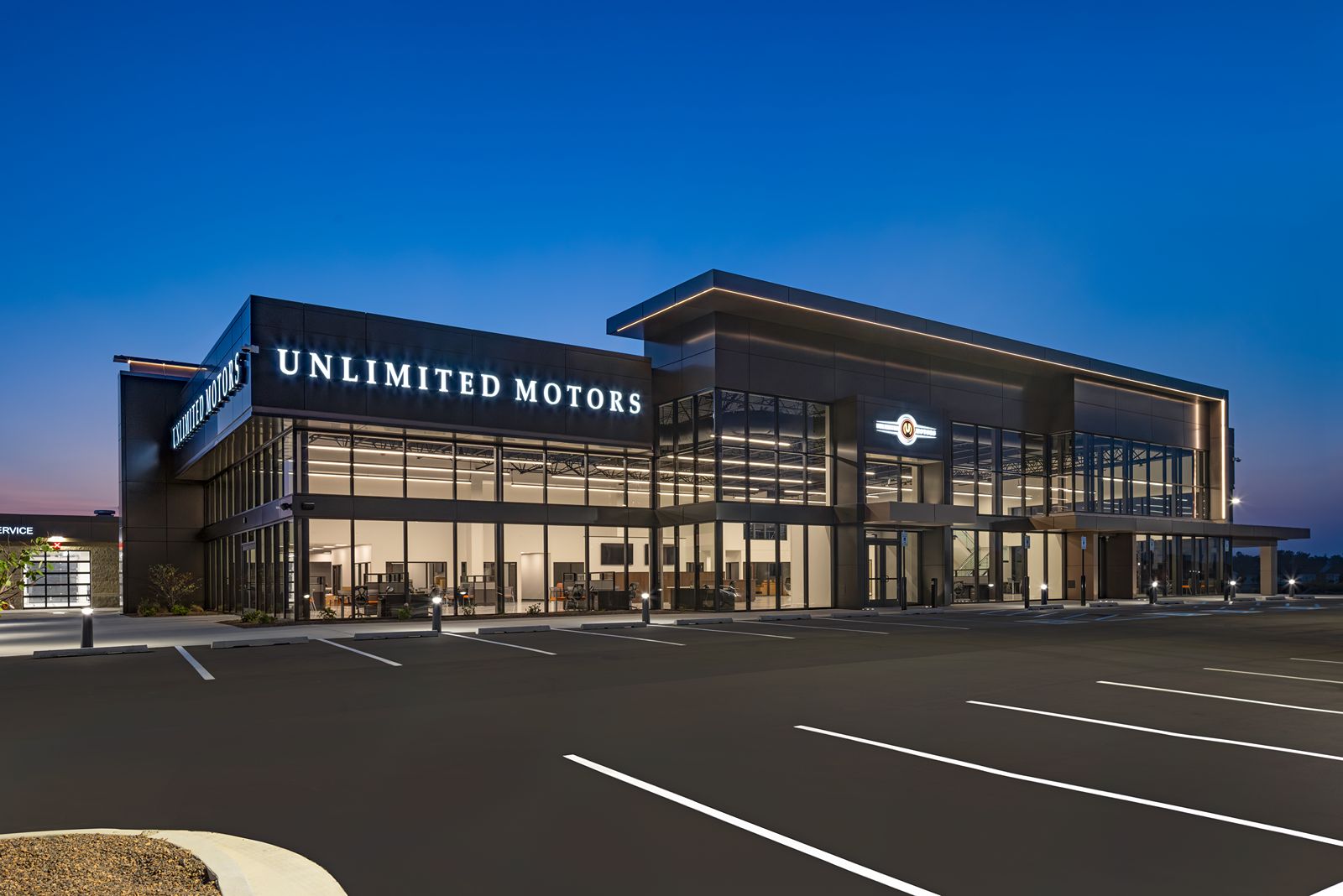
Auto Dealership Roofing
Commercial roofing for auto dealerships, car lots, service centers, and automotive facilities throughout Charlotte, NC.
Commercial Roofers Charlotte
Auto Dealership Roofing work starts with a documented roof walk and ends with a scope owners can use.
Charlotte's automotive market is served by major dealer groups including the Hendrick Automotive Group, headquartered in Concord and operating dozens of franchises across the Carolinas, with a large concentration of showroom and service facilities in the Charlotte metro that represent significant real estate investments requiring qualified commercial roofing contractors who understand both OEM facility standards and the specific climate demands of the Piedmont. Charlotte dealerships face a combination of hot, humid summers, occasional winter ice events, and the severe thunderstorm weather that moves through the region from the Gulf coast - conditions that require roofing systems selected and installed with specific attention to the Charlotte environment.
Showroom roofs at Charlotte dealerships are often brand-specific architecturally designed buildings where OEM standards from Toyota, Honda, Ford, GM, and luxury brands prescribe specific materials and aesthetic conditions. Hendrick facilities and comparable dealer groups invest in showroom buildings that are brand-compliant showpieces, and maintaining the roofing system in a condition consistent with that investment is both a business obligation and an OEM requirement. Contractors who understand OEM facility documentation requirements - including the ability to provide warranty certificates in formats acceptable to manufacturer compliance programs - provide value that goes beyond the physical roofing work.
Service department roofs in Charlotte carry the full complexity of service operations under one roof: skylights providing natural light for technicians, HVAC equipment serving both service bays and customer lounges, exhaust fan penetrations, compressed-air conduit, and vehicle lift hydraulic system conduit. Each penetration must be properly waterproofed with membrane-compatible materials. Charlotte's mixed-humid climate creates conditions where improperly sealed penetrations allow not just water intrusion but moisture vapor infiltration that causes corrosion on stored tools and diagnostic equipment in service bays - a slow damage pathway that is often difficult to trace to its roof source.
Service bay skylights are standard in Charlotte dealerships for both functional and OEM aesthetic reasons, and their curb flashings represent one of the most important details in the service department roofing system. Charlotte's occasional ice storms - while less frequent than northern markets - create freeze-thaw stress on skylight curb details that rely on caulk as a primary seal. Proper counter-flashing with mechanical fastening and full membrane integration provides resilience against both ice storm conditions and Charlotte's summer thunderstorm wind events, which can drive rain under inadequately detailed counter-flashing.
The first visit produces a practical roof record: current conditions, visible failure points, drainage notes, access concerns, and the repair or replacement path that fits the building.
Owners get a written scope that separates urgent water-control work from longer-term capital planning, so the roof decision is not made from guesswork.
The closeout package keeps the next decision clear with before photos, after photos, material notes, warranty coordination, and recommended maintenance timing.
For occupied buildings, staging, access, odor control, and tenant communication are part of the roof plan before crews arrive.
For portfolio owners, the goal is consistent documentation across properties, not a one-off opinion that cannot be compared later.
Can a new single-ply membrane be installed over an existing BUR roof on a Charlotte building?
Yes, if the moisture survey shows the existing BUR insulation is dry and the BUR plies are structurally intact. Most major TPO and EPDM manufacturers have published recover specifications that allow their membrane to be installed over a sound BUR substrate. The recover specification typically requires a cover board - high-density polyiso or gypsum - over the existing BUR surface before the new membrane is installed. We verify the recover specification with the manufacturer before scoping and obtain manufacturer confirmation that the recover configuration qualifies for the target warranty term.
How many cores do you pull on a Charlotte BUR moisture survey?
Minimum five locations on a roof under 10,000 square feet. On larger roofs we target one core per 2,000 to 2,500 square feet, concentrated in areas showing surface deflection, prior repair work, or drainage anomalies. On BUR roofs with a history of localized leaks, we pull additional cores around the reported leak locations and at all four parapet corners - the highest-probability moisture entry points on older Charlotte BUR systems.
Does BUR work require a permit?
Replacement and recover projects above the City of Charlotte's threshold - currently $30,000 in contract value for commercial work - require a building permit filed with the relevant jurisdiction. We handle permitting as part of our scope for all BUR replacement and recover projects in Charlotte, Mecklenburg County, and the surrounding municipalities. Repair work below the permit threshold does not typically require a permit, but we document all repair work to the same standard regardless of permit status.
BUR assessment for an older Charlotte commercial building?
We will walk the roof, pull moisture cores, and produce a written assessment with recover-vs-tear-off recommendation - for any BUR system in Uptown, South End, NoDa, or anywhere else in the Charlotte metro.
Planning Auto Dealership Roofing
Auto Dealership Roofing should be evaluated through the roof condition, the building use, the owner's timing, and the level of documentation needed to make a decision.
The written record should make the next step clear without relying on broad claims or generic sales language.
Request a Written Scope