

Retail Roofing
Commercial roofing for Charlotte retail properties - SouthPark Mall, Northlake Mall, Carolina Place, Concord Mills, strip centers - membrane replacement, drain maintenance, and tenant-coordination scheduling.
Commercial Roofers Charlotte
Retail Roofing roof work is shaped by occupancy, access, drainage, tenant protection, and the warranty path that fits the building.
Charlotte's major retail centers - SouthPark Mall, Northlake Mall, Carolina Place in Pineville, and Concord Mills off I-85 - are large-footprint, complex-drain roof systems that require tenant-coordinated scheduling and airtight sequencing to avoid business disruption.
Retail roofing in Charlotte is defined by two constraints that do not exist in the same form on office or warehouse buildings: tenant operating hours and the consequence of any leak. An office tenant with a ceiling stain has a facilities problem. A retail tenant with a leak over the sales floor on a Saturday afternoon has lost revenue, potentially damaged inventory, and has a landlord-tenant dispute in progress before the drip stops.
I have worked on retail roofing across Charlotte's major mall properties and strip center inventory. The large enclosed malls - SouthPark Mall on Fairview Road, Northlake Mall off I-77 near the Huntersville border, Carolina Place Mall in Pineville, and Concord Mills on Concord Mills Boulevard - are their own category. Each is a multi-owner, multi-tenant structure where the common area roof is managed by the mall's property management entity and the individual store leases may include lease-granted rights around construction access and disruption. Roofing work on a major enclosed mall requires coordination at the ownership level, not just the maintenance team.
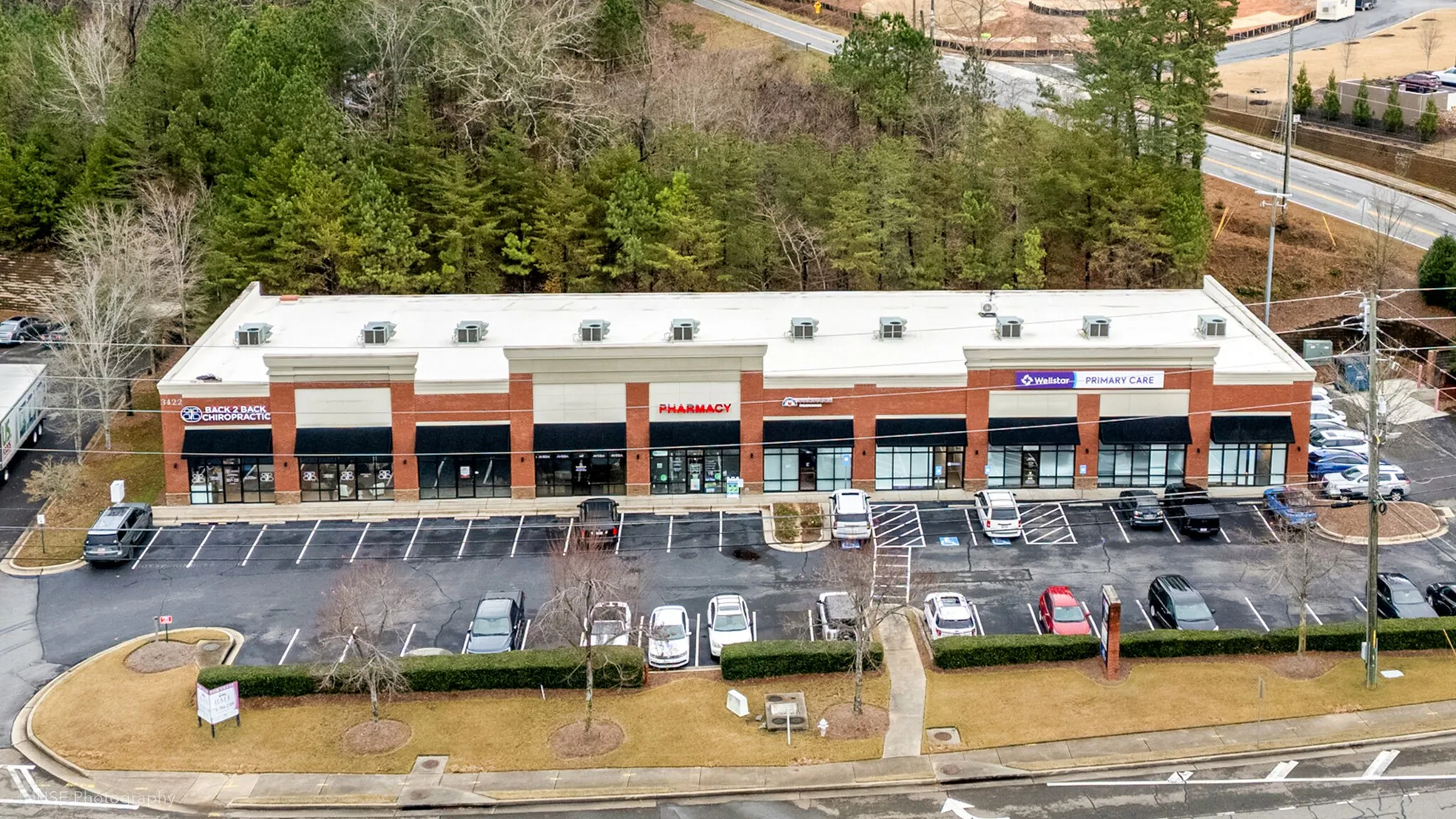
Strip centers - the grocery-anchored and service-tenant retail formats that run along every major Charlotte commercial corridor from University City to Ballantyne to Steele Creek - are a larger slice of what I actually work on day to day. These buildings are typically 20,000 to 80,000 square feet, single-story, with built-up or single-ply roofing that ranges from mid-1990s to 2015 vintage. The failure patterns and the tenant coordination requirements are predictable once you have seen a few of them.
The first visit produces a practical roof record: current conditions, visible failure points, drainage notes, access concerns, and the repair or replacement path that fits the building.
Owners get a written scope that separates urgent water-control work from longer-term capital planning, so the roof decision is not made from guesswork.
The closeout package keeps the next decision clear with before photos, after photos, material notes, warranty coordination, and recommended maintenance timing.
For occupied buildings, staging, access, odor control, and tenant communication are part of the roof plan before crews arrive.
For portfolio owners, the goal is consistent documentation across properties, not a one-off opinion that cannot be compared later.
SouthPark Mall and Enclosed Mall Roofing
SouthPark Mall is Charlotte's highest-volume enclosed retail center, driven by Nordstrom, Neiman Marcus, and Belk on the Fairview Road and Sharon Road intersection. The mall's roof is a complex, multi-level system - the anchor stores have their own roof areas separate from the mall common area, and the common area skylights, mechanical equipment, and food court exhaust systems create a high penetration count across the entire field.
Work on SouthPark's common area roof requires coordination through Simon Property Group's property management office. The access windows are tightly controlled - crane and heavy equipment staging on the Fairview Road frontage is not available during retail hours, and mall management requires advance notice for any work that affects parking or common area access. My role on projects at this scale is most often as the roofing trade contractor within a larger capital project managed by the ownership group's construction management team.
Northlake Mall, off I-77 at Northlake Center Parkway, is a comparable structure with similar management constraints. Carolina Place in Pineville is managed by a different ownership group and has a smaller footprint, which makes the coordination somewhat more direct. Concord Mills - the outlet center format off I-85 in Cabarrus County - is a single-level enclosed mall with a large, relatively accessible roof plane and a high-traffic parking field that requires careful staging coordination.
Charlotte Strip Center Roofing - Common Conditions
The strip centers I inspect most frequently in the Charlotte metro share a pattern: 1995-to-2010 vintage construction on modified bitumen or first-generation 60-mil TPO, drain systems with inadequate sump depth due to recovered-over original insulation, and at least one rooftop HVAC curb flashing that was installed or replaced by the HVAC contractor rather than the roofing trade. These three conditions together account for the majority of active leak complaints I get called to evaluate.
Restaurant tenants in strip centers are the highest-risk from a roofing standpoint. Restaurant exhaust systems - particularly for fast-food and fast-casual tenants - discharge grease-laden air through roof exhaust fans. Grease accumulates on the membrane around the exhaust penetration and accelerates membrane degradation. The area around a restaurant exhaust penetration on a strip center roof is almost always the first section to fail. I address exhaust area membrane replacement with a PVC or grease-resistant coating zone around the penetration, not standard TPO, which degrades rapidly in grease contact.
Grocery anchor roofs - the major footprint sections over Publix, Harris Teeter, and Food Lion locations in Charlotte strip centers - have refrigeration condensers on the roof that add significant thermal load and mechanical traffic. The structural roof deck over a grocery anchor carries more long-term dead load from compressor equipment than the original structural design typically anticipated. I check deck condition under the condenser pad footprints on every grocery anchor roof inspection.
Tenant Coordination on Charlotte Retail Reroofing Projects
The logistics plan identifies: daily production hours and staging area for materials and equipment; which tenant spaces are directly below active work each day; the advance notice interval for tenant notification (I use 48 hours minimum on retail, 72 hours for restaurants and medical tenants); and the protocol for leak response if the dry-in is breached during a rain event. The last point matters - on a retail reroofing project, the response protocol for a rain event that breaches a section's dry-in is not a phone call the next morning. It is a same-evening crew mobilization.
Every retail reroofing project I run includes a written daily dry-in confirmation at end of shift. The project manager signs off that the day's open sections are dry-in complete before the crew leaves the site. That sign-off is timestamped and dated and becomes part of the project record.
Can you do retail reroofing without closing the stores?
Yes, with proper sequencing. We stage the work so that each section's tear-off and dry-in happens in a single shift. Tenants remain open and are notified in writing before work begins above their space. We schedule the heaviest equipment and noisiest operations for hours that minimize customer impact - typically early morning before retail open or late afternoon after peak traffic.
Our strip center has a restaurant tenant with grease damage around the exhaust fan. How is that repaired?
Grease-degraded TPO or modified bitumen around a restaurant exhaust penetration requires removal of the affected membrane section - not a patch over it. We cut out the degraded field back to clean membrane, replace the section with a PVC or grease-resistant coating zone, and flash the exhaust penetration with a compatible material. Grease damage is a progressive condition - the area affected grows every year if the restaurant continues to operate. Addressing it early costs less than waiting.
Who handles the permitting for retail reroofing?
We handle all permits as part of project scope. Depending on the building's location, the permitting jurisdiction may be the City of Charlotte, the Town of Pineville, the City of Concord, or another municipality in the Charlotte metro. We manage the application and coordinate inspections with the relevant jurisdiction - it is not an add-on cost.
Charlotte retail roof inspection or emergency repair?
Our project managers will walk the roof, document conditions by zone, and produce a tenant-coordination-ready scope for any retail property in the Charlotte metro - from Concord Mills to Carolina Place to SouthPark.
Request a Written Scope