

Restaurant Roofing
Commercial roofing for Charlotte restaurants - South End breweries and dining, Plaza Midwood, NoDa restaurant cluster - grease exhaust compatibility, membrane selection, and after-hours scheduling.
Commercial Roofers Charlotte
Restaurant Roofing roof work is shaped by occupancy, access, drainage, tenant protection, and the warranty path that fits the building.
Charlotte's South End brewery and dining corridor, the Plaza Midwood independent restaurant district, and the NoDa arts and food cluster each have building roofing conditions shaped by their construction history and the specific demands that restaurant operations place on a commercial roof.
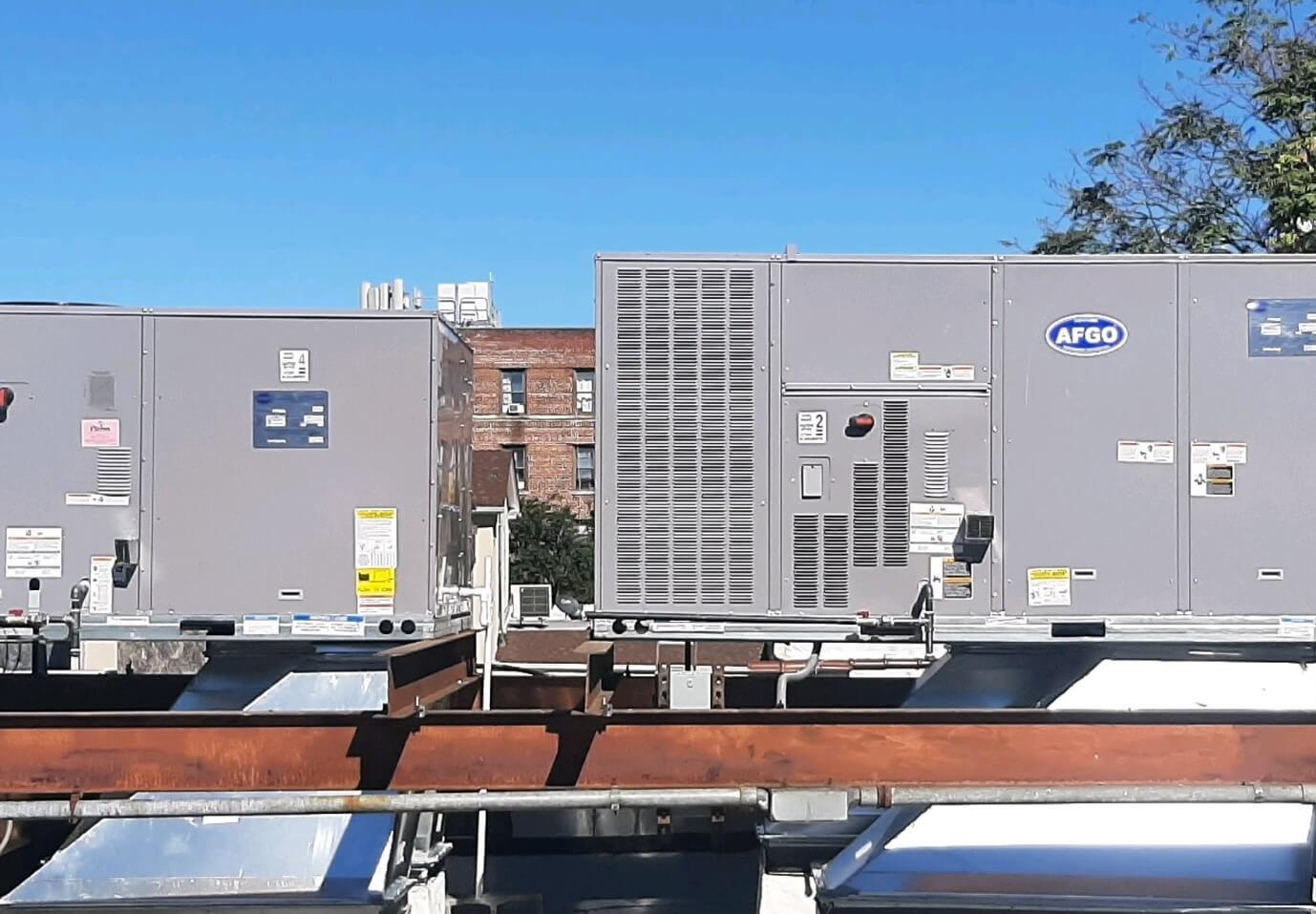
Restaurant roofing is a specialty within commercial roofing that most contractors treat as standard commercial work. It isn't. The exhaust systems on restaurant buildings - particularly the high-volume exhaust from commercial kitchen hoods on full-service restaurants and the lower-volume but continuous exhaust from brewery fermentation and serving areas - discharge grease-laden or humid air through roof penetrations that accelerate membrane degradation at rates significantly above what the surrounding field experiences. A standard TPO or modified bitumen membrane directly adjacent to a restaurant exhaust penetration has a materially shorter service life than the same membrane 30 feet away.
Charlotte's South End dining and brewery district - the restaurants, taprooms, and food halls that have developed along South Boulevard and the cross streets between Morehead and the Bland Street Lynx station - sits in buildings that were originally built as warehouse and light industrial facilities in the early and mid-20th century. The conversions that created South End's restaurant scene added commercial kitchens and brewery operations to buildings designed for manufacturing, and the roof systems on those buildings were not specified for restaurant exhaust loads. I have documented grease damage on South End restaurant building roofs where the membrane within 10 feet of an exhaust penetration has degraded to the point of membrane-surface failure while the field 30 feet away is in serviceable condition.
Plaza Midwood and NoDa - Charlotte's independent restaurant and bar districts along Central Avenue and North Davidson Street respectively - have a similar building profile to South End: converted early 20th-century brick commercial buildings with roof systems that range from original BUR to 1990s and 2000s modified bitumen to recent TPO recovers. The restaurant cluster in these neighborhoods creates a specific inspection pattern: high exhaust penetration counts, grease damage at exhaust perimeter zones, and parapet flashing conditions on old masonry walls that are often the biggest source of active leaks.
For portfolio owners, the goal is consistent documentation across properties, not a one-off opinion that cannot be compared later.
The first visit produces a practical roof record: current conditions, visible failure points, drainage notes, access concerns, and the repair or replacement path that fits the building.
Owners get a written scope that separates urgent water-control work from longer-term capital planning, so the roof decision is not made from guesswork.
The closeout package keeps the next decision clear with before photos, after photos, material notes, warranty coordination, and recommended maintenance timing.
For occupied buildings, staging, access, odor control, and tenant communication are part of the roof plan before crews arrive.
South End Brewery and Restaurant Corridor - Roof Conditions
South End's brewery taprooms and restaurant buildings along South Boulevard - Sycamore Brewing, NoDa Brewing's South End location, Protagonist Brewing, and the constellation of dining concepts in the former industrial buildings between Morehead and the light rail stations - are operating in buildings that were designed for textile, manufacturing, or warehouse use. The roof systems on these buildings are a patchwork of original construction, mid-century repairs, and modern recovers that reflect each building's ownership history.
The brewery operations in South End put a specific demand on roof penetrations that restaurant exhaust alone does not: grain dust and humidity from the fermentation and serving areas discharge through ventilation penetrations that are sized and detailed for industrial ventilation, not for the high-moisture environment of active fermentation. Condensation within ductwork that exits through roof penetrations can saturate the insulation in the immediate zone around the penetration over time, creating a wet insulation condition that is invisible from the membrane surface until the membrane itself fails.
I inspect brewery and restaurant roof penetrations with a moisture probe, not just a visual check. The insulation condition in the two-to-four foot zone around every exhaust and ventilation penetration tells me whether the membrane replacement I'm being asked to scope is the full extent of the problem, or whether there is a wet insulation zone beneath the surface that needs to be addressed simultaneously.
Grease Exhaust Compatibility - Membrane Selection for Restaurant Roofs
Standard TPO membrane is not grease-compatible. Cooking oil and grease from commercial kitchen exhaust dissolves the plasticizers in TPO formulations, causing the membrane to become brittle, discolor, and eventually crack in the exhaust zone. The standard fix - a TPO patch over grease-degraded TPO - fails at the patch edge within 18 months because the underlying membrane continues to degrade.
The correct specification for a restaurant roof exhaust zone is a grease-compatible membrane section - either PVC membrane, which is inherently grease-resistant, or a silicone coating system over the affected zone with an appropriate primer for the existing membrane. I spec PVC membrane in a contained zone around every commercial kitchen exhaust penetration on restaurant buildings - sized at minimum four feet from the exhaust collar in every direction, extended where grease residue or surface degradation extends beyond that perimeter.
The exhaust system design matters as well. Kitchen exhaust fans with proper grease traps and clean-out drains discharge significantly less grease vapor to the membrane than fans without them. When I inspect a restaurant roof with an active grease damage pattern, I note the exhaust equipment type in my inspection report and recommend that the building owner coordinate with a kitchen exhaust ventilation contractor on the fan specification - because replacing the membrane without addressing the source will produce the same failure in five years.
Plaza Midwood and NoDa - Independent Restaurant District Roofing
Plaza Midwood's Central Avenue restaurant and bar corridor and NoDa's North Davidson Street cluster are both housed in early-to-mid-20th-century brick commercial buildings. These buildings have the same characteristic masonry parapet condition I see on South End's older conversions: unreinforced masonry parapets with mortar joints that have opened with seasonal movement, counter-flashing that was re-termination-barred during a membrane recover in the 1990s or 2000s, and cap flashing that may be the original metal or a later PVC or aluminum replacement.
Restaurant tenant turnover in these districts is high relative to other commercial uses. When a new restaurant tenant takes a space in a Plaza Midwood or NoDa building, they typically add or reconfigure kitchen exhaust equipment - which means new penetrations cut through the existing roof membrane, flashed by whoever the HVAC contractor used, with no involvement from a roofing contractor. I have inspected NoDa restaurant buildings where the count of improperly flashed penetrations cut by non-roofing trades exceeds the count of properly flashed original penetrations. Each one is a potential entry point.
After-hours and early morning scheduling is standard for restaurant roofing in Plaza Midwood and NoDa. Most of the restaurants in these districts are closed Monday and Tuesday, and run reduced hours Wednesday through Thursday. I schedule the majority of production work in these windows, with the noisiest operations on Monday and Tuesday when the neighboring businesses are most likely to be closed. Active restaurants in the vicinity of a roofing project appreciate the consideration, and in a dense neighborhood dining district where buildings share walls, that consideration is visible.
My South End restaurant building has TPO around the kitchen exhaust fan that is cracked and discolored. What does the repair look like?
We cut out the degraded TPO section - typically the membrane within 4-6 feet of the exhaust collar - back to clean, undegraded membrane. The replacement section is PVC membrane, which is grease-compatible, welded to the existing TPO field with a compatible bonding adhesive and cover strip. The exhaust penetration gets a new PVC boot flashing. This repair holds where a TPO-patch-on-TPO repair does not.
Can you schedule restaurant roofing work around business hours in NoDa and Plaza Midwood?
Yes. We schedule production around each building's specific operating hours and coordinate with the restaurant operator on which days have the lightest reservation load. Most of our NoDa and Plaza Midwood production runs Monday through Wednesday to minimize impact on the Thursday-Sunday dinner and weekend brunch business. We also coordinate with neighboring businesses when production noise could affect their operations.
How do you handle a leak above an active restaurant dining room?
Emergency same-day response for active leaks above occupied restaurant space. We deploy a temporary tarp or spray-applied emergency sealant to stop the intrusion, document the failure cause with photographs, and produce a written repair scope within 24 hours. We do not leave an active leak above a restaurant dining room unaddressed - the health code and liability exposure for a restaurant operator with a roof leak above food preparation or service areas is not a situation that waits for a scheduled repair appointment.
Charlotte restaurant roof inspection or emergency repair?
Our project managers will walk the roof, document grease damage and exhaust penetration conditions, and produce a written scope with grease-compatible membrane specifications - for any restaurant building in South End, Plaza Midwood, NoDa, or across the Charlotte metro.
Request a Written Scope