

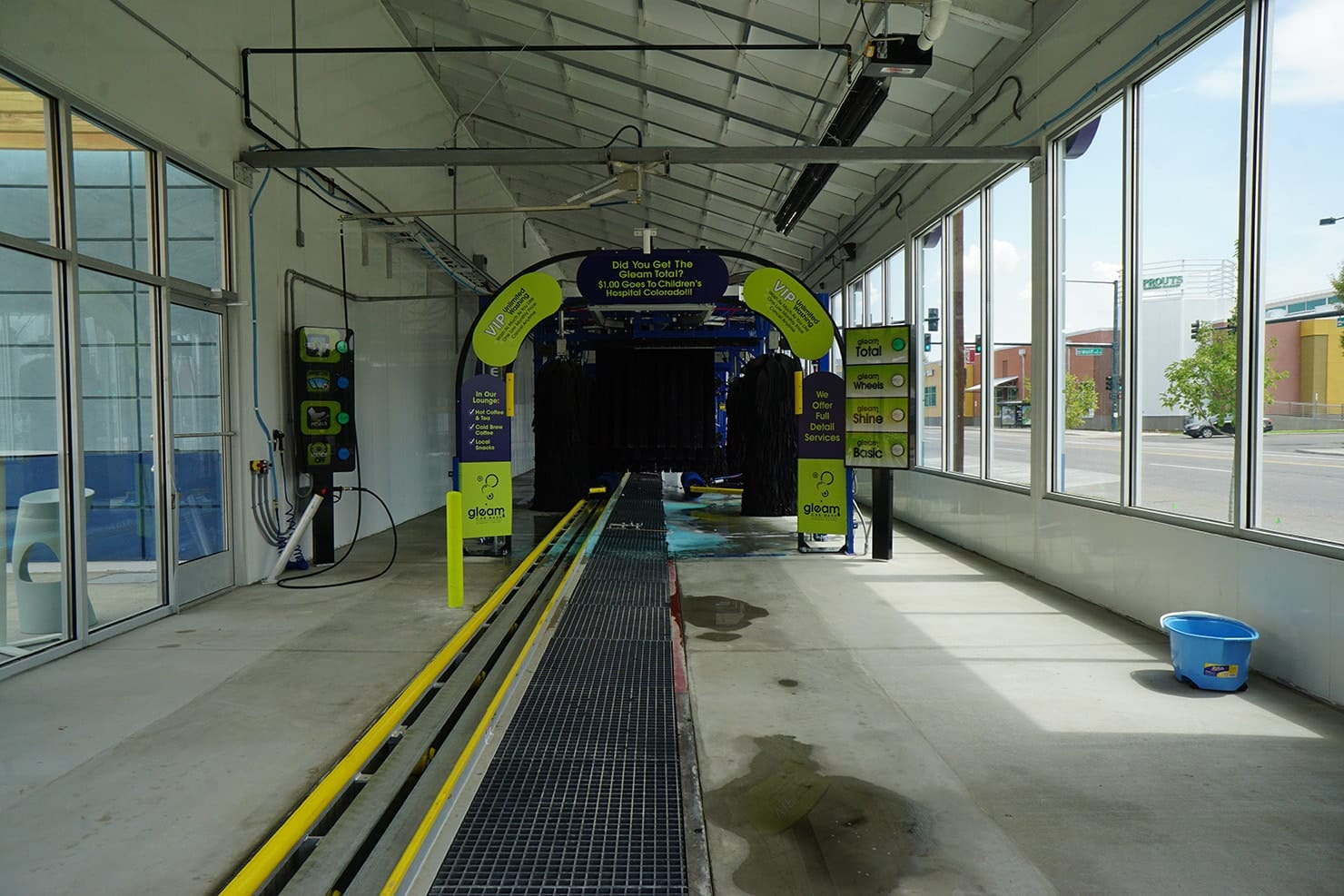
Car Wash Roofing
Charlotte car wash roofing built for chemical vapor, tunnel humidity, and canopy transitions - membrane and flashing specs that survive the wash environment.
Commercial Roofers Charlotte
Car Wash Roofing roof work is shaped by occupancy, access, drainage, tenant protection, and the warranty path that fits the building.
A car wash roof fails from the inside out, and that is the part most contractors miss. We build and service wash-facility roofs across Charlotte - from the express tunnels lined up along South Boulevard and Independence Boulevard to the in-bay automatics tucked into the retail pads near Pineville, Matthews, and the University City stretch off North Tryon. The traffic counts that make those corridors attractive to a wash operator are the same counts that keep the tunnel running open to close, and a roof over a busy tunnel takes a beating no standard commercial deck was specified to handle.
Property Type Car Wash Facility Roofing in Charlotte, NC A car wash roof fails from the inside out, and that is the part most contractors miss.
We build and service wash-facility roofs across Charlotte - from the express tunnels lined up along South Boulevard and Independence Boulevard to the in-bay automatics tucked into the retail pads near Pineville, Matthews, and the University City stretch off North Tryon.
The traffic counts that make those corridors attractive to a wash operator are the same counts that keep the tunnel running open to close, and a roof over a busy tunnel takes a beating no standard commercial deck was specified to handle.
Why a Wash Tunnel Roof Is Not a Normal Commercial Roof Inside an active wash tunnel the air sits at near-total saturation for most of the operating day.
It migrates up through the deck, condenses on the underside of the roof assembly, and attacks the structure from below: corroding the top flange of steel bar joists, rotting the deck, and backing fasteners out of a substrate that is slowly losing its grip.
Owners call us about a stain on the membrane and we find the real damage on the underside, where the fasteners are weeping rust and the deck has lost section.
That underside exposure is the single most important fact about car wash roofing, and it drives every decision we make.
A roof that looks fine from a drone photo can be structurally compromised at the deck.
Membrane and Fastener Selection for the Wash Environment We specify PVC over the tunnel and equipment rooms in most Charlotte wash projects.
On the tunnel section we lean toward fully adhered or fleece-back PVC so there is no fastener field carrying the membrane against the air pressure the blowers generate, and so we are not relying on a mechanical fastener seated in a deck that the vapor is actively corroding.
Equipment and chemical storage rooms: chemical-resistant membrane with sealed penetrations around dosing lines and supply conduit.
Why a Wash Tunnel Roof Is Not a Normal Commercial Roof
Inside an active wash tunnel the air sits at near-total saturation for most of the operating day. Hot water, blower wash, and the chemical menu - presoaks, high-pH detergents, hydrofluoric wheel cleaners, drying agents, and wax - all aerosolize and rise. That vapor does not stay in the tunnel. It migrates up through the deck, condenses on the underside of the roof assembly, and attacks the structure from below: corroding the top flange of steel bar joists, rotting the deck, and backing fasteners out of a substrate that is slowly losing its grip. Owners call us about a stain on the membrane and we find the real damage on the underside, where the fasteners are weeping rust and the deck has lost section.
That underside exposure is the single most important fact about car wash roofing, and it drives every decision we make. A roof that looks fine from a drone photo can be structurally compromised at the deck. We inspect from inside the tunnel as well as on top, and we treat the vapor drive as the primary load, not an afterthought.
Membrane and Fastener Selection for the Wash Environment
We specify PVC over the tunnel and equipment rooms in most Charlotte wash projects. PVC holds up to the alkaline detergents and surfactants far better than TPO or EPDM, both of which can stiffen, craze, or lose seam strength under sustained chemical exposure. On the tunnel section we lean toward fully adhered or fleece-back PVC so there is no fastener field carrying the membrane against the air pressure the blowers generate, and so we are not relying on a mechanical fastener seated in a deck that the vapor is actively corroding. Where the structure allows, we look at a non-penetrating attachment approach over the wettest zones so the assembly does not depend on the deck holding a screw for the next fifteen years.
Tunnel and blower bays: fully adhered or fleece-back PVC, oversized welded flashings, stainless fasteners and plates where any mechanical attachment is unavoidable.
Equipment and chemical storage rooms: chemical-resistant membrane with sealed penetrations around dosing lines and supply conduit.
Office, lobby, and pay-station areas: standard single-ply is acceptable since the vapor exposure drops off sharply outside the wash envelope.
Exhaust, Drying, and the Penetration Plan
Tunnels run large exhaust and drying-air equipment to pull moisture out, and those units sit on the roof moving wet, chemically loaded air through curbs all day. Standard curb flashing details do not last here. We oversize and reinforce every curb, detail the drying-blower penetrations for continuous airflow and condensation, and treat each one as its own assembly rather than a repeat detail copied across the roof. Ponding is the other recurring problem - a lot of bay roofs were framed dead-flat and never drained right, so water stands directly over the equipment that least tolerates a leak. We add tapered insulation to move water to the drains and scuppers and get it off the deck.
Vacuum Canopies and the Exit-Side Transition
Express sites in Charlotte almost always have a vacuum canopy on the exit side, and the canopy-to-building transition is the most common leak we get called for on these properties. The canopy sees tire-dressing overspray, vehicle exhaust, and outdoor thermal cycling, while the joint where it meets the main building moves under wind and traffic. We rework canopy membrane or panel, rebuild the transition flashing, and clean and re-pitch the canopy gutters and downspouts so the exit lane is not constantly wet.
Coatings and the In-Bay and Self-Serve Sites
Not every wash is a high-volume express tunnel. In-bay automatics and self-serve sites around Pineville and Matthews see far less chemical vapor than a full menu express, but they bring their own problems - open bay ceilings exposed to wind-driven rain, and flat bay roofs that pond. On those buildings a reinforced coating system can be the right answer where the membrane is still sound: it seals the seams and fasteners, adds a reflective surface, and buys years before a tear-off. We core and check the underside first, because a coating over a corroded deck only hides the problem. Where the structure is sound we will quote restoration honestly against full replacement instead of pushing the bigger job.
Working Around a Tunnel That Never Closes
Charlotte washes run seven days a week through the warm season, and an unlimited-club model depends on uptime. We sequence tunnel-roof work into the early-morning or after-close window, keep the equipment rooms protected and dry overnight, and run exterior building and canopy work during operating hours with traffic control that keeps cars clear of the crew. The site keeps washing; the roof gets replaced around it.
Common Questions From Charlotte Wash Operators
Can you re-roof while we stay open? Yes. We stage the tunnel for off-hours and handle the building and canopy during the day. We confirm a watertight dry-in before every open.
Why PVC instead of the TPO another bidder quoted? TPO is cheaper up front but is more vulnerable to the alkaline detergents and waxes in a wash program. In a tunnel that difference shows up as early seam and surface failure, and often as a denied warranty claim. PVC is the system that lasts in this environment.
The membrane looks fine - do we really need work? The membrane is not where wash roofs usually fail. We inspect the underside of the deck and the fasteners, because the vapor damage is structural and hidden. That inspection tells us whether you have a coating job or a tear-off.
Request a Written Scope