

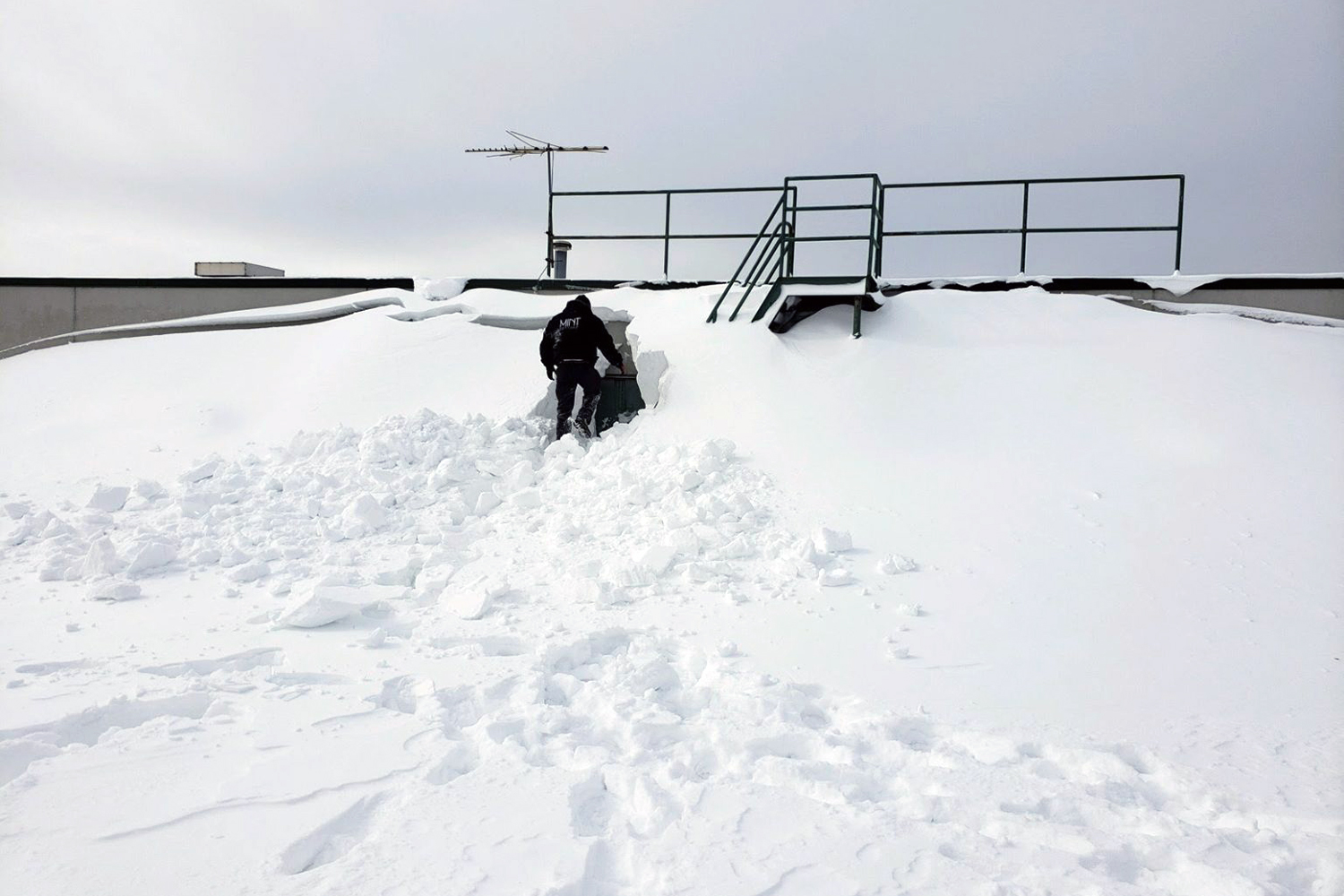
Ice Storm Damage Roof Repair
Commercial roof repair after Carolina ice storms in Charlotte - membrane damage from ice accumulation, structural overload assessment, and post-thaw leak diagnosis for Mecklenburg County flat roofs.
Commercial Roofers Charlotte
Charlotte's winter weather is dominated by ice rather than snow. Freezing rain events that deposit a half inch to one inch of glaze ice on commercial flat roofs produce structural loads that many buildings in the Piedmont were not designed to carry, and membrane damage that does not appear until the spring thaw.
Charlotte sits at the meteorological boundary between the rain and snow patterns that affect the Carolinas in winter. Cold air damming against the Appalachians to the west and warm Gulf air moisture from the south create the winter freezing-rain pattern that has made Charlotte notorious for ice-related infrastructure events. The winter ice events of 2002, 2014, and 2022 - each producing over half an inch of glaze ice accumulation across Mecklenburg County - shut down the city not because of snow depth but because of ice weight and the loss of traction on the region's heavily graded road system.
Ice on a commercial flat roof weighs approximately 57 pounds per cubic foot - substantially more than the 30-pound-per-square-foot live load design that most commercial flat roofs in Charlotte are built to. A half-inch glaze ice layer weighs approximately 2.4 pounds per square foot. A one-inch ice layer is 4.8 pounds. These loads are within the structural design envelope for most Piedmont commercial buildings, but they are additive to any other load on the roof at the time - rooftop equipment weight, existing drainage water trapped by frozen drains, and any snow that preceded or followed the ice event. Buildings in Charlotte's older commercial corridors with steel deck that has been partially compromised by underlying wet insulation corrosion are at higher structural risk during significant ice events than a building inspection focused only on the membrane surface would reveal.
The membrane damage from ice events on Charlotte commercial roofs is not always visible until the spring thaw. Ice contraction during freeze and expansion during thaw cycles stress membrane seams differently than summer thermal cycling. On a TPO or EPDM membrane where the seams were installed at the low end of the acceptable weld quality range, freeze-thaw cycling can open seam edges that were not visibly deficient before the winter. Those seam openings produce the spring-thaw roof leaks that are a recurring call pattern for Charlotte commercial buildings every year from late February through April.
For portfolio owners, the goal is consistent documentation across properties, not a one-off opinion that cannot be compared later.
The first visit produces a practical roof record: current conditions, visible failure points, drainage notes, access concerns, and the repair or replacement path that fits the building.
Owners get a written scope that separates urgent water-control work from longer-term capital planning, so the roof decision is not made from guesswork.
The closeout package keeps the next decision clear with before photos, after photos, material notes, warranty coordination, and recommended maintenance timing.
For occupied buildings, staging, access, odor control, and tenant communication are part of the roof plan before crews arrive.
Structural Risk During Charlotte Ice Events
Commercial flat roof structural design for snow and ice in Mecklenburg County follows ASCE 7-22 Chapter 7, which specifies a ground snow load of 15 pounds per square foot for the Charlotte area - one of the lowest in the eastern United States, reflecting the rarity of significant snow accumulation in the Piedmont. Ice accumulation is addressed separately under the glazed ice provisions, and the combined load - ice plus any rain-on-ice, plus the ice's inhibition of drainage during the event - is what creates structural risk on flat roofs that were designed to the minimum code load.
Buildings that have accumulated partially saturated insulation over years of minor leak events are at elevated risk during ice events because the standing water trapped in the insulation adds dead load to the roof assembly before the ice event even begins. A building with 20 to 30 pounds per square foot of wet insulation dead load, combined with a Charlotte ice event that produces another 4 to 5 pounds per square foot of ice accumulation, is approaching the design live load capacity of the structural framing. During my post-ice-event inspections, I look specifically for signs of structural deck deflection - bay-level deflection visible in the standing-seam geometry of the deck, or surface deflection that follows the structural bay grid - as a leading indicator of overload stress.
Charlotte's commercial buildings in the North Tryon corridor, the older Independence Boulevard commercial zone, and the Eastland area have the oldest steel deck inventory in the metro. These buildings are most likely to have combined insulation moisture dead load with structural deck age, making them the highest-priority buildings for post-major-ice-event structural assessment.
Frozen Drains and Backed-Up Drainage During Ice Events
One of Charlotte's most consistent ice-event roof damage patterns is the frozen primary drain. When freezing rain accumulates on a commercial flat roof, the primary drain inlet freezes before the ice accumulation has time to flow to the drain. The roof then accumulates ice without drainage - each subsequent ice deposition adds to the load without any relief through the drain system. The secondary drain, if it is also frozen or if it is interior-routed through warm attic space, may not be frozen - but at that point the primary drainage is already overwhelmed.
I assess drain freeze risk as part of every winter inspection on Charlotte commercial buildings. Drains that are interior-cored through the deck into heated interior space are relatively freeze-resistant - the warm air rises through the drain body and prevents inlet freeze. Drains that are surface-mounted with scupper-style overflows at the parapet, and scuppers that face north or northeast, are more vulnerable to freeze during Charlotte's characteristic north-to-northeast cold air damming events. Buildings with roof drain heating systems - heat-trace cables installed in the drain body and strainer - are the most protected, but those systems require annual verification that the heat trace is operational before the first freeze event.
Post-Thaw Membrane and Seam Inspection
The spring roof inspection is Charlotte's most important annual maintenance event for buildings that experienced ice accumulation. Freeze-thaw membrane stress on TPO and EPDM seams is cumulative - seams that were borderline in weld quality open incrementally over successive winter cycles. A seam that survived three winters without leaking may open in the fourth winter ice event and produce a March or April leak that appears to be a new failure but is actually the culmination of years of progressive seam fatigue.
My post-winter seam inspection on Charlotte commercial buildings uses a 5-pound pull-probe test on every seam in the field - not a sample. Seams that deflect under probe pressure or that show edge separation are flagged for heat-weld repair before the spring thunderstorm season begins. Conducting this inspection in late February or March - after the last significant freeze but before the first heavy spring rainfall event - is the window that catches the freeze-induced seam damage before it becomes an active leak.
My Charlotte commercial building had ice accumulation during a winter storm. When should I get the roof inspected?
As soon as safely accessible after the thaw - typically within one to two weeks of the ice clearing from the roof surface. The inspection window between thaw and the first spring thunderstorm is the diagnostic period for freeze-induced seam damage. Waiting until the first spring leak appears adds interior damage to what was a roof-only issue.
Do need heated drains for ice events?
Not all of them. The buildings at highest risk for drain freeze are those with surface-mounted scupper drains facing north or northeast, or roof drains without a heated interior run through the deck. Interior-cored drains that terminate in heated building space are usually adequate without supplemental heat trace. For buildings that have a recurring drain freeze history - confirmed by post-thaw inspection showing ice rings at the drain strainer - heat trace installation is the cost-effective solution. I assess drain freeze risk as part of annual pre-winter inspections.
How is Carolina ice storm damage different from snow damage for insurance purposes?
Ice accumulation is typically covered under the same winter storm provision as snow in commercial property policies. The documentation difference is in the weight calculation - a half-inch ice event produces documented load that I can quantify against the building's design live load. Structural deflection evidence from an ice overload event is captured in post-thaw photographs while the deflection marks are still visible. Snow load documentation relies on depth measurements and density estimates; ice load documentation can be more precise because glaze ice weight per inch of accumulation is a known constant.
Ice storm damage inspection for your Charlotte commercial building?
My project managers assess structural load evidence, inspect every seam with a probe test post-thaw, and document ice-related damage for insurance carriers - for any commercial building in Mecklenburg County.
Request a Written Scope