

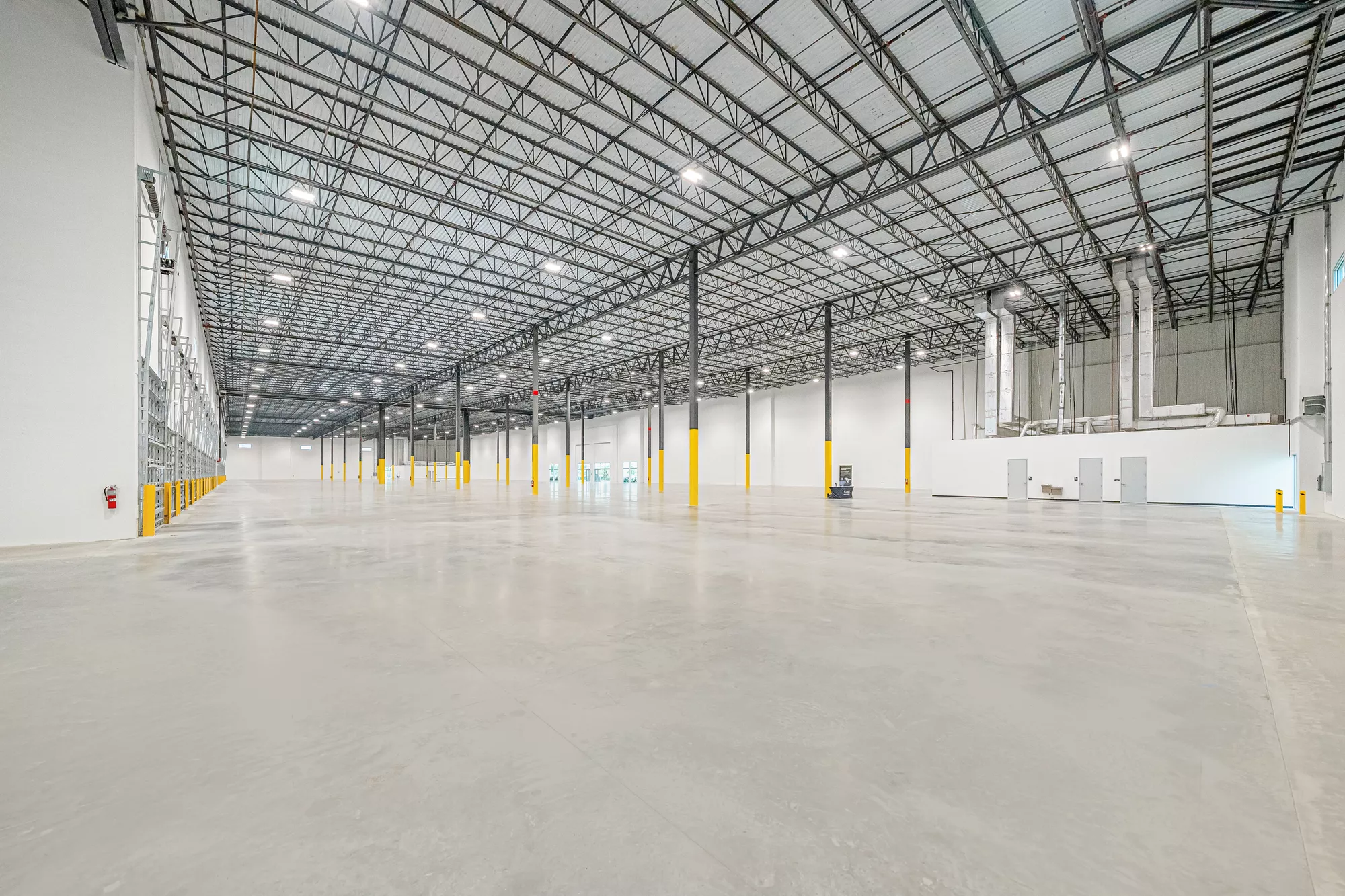
Logistics & Distribution Roofing
Commercial roofing for Charlotte Douglas International Airport cargo facilities, Norfolk Southern rail yards, and Westinghouse Blvd distribution centers across the CLT logistics corridor.
Commercial Roofers Charlotte
Logistics & Distribution Roofing roof work has to respect operations, access limits, safety requirements, and the record owners need after the work is complete.
Charlotte Douglas International Airport is American Airlines' second-largest hub. The cargo buildings, freight facilities, and ground support operations surrounding it - combined with the Norfolk Southern rail yard and the Westinghouse Blvd distribution corridor - make Charlotte one of the Southeast's most active logistics markets. The buildings serving that market run around the clock and cannot stop for a roofing contractor.
Charlotte Douglas International Airport (CLT) handled more than 55 million passengers in 2023 and processes cargo volumes that keep American Airlines' cargo hub, FedEx Ground, and a dense cluster of freight forwarders and logistics operators active through every overnight shift. The commercial roofing inventory along Josh Birmingham Parkway, Doby's Bridge Road, and the cargo facility loop on the airport's south side represents a specific category of work: large-footprint low-slope structures, continuous multi-shift operations, and facility managers who measure downtime in freight-cost terms, not inconvenience terms.
Norfolk Southern's Charlotte rail yard, located west of Uptown along the Camp Greene corridor, anchors the region's intermodal freight infrastructure. The maintenance shops, locomotive facilities, and freight handling buildings along the rail yard carry roofing systems that see heavier than average thermal cycling, vibration from rolling stock, and the environmental exposure of an active rail environment. These are not standard office building roofing conditions, and they require a contractor who has scoped logistics facilities before and knows what the differences mean.
The Westinghouse Blvd distribution corridor in southwest Charlotte - and its extension south into Steele Creek and Berewick - is one of the fastest-growing industrial real estate zones in the Southeast. Amazon, XPO Logistics, and regional distribution operators have built or leased facilities in this corridor over the past decade. Most of the large-footprint buildings from the 2010s and early 2020s are running first-generation TPO systems approaching the maintenance cycle that determines whether they extend their warranty or accelerate toward replacement. Our project managers have assessed roofing conditions on multiple distribution buildings in this corridor.
For occupied buildings, staging, access, odor control, and tenant communication are part of the roof plan before crews arrive.
For portfolio owners, the goal is consistent documentation across properties, not a one-off opinion that cannot be compared later.
The first visit produces a practical roof record: current conditions, visible failure points, drainage notes, access concerns, and the repair or replacement path that fits the building.
Owners get a written scope that separates urgent water-control work from longer-term capital planning, so the roof decision is not made from guesswork.
The closeout package keeps the next decision clear with before photos, after photos, material notes, warranty coordination, and recommended maintenance timing.
CLT Airport Cargo Facility Roofing - Access and Coordination
American Airlines' cargo operations at CLT occupy facilities on the airport's cargo side that require airport badging for contractor access. The Charlotte Douglas International Airport Badging Office manages contractor credentialing - the process runs three to six weeks for full crew clearance and has to be built into the pre-construction timeline as a critical path item. We initiate the badging process as part of pre-construction and do not estimate a mobilization date without confirming the credentialing timeline with the airport authority.
FAA Part 77 obstruction standards apply to crane operations near the airport's runway approach corridors. Crane positioning for material lift on cargo side buildings requires FAA aeronautical study coordination and, in some cases, NOTAM issuance before the crane is erected. We file the required FAA notifications as part of pre-construction on all airport-perimeter projects and coordinate crane positioning with the airport authority's Engineering and Construction department.
The cargo building roofs at CLT include a mix of older EPDM systems from the 1990s buildout and newer TPO systems installed during the airport's cargo infrastructure expansion in the 2000s and 2010s. Many of the EPDM roofs are running original 60-mil systems that have reached or exceeded their designed service life. Full replacement is typically the right scope for these - silicone restoration coating extends systems that are still structurally sound, but EPDM that has hardened and lost elongation cannot benefit from topcoat application and will fail at the seams regardless of the coating mil thickness.
Westinghouse Blvd Corridor - Distribution Center Roofing
Large-footprint distribution centers in the Westinghouse Blvd and Steele Creek corridor typically run 500,000 to 1,500,000 square feet of clear-span low-slope roofing on metal deck. The roofing systems on these buildings were specified to meet building permit requirements and owner-mandated warranty terms at the time of construction - sometimes to the minimum specification, which means the system performs adequately for the first 10 years and then begins to show heat-seam failures, lap separations, and penetration flashing stress as the membrane ages and the building's thermal movement accumulates.
Sequenced tear-off and dry-in is the non-negotiable production method for occupied distribution centers. A 1,000,000 sq ft warehouse that is running daily receiving and shipping operations cannot have 200,000 square feet of roof open to the sky at once. We tear off in 10,000 to 25,000 sq ft sections, dry-in each section before end of shift, and coordinate daily production limits with the facility manager against inventory movement schedules. If a receiving push or shipping surge is planned for a specific week, we schedule around it - because a material exposure event during a major inventory push creates liability that neither party wants.
Dock door and loading bay areas on distribution centers require specific flashing attention during reroof projects. The parapets and curb flashings at dock door penetrations, the expansion joints across large-bay clear-span structures, and the HVAC make-up air unit curbs that service massive floor-level air distribution systems all represent higher-risk flashing locations than open field membrane. We scope these locations as individual work items and do not assume that standard field detailing applies to a 48-door distribution center's dock wall interface.
Norfolk Southern Rail Yard Maintenance Facilities
Locomotive maintenance shops and freight handling buildings on the Norfolk Southern Charlotte yard operate in a thermal and vibration environment that accelerates roofing system degradation faster than standard commercial construction. Heavy steel structural frames with standing seam or R-panel metal roofing are common on the older yard buildings - many of these systems are running significant rust progression at laps and fastener points. Low-slope sections over administrative areas and parts rooms carry BUR or modified bitumen systems that are often 30 to 40 years old.
Metal roof restoration on rail yard maintenance buildings typically involves rust treatment at visible corrosion, re-fastening at loose panel laps, seam sealing with urethane caulk, and topcoat application with elastomeric or silicone coating. This is cost-effective on metal systems that are structurally sound but showing surface degradation - it avoids the disruption and cost of full metal roof replacement when the underlying structure is still in acceptable condition. We assess the structural condition before recommending restoration versus replacement.
Can you work on CLT airport cargo buildings that require airport badging?
Yes. We initiate the Charlotte Douglas International Airport badging process in pre-construction and build the credentialing timeline into the production schedule. Every crew member working on airside or cargo-side facilities is badged before mobilization. We do not guess at the timeline - we confirm with the Badging Office and build that date into the contract.
How do you handle production on an occupied distribution center that cannot stop operations?
Sequenced tear-off with same-day dry-in on each section is the baseline. Section size is agreed with the facility manager based on their operational calendar - we do not set section size unilaterally. If a receiving push or shipping surge is scheduled, we build that into the production calendar before mobilization, not after it becomes a conflict on-site.
What roofing options make sense for a large Westinghouse Blvd distribution center?
For an occupied distribution center with an aging first-generation TPO system, the decision is recover, restore, or replace - and it depends on moisture core readings and seam inspection results. A system with under 20% insulation saturation and intact seams is a candidate for silicone fluid-applied restoration with a 10 to 15-year manufacturer warranty. A system with widespread seam failures or significant insulation saturation needs replacement.
Do you work on metal roof buildings at rail yard and freight facilities?
Yes. Metal roof restoration - rust treatment, re-fastening, seam sealing, and elastomeric or silicone coating - is a cost-effective option for metal systems that are structurally sound but showing surface degradation. We assess structural condition first before recommending restoration versus panel replacement.
Roofing scope for a Charlotte logistics or distribution facility?
Our project managers understand the access requirements, production sequencing constraints, and roofing system conditions at CLT airport cargo facilities, Norfolk Southern rail infrastructure, and the Westinghouse Blvd distribution corridor.
Request a Written Scope