

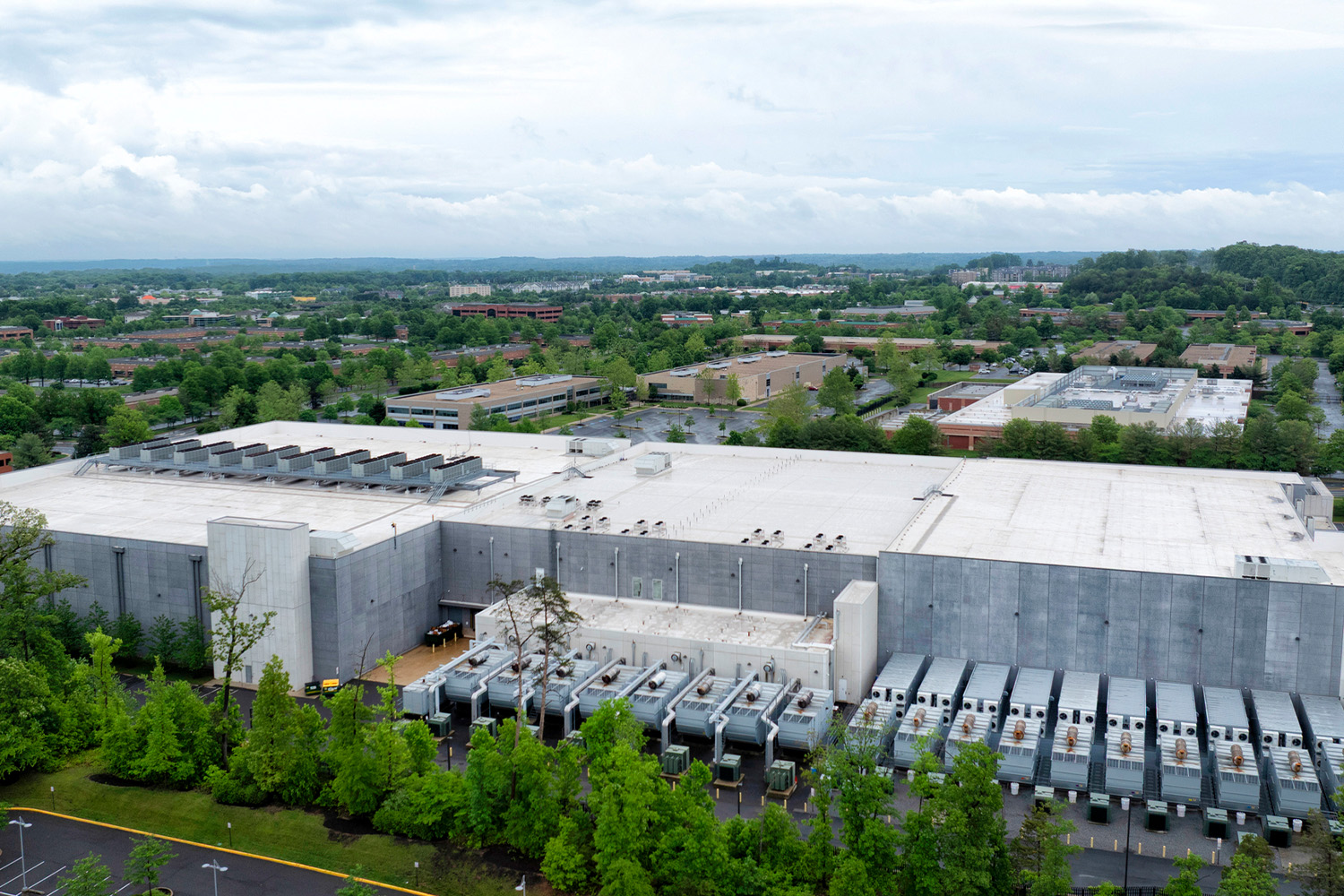
Data Center Roofing
Data center roofing for colocation facilities, server rooms, and mission-critical buildings throughout Charlotte, NC.
Commercial Roofers Charlotte
Data Center Roofing roof work has to respect operations, access limits, safety requirements, and the record owners need after the work is complete.
Charlotte, North Carolina has built one of the most concentrated data center markets in the southeastern United States, driven by the city's position as the second-largest banking center in the country, its growing technology sector, and the strategic importance of its fiber network crossroads. The Metro Park West corridor along Interstate 485 and the communities of Concord and Kannapolis to the north have attracted major colocation operators including QTS Realty Trust, CyrusOne, and Flexential, each operating large campuses that collectively represent hundreds of megawatts of critical IT load. This density of mission-critical infrastructure has made Charlotte one of the most active markets in the Southeast for specialized data center roofing services.
The QTS Charlotte campus and nearby CyrusOne facilities along the Metro Park West data center corridor exemplify the scale of roofing complexity that defines hyperscale and enterprise colocation projects. A single large campus may encompass multiple buildings totaling 300,000 to 500,000 square feet of roof area, each section featuring dozens of CRAC and CRAH unit roof penetrations, emergency generator exhaust stacks, rooftop transformers, and complex cable management systems. Maintaining watertight integrity across this surface area - while accommodating ongoing construction phases and equipment additions - requires systematic quality assurance that exceeds the standards applied to ordinary commercial roofing work.
Charlotte's position in the Piedmont region creates a weather profile that data center roofing systems must be engineered to handle across a wide range of conditions. The city receives approximately 44 inches of rainfall annually, with significant convective storm activity from late spring through summer. Ice storm events, which occur roughly every three to five years, can deposit significant ice loads on rooftop mechanical equipment and membranes. The combination of summer heat - Charlotte averages 18 days above 95F - and periodic winter ice events means that membrane selection and insulation design must account for both heat gain management and freeze-thaw cycling at penetrations and flashings.
Generator exhaust flashing is a particularly demanding detail at Charlotte's large data center campuses. Enterprise facilities typically deploy generator arrays rated at 10 to 40 megawatts of backup capacity, with individual units exhausting at temperatures that can exceed 1,000F at the stack. Standard roof flashings are entirely inadequate at these temperatures. The correct specification involves high-temperature pipe insulation, stainless steel flashing collars with proper clearance from the membrane, and careful sequencing of the exhaust stack installation relative to the roofing work to ensure that final flashing is installed without compromising the insulation layers below.
Owners get a written scope that separates urgent water-control work from longer-term capital planning, so the roof decision is not made from guesswork.
The closeout package keeps the next decision clear with before photos, after photos, material notes, warranty coordination, and recommended maintenance timing.
For occupied buildings, staging, access, odor control, and tenant communication are part of the roof plan before crews arrive.
For portfolio owners, the goal is consistent documentation across properties, not a one-off opinion that cannot be compared later.
The first visit produces a practical roof record: current conditions, visible failure points, drainage notes, access concerns, and the repair or replacement path that fits the building.
Frequently Asked Questions: Data Center Roofing
What roofing membrane is most commonly specified for new data center construction in Charlotte? TPO (thermoplastic polyolefin) is the dominant specification for new Charlotte data center construction. Its reflective white surface reduces cooling loads, its heat-welded seams provide superior long-term waterproofing, and its resistance to UV and ozone exposure suits the Piedmont climate well. PVC is specified on a project-specific basis where chemical exposure is a documented concern.
How are emergency generator exhaust stacks properly flashed on a Charlotte data center roof? High-temperature exhaust stacks require stainless steel flashing collars with high-temp pipe insulation, maintaining minimum clearance distances from combustible roofing materials. Standard EPDM or TPO boot flashings are not appropriate for direct contact with exhaust stacks. The installation sequence matters - flashing should be completed after final stack positioning to ensure the assembly is watertight without compressing the insulation below.
How often should a Charlotte data center roof be inspected? Mission-critical facilities should receive at minimum two inspections per year - spring and fall - plus additional inspection after any significant weather event, including thunderstorms with hail and ice storm episodes. Annual thermographic scanning is strongly recommended to detect subsurface moisture accumulation that is not visible from the surface.
What are the wind uplift requirements for data center roofing in Charlotte? Charlotte falls in ASCE 7 Wind Zone II, with design wind speeds that require careful attention to edge metal securement, corner and perimeter uplift zones, and fastener patterns for insulation boards. Data center buildings, which often feature low-slope or flat roofs with large unobstructed field areas, are particularly susceptible to edge peeling during high-wind events if perimeter details are undersized.
Can you work on UNC Charlotte campus buildings during the academic year?
Yes. Academic-year production requires coordination with the university's facilities department on access windows and noise constraints relative to class schedules and exam periods. We build those constraints into the production plan before mobilization. Summer session is the preferred window for large-scale projects - we recommend reserving summer availability early, as the university's facilities calendar books out 12 to 18 months in advance for major projects.
Are you familiar with the CMS bond program procurement process for school roofing?
Yes. CMS roofing procurement follows North Carolina public contracting requirements - we maintain the required licensing, bonding, and insurance documentation and have completed the prequalification process for CMS projects. Our project managers understand the district's documentation requirements and the interface with the district's facilities department and individual school principals.
Can you repair slate or clay tile roofing on Davidson College historic buildings?
Yes. Historic roofing restoration - slate repair with matched quarry sourcing, clay tile unit replacement, and copper flashing restoration - is a separate discipline from standard commercial flat-roof work. We staff historic restoration work with crew who have experience on comparable materials and do not attempt to apply flat-roof production methods to historic sloped-roof systems.
What documentation do you provide at closeout for a university or school district project?
Manufacturer warranty document, photo-keyed zone diagram with all penetrations logged, maintenance contract terms, and a written record of all materials and systems installed. For public school and university projects, we also provide the project-specific documentation the owner's facilities department requires for their capital asset management records.
Roofing scope for a Charlotte-area university, college, or school district building?
Our project managers understand academic calendar scheduling, public procurement documentation, and the roofing system conditions at UNC Charlotte, CMS bond program schools, and the Charlotte-area private college campuses.
Request a Written Scope