

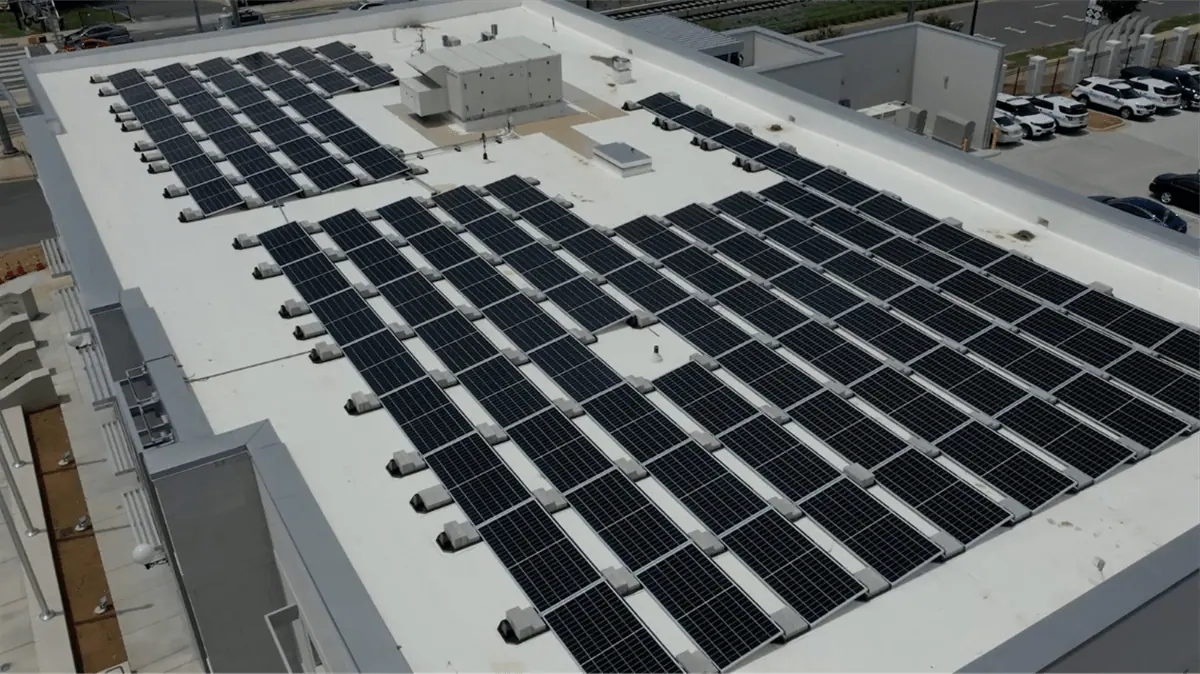
Government Facility Roofing
Commercial roofing for City of Charlotte, Mecklenburg County, and federal facilities including the Charles R. Jonas Federal Building across the Charlotte metro.
Commercial Roofers Charlotte
Government Facility Roofing roof work has to respect operations, access limits, safety requirements, and the record owners need after the work is complete.
City of Charlotte, Mecklenburg County, and federal agencies including the General Services Administration manage building inventories across the Charlotte metro that are maintained through formal public procurement processes. Government facility roofing requires public contracting compliance, documented closeout packages, and the kind of transparent scope documentation that public owners and their auditors can trace from bid through warranty.
The Charles R. Jonas Federal Building and U.S. Courthouse at 401 W Trade St in Uptown Charlotte is one of the most significant federal facilities in the region. The General Services Administration manages the building through its Public Buildings Service facility management function, which applies GSA contractor qualification requirements and federal procurement rules that differ from local government procurement. Federal buildings also carry the security and access control requirements that GSA and the federal tenants - U.S. District Court for the Western District of North Carolina, federal agencies - impose on contractors working in the facility. Charlotte also hosts CMPD headquarters, the Mecklenburg County Sheriff's office complex, and federal law enforcement facilities that operate under similar access control protocols.
Public roofing procurement in North Carolina requires specific documentation: current General Contractor license in the appropriate classification and tier, performance and payment bonding at the statutorily required level, certificate of insurance meeting the public owner's requirements, and - for local government projects - e-verify compliance documentation for every crew member on the project. Our project managers maintain current documentation in all of these categories and are familiar with the specific submission requirements for City of Charlotte, Mecklenburg County, and GSA procurements.
For occupied buildings, staging, access, odor control, and tenant communication are part of the roof plan before crews arrive.
For portfolio owners, the goal is consistent documentation across properties, not a one-off opinion that cannot be compared later.
The first visit produces a practical roof record: current conditions, visible failure points, drainage notes, access concerns, and the repair or replacement path that fits the building.
Owners get a written scope that separates urgent water-control work from longer-term capital planning, so the roof decision is not made from guesswork.
The closeout package keeps the next decision clear with before photos, after photos, material notes, warranty coordination, and recommended maintenance timing.
City of Charlotte Facility Procurement and Project Management
The City of Charlotte's General Services Department manages the city's building portfolio and procures roofing services through Charlotte-Mecklenburg Procurement's formal solicitation process for projects above the informal threshold. Informal procurements - typically for repair and maintenance work below the formal threshold - go through the city's vendor registration system and require current vendor credentials on file with Charlotte-Mecklenburg Procurement.
City of Charlotte fire stations present a specific scheduling challenge: every fire station is continuously occupied and operationally active, 24 hours a day, 365 days a year. Access for roofing production has to be coordinated with the fire station's battalion chief and the Charlotte Fire Department's facilities manager - not just the general services project manager - to ensure that apparatus bay access, personnel areas, and emergency response capability are not compromised by roofing equipment staging, material placement, or crew activity. We build that three-way coordination into the pre-construction plan for every fire station project.
Charlotte recreation centers and community centers under the Parks and Recreation Department operate programming schedules that create partial-occupancy windows for roofing production. Summer day camp programs run through most of July and August - the same window that would otherwise be ideal for occupied-building roofing. We coordinate production windows with the facility's program director and the Parks and Recreation facilities contact to find the access windows that avoid interrupting active programming.
Mecklenburg County Courthouse and Government Complex
The Mecklenburg County courthouse complex on McDowell St in Uptown includes the main courthouse, the District and Superior Court facilities, and the county administration buildings. Security protocols at courthouse facilities restrict contractor access - crew members must pass through security screening at building access points, tools and materials must be inspected, and unescorted access to restricted court areas is not permitted. We build the security screening time into the daily production schedule and do not plan production quantities that require crew to rush through the security process.
The county's library system operates 20 branches across Mecklenburg County, most in buildings from the 1990s and 2000s construction cycle that are now entering their first or second reroof phase. Library buildings are generally good candidates for planned maintenance work during operating hours, as the noise and exterior staging impact on library patrons is lower than on a hospital or occupied office building. The county library facilities team manages the maintenance schedule for the branch inventory and benefits from a contractor who can present multi-building assessment data organized against the capital budget cycle rather than individual emergency repair bids.
The Mecklenburg County jail complex on McDowell St operates 24 hours a day with secure perimeter requirements that govern contractor access at every stage of a roofing project. The Mecklenburg County Sheriff's Office facility management team coordinates contractor access through its own credentialing process - background checks, visitor badging, and escort requirements inside the secure perimeter. We initiate that credentialing process in pre-construction and build the timeline into the mobilization schedule.
Federal Building Roofing - GSA and Security Requirements
Security clearance for contractor personnel working on federal buildings is managed by the Federal Protective Service and the GSA building management office. The process and lead time for FPS contractor credentialing at federal courthouses and law enforcement-occupied buildings is longer than for standard commercial credentialing - typically four to eight weeks for full crew clearance. We initiate the FPS credentialing process as early in pre-construction as the project timeline allows and do not estimate a mobilization date without confirming the clearance timeline with the GSA building manager.
Federal buildings carry the same closeout documentation standards as any GSA facility: manufacturer warranty documents, warranty inspection records, as-built roof drawings with all penetrations logged, and Davis-Bacon certified payroll records for the duration of the project. These are not optional at federal project closeout - the GSA contracting officer's acceptance of the project is contingent on complete closeout documentation.
Are you registered with Charlotte-Mecklenburg Procurement and SAM.gov for public projects?
Yes. We maintain current vendor registration with Charlotte-Mecklenburg Procurement, SAM.gov registration for federal work, and the required General Contractor license and bonding documentation for North Carolina public projects. Our insurance certificates are maintained at the coverage levels required by both local and federal government contracts.
Can you work on an occupied Charlotte fire station without affecting emergency response?
Yes. Fire station roofing requires three-way coordination: city General Services, the battalion chief at that specific station, and Charlotte Fire Department facilities management. Apparatus bay access is never blocked - ever. Crew and equipment staging is located away from the apparatus apron and access routes. We do not start production at a fire station without confirmed approval from all three parties.
How do you handle Davis-Bacon prevailing wage requirements on federal projects?
We maintain certified payroll records for all crew members on federal projects, file certified payroll reports on the schedule the GSA contracting officer requires, and train our foremen on Davis-Bacon classification requirements before mobilization on any federal project. Davis-Bacon compliance documentation is part of the closeout package we deliver to the contracting officer.
What is the process for FPS security clearance for the Jonas Federal Building?
The Federal Protective Service clearance process for contractor personnel working at federal courthouses and law enforcement-occupied buildings runs four to eight weeks from application submission to approved badge issuance. We initiate the FPS process as early in pre-construction as possible and build the clearance timeline into the project schedule - not as a contingency, but as a critical path item.
Roofing scope for a City of Charlotte, Mecklenburg County, or federal facility?
Our project managers maintain current procurement registration, licensing, and bonding documentation for City of Charlotte, Mecklenburg County, and GSA facility projects.
Request a Written Scope