

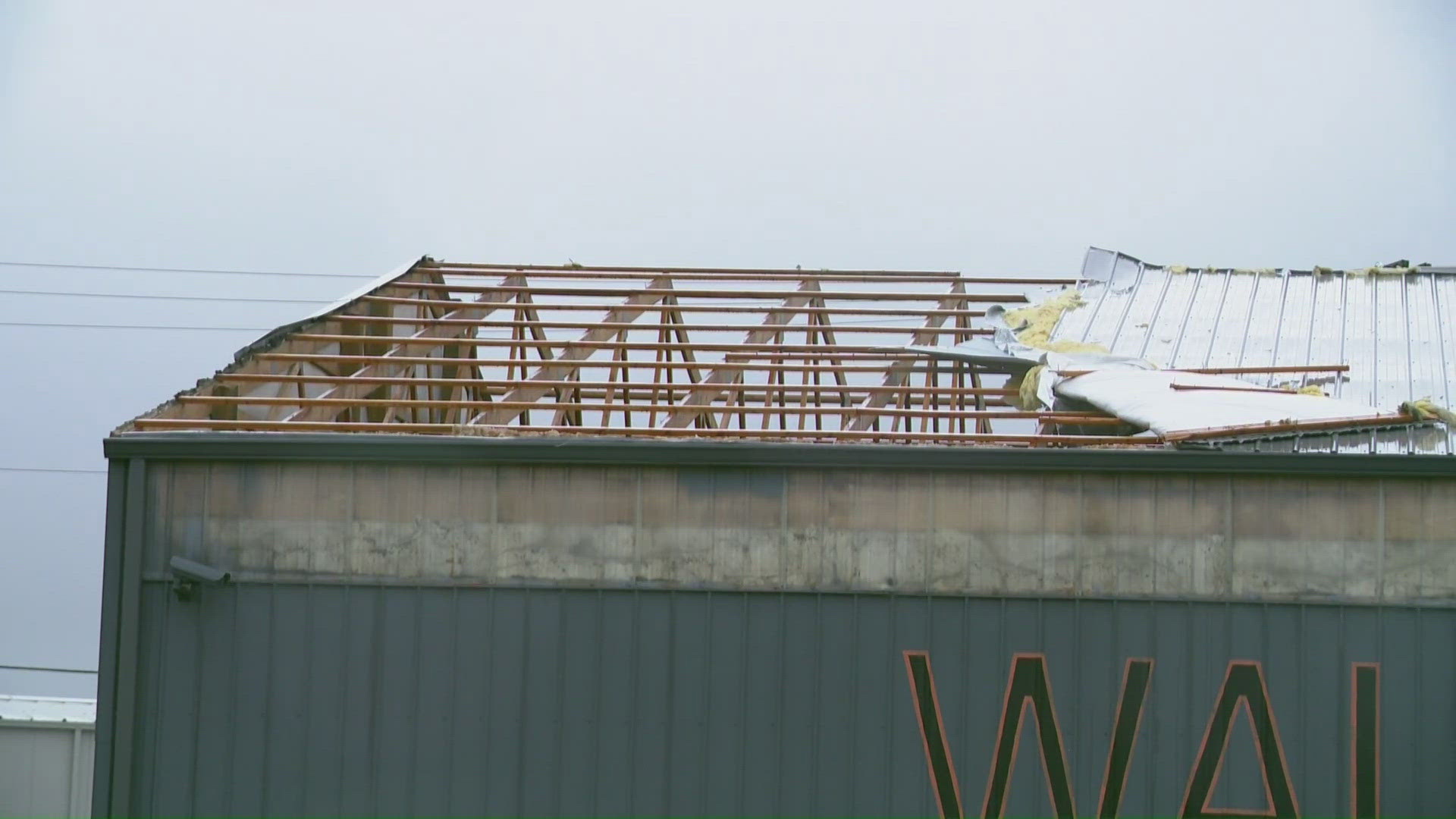
Tornado Damage Roof Repair
Emergency commercial roof repair after tornado events in Charlotte - structural triage, emergency dry-in, documented scope for insurance carriers on Mecklenburg County and surrounding county buildings.
Commercial Roofers Charlotte
Charlotte sits in the Southeast's secondary tornado corridor. The March 2007 outbreak that put tornadoes on the ground across the metro, and subsequent spring events in 2011 and 2016 in adjacent counties, establish that tornado damage to commercial roofs in this market is a real and recurring risk.
Tornado damage on a commercial building is a different category of event from hurricane or straight-line wind damage. EF1 and EF2 tornadoes - the most common intensities that affect the Charlotte metro and its surrounding counties - produce localized damage paths with extreme wind-speed variability over short distances. A building that takes a direct path hit from an EF2 event can lose sections of roof deck, roof-mounted equipment, and structural elements simultaneously. The building 200 feet away may be untouched. This spatial variability is why tornado damage requires a different inspection approach than a straight-line wind event.
The March 2007 tornado outbreak is the most the project teamd event in Charlotte's recent commercial roof damage history - it put multiple tornadoes on the ground across Mecklenburg and adjacent counties during a single outbreak cycle, affecting a mix of commercial and commercial buildings in communities north and east of the city. Spring supercell outbreaks that affect the Charlotte metro are not annual events, but they are not rare either - the historical record shows a significant outbreak affecting the metro or adjacent counties roughly every three to five years.
My tornado damage inspection protocol starts with life-safety assessment before anything else. Tornado events can compromise structural deck connections, collapse rooftop equipment onto the membrane, and displace parapet walls in ways that make the roof surface unsafe to walk without first assessing structural integrity from below. I do not put crews on the roof of a tornado-affected building until I have confirmed from interior inspection that the deck connections are intact and the structural framing shows no displacement.
The closeout package keeps the next decision clear with before photos, after photos, material notes, warranty coordination, and recommended maintenance timing.
For occupied buildings, staging, access, odor control, and tenant communication are part of the roof plan before crews arrive.
For portfolio owners, the goal is consistent documentation across properties, not a one-off opinion that cannot be compared later.
The first visit produces a practical roof record: current conditions, visible failure points, drainage notes, access concerns, and the repair or replacement path that fits the building.
Owners get a written scope that separates urgent water-control work from longer-term capital planning, so the roof decision is not made from guesswork.
Structural Triage Before Roof Inspection
EF2 tornado winds - 111 to 135 mph - are at or above the ASCE 7-22 design wind speed for most Charlotte commercial buildings. A direct or near-direct path hit from an EF2 event can exceed the design loads that the structural framing was calculated for. The consequences range from localized deck uplift - where the metal deck separates from the structural framing but the building remains standing - to partial collapse of the framing itself. In either case, the roof surface is not safe to inspect until structural integrity is confirmed.
For buildings where the structural assessment confirms the deck is sound, the roof inspection follows the damage path. Tornado damage is not uniform across the roof - it follows the track direction and produces characteristic damage patterns: maximum damage in the entry corner, decreasing damage across the diagonal, with edge-zone membrane failure and equipment displacement along the track path.
Emergency Dry-In on Tornado-Damaged Charlotte Buildings
Tornado events in the Charlotte metro typically occur in spring - the peak months are March through May, with secondary risk in the October-November late-season pattern. Spring tornado events in Charlotte are often followed within hours by the same system's trailing cold front, which can bring additional rain. Emergency dry-in - getting a temporary weathertight membrane over exposed deck - has to happen the same day as the event on any building where the deck is exposed.
Emergency dry-in on a tornado-damaged commercial building is not the same as a standard tarping operation. The damage is more complex, the structural unknowns are larger, and the temporary membrane has to span damaged areas and tie into undamaged membrane at the perimeter in ways that hold through subsequent storms. I use mechanically attached temporary single-ply sheet on any area where the deck is sound and the perimeter is accessible. Areas with structural uncertainty get ballasted sheet or temporary cant systems that do not require penetrations into a potentially compromised deck.
Insurance Documentation for Tornado Damage Claims
Tornado damage claims on commercial buildings are typically large and often contested. The EF rating assigned to the event by the NWS survey team - which is based on the worst observed structural damage in the tornado's path, not necessarily at the specific building - is the baseline intensity the project team. A building that sits at the edge of a surveyed EF2 path may have experienced EF1 or EF0 conditions. The claim documentation has to connect the damage observed at the specific building to the wind conditions that building actually experienced.
I produce tornado damage documentation that includes: the NWS event survey report for the tornado affecting the building's location, aerial imagery of the damage path keyed to the building's location, the pre-event membrane condition (from any prior inspection records), the structural triage assessment, and the post-event damage scope with event-related damage separated from pre-existing condition. For major tornado events, I coordinate with the manufacturer warranty desk if the damaged building is within its warranty period - tornado damage on a warranted system triggers a different claim process than standard weather damage, and some manufacturer warranty programs have emergency response provisions.
A tornado touched down near my Charlotte commercial building. What do I do first?
Confirm life safety - do not enter the building until the local fire marshal or building official has done a re-entry assessment. Once re-entry is cleared, call 704-710-8487 and report the event address and what you can see from the exterior. If active water intrusion is happening, I will schedule emergency dry-in the same day. Do not let general contractors or restoration companies tarp the roof without documenting the pre-tarp conditions - that photographic record is part of the insurance claim.
Can tornado damage on a Charlotte commercial roof be partially repaired, or does the whole roof need replacement?
It depends on the damage pattern. A building that takes a glancing EF1 path may have localized membrane and flashing damage that is legitimately repairable without full replacement - if the field membrane is intact and dry and the structural deck is sound. A building in the direct path of an EF2 event with exposed deck and saturated insulation is a replacement scope. I write the scope based on what the inspection finds, not on a default toward maximum replacement.
Does the Charlotte metro see enough tornadoes to justify tornado-specific preparation for commercial buildings?
The historical record supports it. The March 2007 outbreak put multiple tornadoes on the ground in the metro area. Subsequent years have seen EF1 and EF2 events in Cabarrus, Rowan, Union, and Iredell Counties that border Mecklenburg. The correct preparation for a commercial building is documented pre-event condition - an annual roof inspection with photo record - so that if a tornado does affect the building, the before-and-after comparison that drives the claim is already in place.
Tornado damage inspection for a Charlotte commercial building?
My project managers conduct structural triage before any crew goes onto the roof, document damage conditions for insurance carriers, and deliver emergency dry-in the same day for buildings with exposed deck - anywhere in Mecklenburg County.
Request a Written Scope