

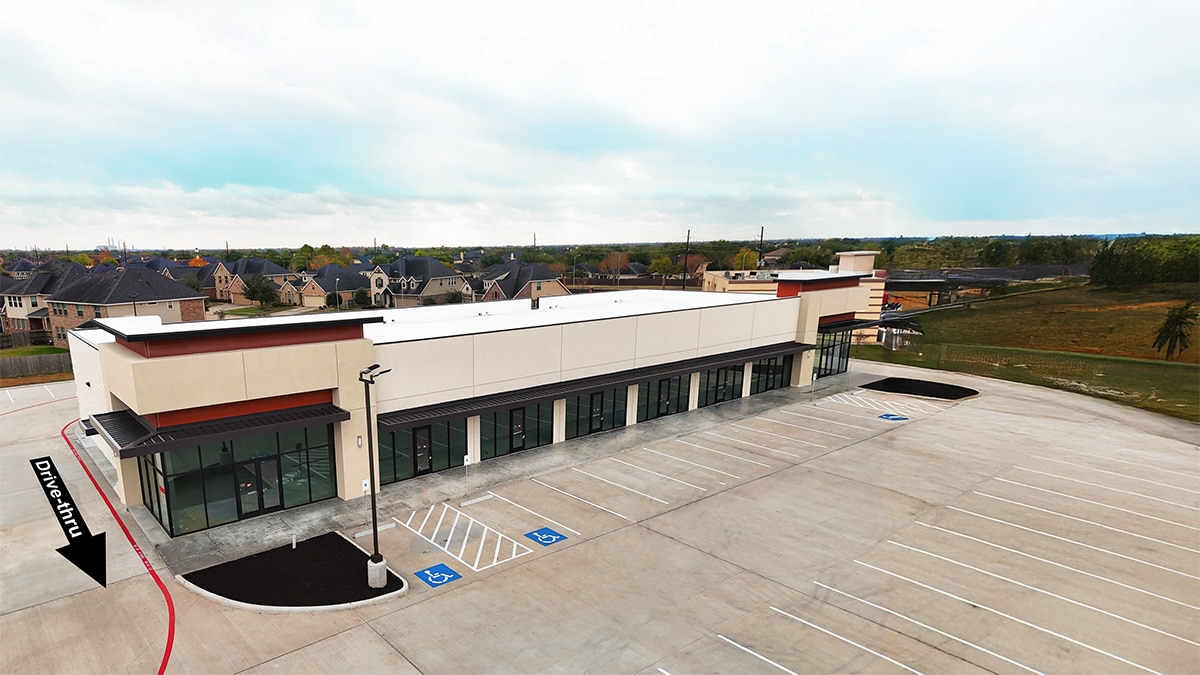
Retail and Shopping Center Roofing
Commercial roofing for strip malls, shopping centers, anchor stores, and standalone retail buildings throughout Charlotte, NC.
Commercial Roofers Charlotte
Retail and Shopping Center Roofing work starts with a documented roof walk and ends with a scope owners can use.
Charlotte's retail commercial real estate market is one of the most active in the Southeast, driven by the metro's sustained population growth and its role as a regional banking and corporate headquarters hub. From the power centers lining South Boulevard in the SouthPark corridor to the newer mixed-use retail threading through the Ballantyne and Steele Creek communities, commercial property managers across Mecklenburg and the surrounding counties oversee a large and diverse inventory of retail roofing. The Queen City's climate - hot, humid summers, occasional ice storms in winter, and a growing frequency of severe convective storm events - puts roofing systems to the test in multiple ways throughout the year.
Hail damage is a recurring concern for Charlotte retail property owners. The Piedmont region sits squarely in the hail corridor that activates during spring and summer convective seasons, and the large-diameter hail events that have hit the metro - including significant storms in the Mint Hill and Concord areas - can damage TPO membranes and create hundreds of small punctures that won't show up as leaks immediately but will over time. A post-hail inspection by a qualified commercial roofing contractor, documented with photographs, is the appropriate first step after any severe weather event, both for property protection and for insurance claim purposes.
TPO single-ply membrane is the dominant system on Charlotte's newer retail construction, and the energy benefits are meaningful in a climate where cooling loads run from April through October. White reflective TPO reduces the heat island effect on large retail roofscapes - a factor that matters in Mecklenburg County's development permitting discussions around impervious surface and heat management. Fully adhered 60-mil systems over polyiso insulation boards are standard on most new Charlotte retail, and that specification delivers reliable performance when installed by contractors who hold manufacturer certifications.
HVAC penetrations on Charlotte strip malls and shopping centers are a common source of chronic leaks that property managers attribute to the roof rather than the flashing condition around rooftop units. Centers along Carowinds Boulevard or in the University City corridor near UNC Charlotte often house six to fifteen rooftop units per building, and the curb flashings on those units see thermal stress from Charlotte's temperature extremes - from sub-20 nights in January ice events to 95-degree August afternoons. A dedicated penetration inspection and remediation as part of any re-roofing project, rather than assuming existing flashings are acceptable, prevents old problems from migrating into a new roof system.
Owners get a written scope that separates urgent water-control work from longer-term capital planning, so the roof decision is not made from guesswork.
The closeout package keeps the next decision clear with before photos, after photos, material notes, warranty coordination, and recommended maintenance timing.
For occupied buildings, staging, access, odor control, and tenant communication are part of the roof plan before crews arrive.
For portfolio owners, the goal is consistent documentation across properties, not a one-off opinion that cannot be compared later.
The first visit produces a practical roof record: current conditions, visible failure points, drainage notes, access concerns, and the repair or replacement path that fits the building.
Can a new single-ply membrane be installed over an existing BUR roof on a Charlotte building?
Yes, if the moisture survey shows the existing BUR insulation is dry and the BUR plies are structurally intact. Most major TPO and EPDM manufacturers have published recover specifications that allow their membrane to be installed over a sound BUR substrate. The recover specification typically requires a cover board - high-density polyiso or gypsum - over the existing BUR surface before the new membrane is installed. We verify the recover specification with the manufacturer before scoping and obtain manufacturer confirmation that the recover configuration qualifies for the target warranty term.
How many cores do you pull on a Charlotte BUR moisture survey?
Minimum five locations on a roof under 10,000 square feet. On larger roofs we target one core per 2,000 to 2,500 square feet, concentrated in areas showing surface deflection, prior repair work, or drainage anomalies. On BUR roofs with a history of localized leaks, we pull additional cores around the reported leak locations and at all four parapet corners - the highest-probability moisture entry points on older Charlotte BUR systems.
Does BUR work require a permit?
Replacement and recover projects above the City of Charlotte's threshold - currently $30,000 in contract value for commercial work - require a building permit filed with the relevant jurisdiction. We handle permitting as part of our scope for all BUR replacement and recover projects in Charlotte, Mecklenburg County, and the surrounding municipalities. Repair work below the permit threshold does not typically require a permit, but we document all repair work to the same standard regardless of permit status.
BUR assessment for an older Charlotte commercial building?
We will walk the roof, pull moisture cores, and produce a written assessment with recover-vs-tear-off recommendation - for any BUR system in Uptown, South End, NoDa, or anywhere else in the Charlotte metro.
Planning Retail and Shopping Center Roofing
Retail and Shopping Center Roofing should be evaluated through the roof condition, the building use, the owner's timing, and the level of documentation needed to make a decision.
The written record should make the next step clear without relying on broad claims or generic sales language.
Request a Written Scope