

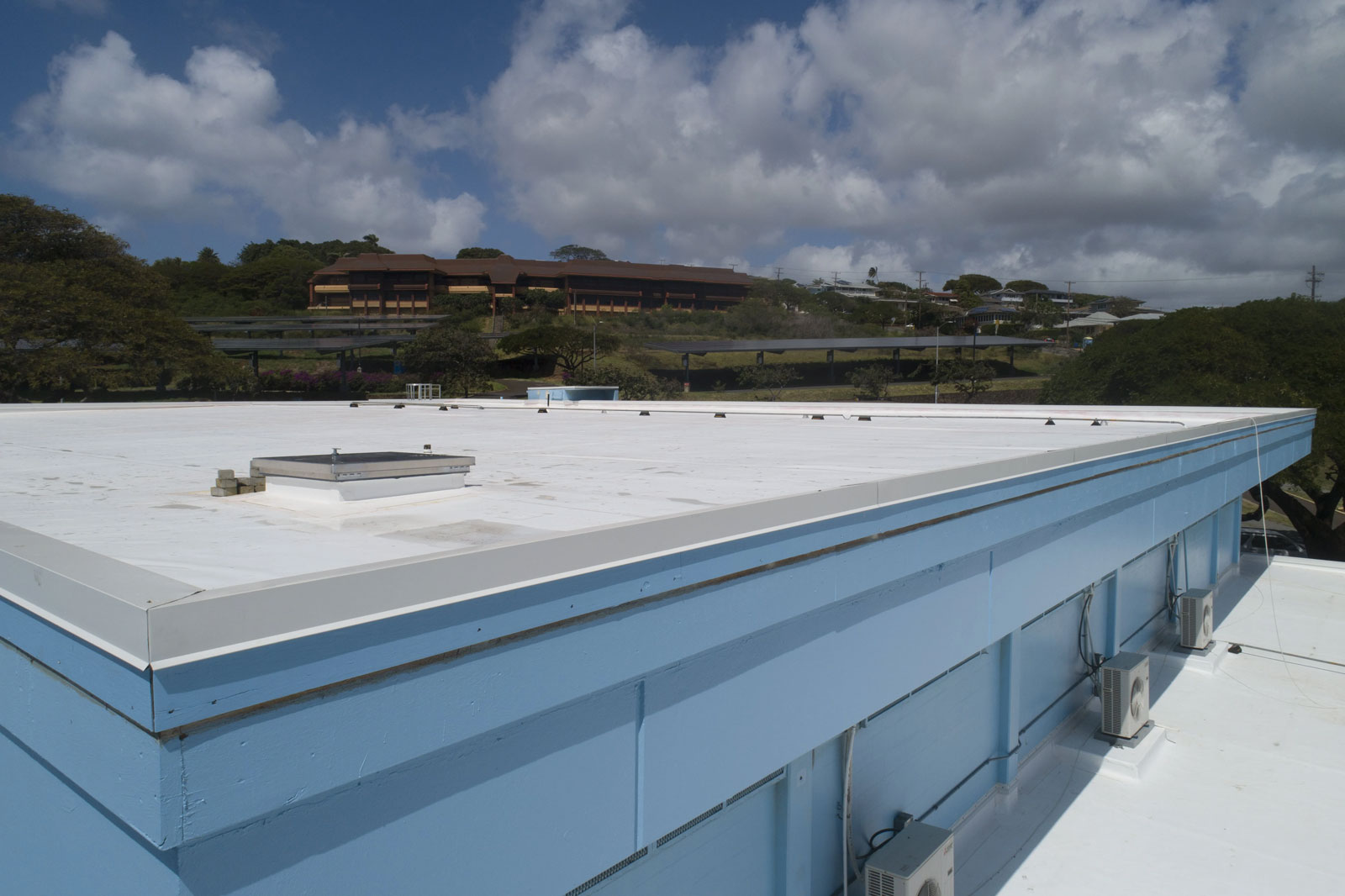
PVC Roofing
PVC commercial roofing for Charlotte - chemical-resistant membrane for restaurant exhaust environments, food processing, and industrial buildings with solvent or grease exposure.
Commercial Roofers Charlotte
PVC Roofing work starts with a documented roof walk and ends with a scope owners can use.
PVC single-ply membrane for Charlotte commercial buildings with chemical exposure environments - restaurant and food service exhaust, industrial solvent zones, and the SouthPark and Ballantyne medical office buildings where grease-resistant performance is required.
Polyvinyl chloride - PVC - roofing membrane is the specification for Charlotte commercial buildings where grease, solvent, or chemical exposure is part of the operating environment. Animal fats and cooking grease from restaurant exhaust hoods attack TPO and EPDM over time - both membranes soften and delaminate under sustained grease exposure. PVC resists this degradation because of its chemical structure. Restaurant-dense corridors in Charlotte - the South End dining district, the SouthPark Mall-area food court anchors, and the NoDa bar and restaurant cluster - include dozens of commercial buildings where PVC is the correct specification directly under and around kitchen exhaust penetrations.
PVC also performs in industrial environments where petroleum-based solvents, cutting fluids, or cleaning chemicals are handled on the roof level. The CLT airport cargo and maintenance facilities - where jet fuel and hydraulic fluid exposure is a realistic condition - and the Westinghouse Boulevard industrial corridor both include buildings where PVC is the technically correct membrane choice.
Charlotte's PVC inventory includes a significant legacy of early-generation systems from the late 1980s and 1990s. Those formulations had plasticizer-migration issues that caused the membrane to become brittle and crack over time. Current PVC formulations from Sika Sarnafil, Carlisle, and IB Roof Systems have corrected these issues. If your Charlotte building has a PVC roof installed before 2000, it may be running an early formulation that is past economical repair - we assess the membrane's plasticizer state during inspection.
The closeout package keeps the next decision clear with before photos, after photos, material notes, warranty coordination, and recommended maintenance timing.
For occupied buildings, staging, access, odor control, and tenant communication are part of the roof plan before crews arrive.
For portfolio owners, the goal is consistent documentation across properties, not a one-off opinion that cannot be compared later.
The first visit produces a practical roof record: current conditions, visible failure points, drainage notes, access concerns, and the repair or replacement path that fits the building.
Owners get a written scope that separates urgent water-control work from longer-term capital planning, so the roof decision is not made from guesswork.
Where PVC Is the Right Call
Restaurant and food service buildings: Any Charlotte commercial building with kitchen exhaust penetrations in the roof field should specify PVC at and around those penetrations, regardless of what membrane covers the rest of the roof field. We install PVC in a defined zone around every kitchen exhaust penetration - sized to account for grease fallout radius under prevailing wind direction - even when the balance of the roof is TPO or EPDM. The NoDa and South End restaurant clusters, where kitchen exhaust stacks are common on converted industrial buildings with no parapet protection, are the environments where we see the most grease-related membrane damage.
Medical office and laboratory buildings: The SouthPark Mall-area medical office cluster and the University Research Park laboratory buildings handle chemicals that can affect membrane performance. Medical sterilization chemical exhaust, laboratory solvent venting, and HVAC coil cleaning products that drain across the roof surface are all sources of chemical exposure that PVC handles better than TPO. We inspect the exhaust system layout and the prevailing drainage pattern on every medical office or laboratory building before specifying membrane type.
Industrial and manufacturing facilities: The Steele Creek corridor and the Westinghouse Boulevard industrial zone include manufacturing facilities that handle cutting fluids, hydraulic fluid, and petroleum-based products. PVC is the specification where these products can contact the membrane surface either through direct spill or through HVAC condensate drainage. We specify PVC zones at high-risk areas and can run TPO or EPDM on unaffected field areas to manage total installed cost.
PVC Installation Details for Charlotte Conditions
Heat-welded seams: PVC seams are heat-welded like TPO. The weld window for PVC is narrower than for TPO in high humidity - Charlotte's summer dew points affect PVC weld quality more than they affect TPO weld quality. We track dew point alongside ambient temperature during PVC installation and test every seam with a 5-pound pull probe before the day's work is closed. Seam quality on PVC is not negotiable because a failed seam in a grease-exposure zone propagates failure faster than on a standard TPO installation.
Plasticizer compatibility: PVC seaming requires the correct seaming solvent - a step that is not required for TPO. Applying an incompatible solvent to a PVC membrane during repair or recover work causes delamination at the seam rather than bonding. Every PVC repair we do on a Charlotte building involves identifying the existing membrane manufacturer and confirming the compatible seaming solvent before any crew touches the roof.
Thermal movement on Charlotte rooftops: PVC has a higher coefficient of thermal expansion than TPO or EPDM - it moves more per degree of temperature change. On Charlotte's large-footprint industrial roofs in the Steele Creek corridor, this means PVC fastener patterns must account for greater membrane movement. We design PVC fastener patterns against thermal movement calculations as well as wind-uplift requirements.
PVC Warranty and Service Life
Current-generation PVC systems from Sika Sarnafil and Carlisle carry 25-year NDL warranties at 60-mil or heavier gauge, which is the longest standard manufacturer warranty term available in the single-ply membrane category. For a Charlotte medical office building or industrial facility where the chemical exposure environment necessitates PVC, that 25-year term has significant capital planning value - it defers the next major roof capital expenditure by a decade compared to a standard 20-year EPDM or TPO program.
Legacy PVC systems from before 2000 require honest assessment of plasticizer state before any scope is committed. We use a simple field test - membrane flexibility and crack assessment at fold - to determine whether the plasticizer has migrated to the point where the membrane is brittle. A brittle legacy PVC membrane cannot be repaired or recovered - it will crack under the repair crew's foot traffic. Replacement is the only defensible scope in that condition.
Is PVC more expensive than TPO for a Charlotte commercial building?
Generally yes - PVC runs 15-25% higher installed cost per square than comparable TPO, depending on membrane thickness and manufacturer. The premium is justified in chemical-exposure environments where TPO or EPDM would fail prematurely. On buildings where chemical exposure is limited to a few penetration zones, we sometimes specify PVC only in the exposure zone and TPO or EPDM in the clean field areas - which manages total cost while applying the correct membrane to the correct environment.
Can you repair an existing PVC roof that was installed by another contractor?
Yes, with the correct compatible materials. PVC repair requires the same membrane formulation as the existing system - or a tested compatible repair product - and the correct seaming solvent. We identify the existing membrane manufacturer before any repair is attempted. Repairing PVC with incompatible materials produces a seam that looks correct but delaminates within one or two thermal cycles.
Does PVC handle Charlotte's tornado and hurricane-remnant wind events?
PVC at correct fastener density handles Charlotte's ASCE Wind Zone II loading - 115 mph basic wind speed - with appropriate design. We specify PVC fastener patterns against ASCE 7-22 wind-uplift requirements for the building's specific exposure category. Buildings near the CLT airport open exposure zone or the Lake Norman lakefront get higher fastener density than sheltered interior-campus buildings. The membrane formulation does not determine wind resistance - the fastener pattern does.
PVC roofing for a Charlotte commercial building with chemical or grease exposure?
We will assess the exposure environment, evaluate existing membrane conditions, and produce a PVC roofing scope with manufacturer warranty options - for any commercial building in Mecklenburg County or the surrounding metro.
Request a Written Scope