

Expansion Joint Repair
Expansion joint cover replacement, base flashing reconstruction, and watertight joint system installation for Charlotte commercial flat roofs - documented repair for Mecklenburg County buildings with active joint failures.
Commercial Roofers Charlotte
Expansion Joint Repair work starts with a documented roof walk and ends with a scope owners can use.
An expansion joint that has been caulked or bridged with roofing membrane is not repaired - it is a future leak waiting for Charlotte's next thunderstorm or temperature swing to expose it. Expansion joints require flexible cover systems designed to move with the building.
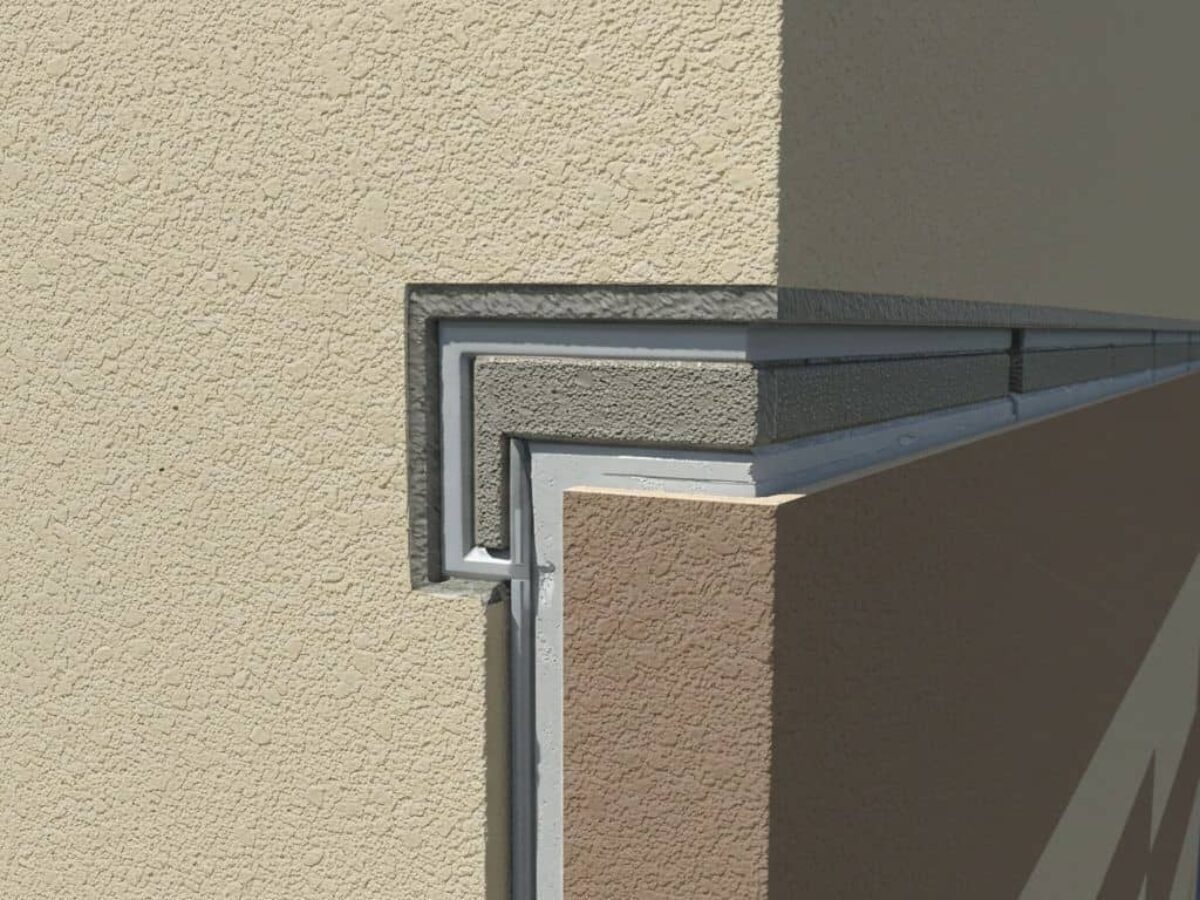
Expansion joints in commercial roofing systems exist to accommodate structural movement between adjacent building sections. When a commercial building in Charlotte - an office complex, a warehouse, a mixed-use development - is constructed in phases or incorporates different structural elements that move independently under thermal load, gravity, or settlement, the expansion joint is the designed gap that allows that movement without transferring stress to the roofing membrane. When the expansion joint cover system fails, the roofing membrane bridges the gap, the building moves, the membrane tears, and the building leaks at the joint.
Charlotte's thermal environment puts specific demands on expansion joint cover systems. The Piedmont's diurnal temperature range - summer afternoons above 95F followed by nights below 70F, and winter days above 60F followed by nights near freezing - produces joint cycling that a rigid cover cannot accommodate. A metal cover plate fastened across an expansion joint without a slip plane will buckle in summer heat and gap in winter cold. An EPDM or neoprene bellows cover system - designed to flex with the joint movement - handles that cycling without transferring stress to the membrane.
The Charlotte commercial building stock has a high frequency of expansion joint repair needs because a significant portion of the building inventory was constructed in phases during the rapid suburban buildout of the 1990s and 2000s. Expansion joints between the building phases on these properties were often finished with inadequate cover systems - or with caulk and membrane bridging that was never intended to be permanent. Many of those temporary fixes are now primary leak sources that recur after every Charlotte thunderstorm season.
For occupied buildings, staging, access, odor control, and tenant communication are part of the roof plan before crews arrive.
For portfolio owners, the goal is consistent documentation across properties, not a one-off opinion that cannot be compared later.
The first visit produces a practical roof record: current conditions, visible failure points, drainage notes, access concerns, and the repair or replacement path that fits the building.
Owners get a written scope that separates urgent water-control work from longer-term capital planning, so the roof decision is not made from guesswork.
The closeout package keeps the next decision clear with before photos, after photos, material notes, warranty coordination, and recommended maintenance timing.
Why Expansion Joints Fail Buildings
Membrane bridging without a flexible cover: The most common expansion joint 'repair' we see on Charlotte commercial roofs is membrane bridging - a strip of roofing membrane adhered or welded across the joint gap as if it were a standard seam. Membrane bridging does not accommodate joint movement. When the building moves - as it does with every significant temperature change - the membrane tears at the joint edge. In Charlotte's thermal environment, where the temperature range through a single day can span 30F in winter and 25F in summer, joint cycling is continuous and the membrane bridge fails quickly.
Caulk-only closures: A gap-filled expansion joint that has been closed with silicone or urethane caulk is a temporary dry-in, not a permanent repair. Charlotte's summer UV breaks down even high-quality silicone within three to five years on an exposed roof surface. Urethane caulks degrade faster. When the caulk fails - typically first at the edges where the adhesion bond is thinest - the gap reopens and the joint leaks. The failure is gradual: first a hairline crack at the caulk edge that lets water in during hard rain, then a widening gap that leaks in any rainfall.
Metal cover plate failure without slip design: Metal expansion joint covers - aluminum or galvanized steel plates fastened across the joint - were common on commercial buildings constructed through the 1980s and early 1990s. These systems typically did not include a slip plane between the plate and the roof deck, which means the plate moved with the building rather than allowing relative movement between sections. The result is fastener pull-out at the plate edges, buckling at the plate center in summer heat, and gap formation at the plate edge in winter cold. Each of these conditions is a water entry path.
Failed neoprene or EPDM bellows deterioration: On buildings where a proper bellows-style expansion joint cover was installed, the bellows material itself has a finite service life. Neoprene bellows installed in the 1980s and 1990s are now 30 to 40 years old and are typically well past their useful life. EPDM bellows installed in the 2000s are 20 to 25 years old and approaching the end of their typical service range. Deteriorated bellows crack at the fold points, which are the highest stress locations, and provide only nominal water resistance even when the joint is in a neutral (unloaded) position.
Expansion Joint Repair Systems We Install
EPDM and TPO bellows cover systems: The current standard for commercial expansion joint covers is a factory-fabricated bellows system - a molded EPDM or TPO cover with a designed fold depth that accommodates the joint's design movement range without stressing the cover material. These systems are anchored at the joint edges with metal bars and compressible closure strips, not direct fastening to the membrane. The bellows accommodates 2 to 4 inches of movement depending on the design specification, which covers the movement range of virtually all Charlotte commercial building joints under normal thermal and settling conditions.
Pre-formed corner and transition pieces: Straight bellows runs are only part of the installation. Corners - where the joint changes direction at a building corner - and transition points - where the joint goes from horizontal on the roof to vertical at a parapet - require pre-formed pieces that accommodate the geometry change without cutting and piecing the bellows material. We specify and install factory pre-formed corners and transitions on every expansion joint project rather than field-cutting a mitered corner in the bellows material, which invariably becomes the first failure point.
Flashing integration at joint ends and wall intersections: Where the expansion joint terminates at a wall or parapet, the end condition requires a transition from the bellows system to the wall flashing assembly. This termination is a high-stress location and it requires a specific detail - a formed end dam, a proper lap sequence with the wall flashing, and sealant at the termination point. We design and install the termination detail as part of the joint system scope, not as an afterthought.
Full membrane preparation at the joint perimeter: Before the new joint cover is installed, we inspect and repair the membrane at both sides of the joint perimeter. A new joint cover installed over deteriorated membrane at the perimeter creates a situation where the cover performs as designed but the adjacent membrane fails. We repair or replace membrane for a minimum of 12 inches on each side of the joint before the new cover is installed.
Charlotte Buildings with High Expansion Joint Frequency
Multi-phase corporate campus development in Ballantyne and University Research Park: The large corporate campuses in these corridors were often constructed in multiple building phases that share a campus infrastructure but have structurally independent building sections. Expansion joints at the connections between phases are the responsibility of the building's maintenance program, and they are frequently overlooked because they are not obviously associated with either building's maintenance manager. We have documented active expansion joint failures at Ballantyne campus properties and University Research Park buildings that had not been maintained because neither the primary tenant nor the property manager recognized the joint as a maintenance item.
Warehouse and distribution buildings in the Steele Creek and Westinghouse corridors: Large-footprint warehouse buildings often incorporate expansion joints at column line intervals to manage thermal growth across the full building dimension. A 500,000 square foot distribution center in the Steele Creek corridor may have multiple expansion joints running across the full building width. When these joints fail, they produce leak lines that cross the full interior of the building - not a single ceiling tile leak but a running wet line along an interior aisle that affects rack storage and operations.
The South End mixed-use and adaptive reuse buildings: New construction connected to or built adjacent to older masonry structures in South End requires expansion joints at the structural transition. These joints combine the movement demands of new construction (settlement, thermal cycling) with the different movement behavior of the older masonry section. The joint design for these hybrid structures is more complex than a standard new-construction joint, and the repair scope when they fail requires understanding both structures' movement behavior.
How do I know if my Charlotte building has expansion joints?
The building's original construction drawings will show expansion joint locations. If you do not have the drawings, expansion joints are typically visible as continuous gaps in the roof surface - often 1 to 3 inches wide - running across the full width or length of the building at regular intervals or at the junctions between construction phases. They may be covered with a metal plate, a membrane bridge, or filled with caulk. A condition inspection by a roofing contractor will identify any expansion joints present and assess their current cover system condition.
Can expansion joint covers be repaired rather than replaced?
Bellows systems with localized damage - a single tear at a fold point on an otherwise sound system - can sometimes be repaired with compatible patch material and adhesive. Bellows systems with widespread cracking or stiffness loss, metal cover systems without proper slip planes, and caulk-only closures require replacement rather than repair. We assess the full length of the joint before recommending repair vs. replacement, because a repair on a 20-foot segment of a 100-foot joint that is failing at multiple points produces diminishing return compared to a full replacement.
How long does expansion joint cover replacement take on a Charlotte commercial building?
For a single straight run of 50 to 100 linear feet with standard corners and no complex transitions, one to two days including membrane preparation. Complex multi-directional joints on large corporate campus or warehouse buildings take longer and are staged to keep each segment dry-in at the end of each day. We do not leave open joint gaps overnight in Charlotte's thunderstorm season.
My Charlotte building's expansion joint is leaking into an occupied tenant space. Is that an emergency?
Yes. Active water entry into an occupied tenant space is an emergency regardless of the source. We provide emergency temporary weatherization - typically caulk-over and temporary membrane bridge as an interim dry-in - within 24 to 48 hours for buildings in the Charlotte metro, followed by a permanent repair scope within the next 5 to 10 business days. We document the temporary measure separately from the permanent repair in the written repair report.
Expansion joint leaking at your Charlotte commercial building?
Our project managers assess the full joint length, document the failure mode, and specify a permanent bellows-system replacement designed for Charlotte's thermal movement range - for any commercial building in Mecklenburg County or the greater Charlotte metro.
Request a Written Scope