

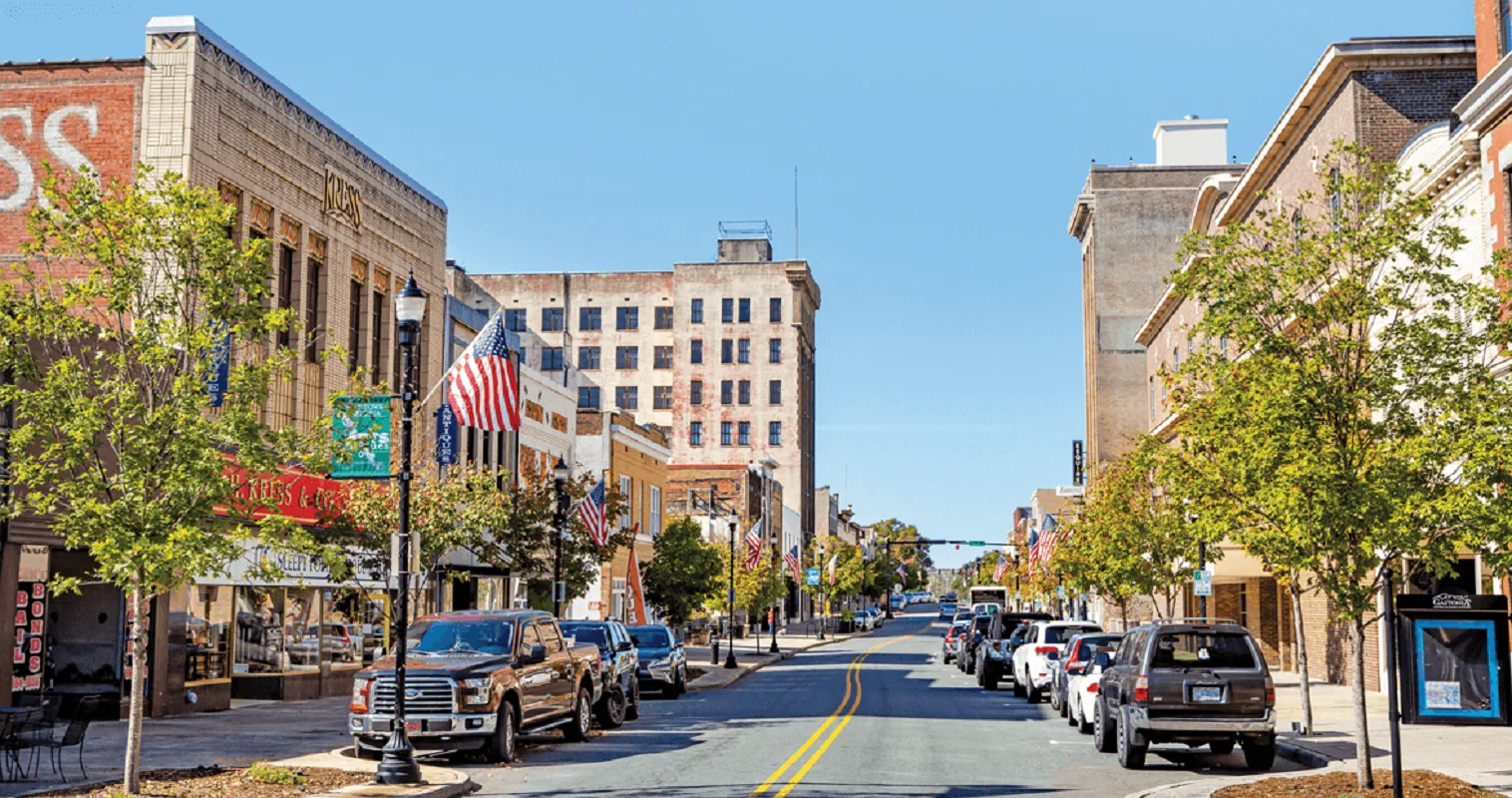
Commercial Roofers in Gastonia, NC
Commercial roofers serving Gastonia, NC should document leak sources, wet insulation, drainage, edge details, penetrations, and repair history before recommending a scope. Commercial roofing contractors serving Gastonia, NC with commercial roof repair, replacement, coatings, maintenance programs, inspections, and documented roof reports.
Commercial Roofers Charlotte
Commercial Roofing Contractors Gastonia, NC
Commercial roofing contractors serving Gastonia, NC with commercial roof repair, replacement, coatings, maintenance programs, inspections, and documented roof reports.
Roof work in Commercial Roofing Contractors Gastonia, NC is planned around access, response timing, commercial building mix, and the condition of the existing roof system.
Commercial roofers serving Gastonia, NC should document leak sources, wet insulation, drainage, edge details, penetrations, and repair history before recommending a scope. Gastonia is Gaston County's commercial center - a city with deep textile manufacturing roots and one of the highest concentrations of large-footprint industrial and distribution buildings in the western Charlotte metro, rooted in the US-321 and I-85 corridors.
Gastonia is 20 miles west of Uptown Charlotte in Gaston County. It is the county seat, the largest city in Gaston County, and the commercial and industrial anchor for a county that was once the textile manufacturing capital of the United States. The mills are gone now - most of the Gaston County textile mills closed or converted between 1995 and 2010 - but their physical infrastructure remains, and much of it has been converted to distribution centers, light manufacturing, and the industrial service businesses that supply the Charlotte metro's growing logistics economy.
The converted mill buildings are among the most interesting and demanding commercial roofing challenges in the Charlotte region. Early twentieth-century brick mill construction with sawtooth or monitor roofline configurations, wood or timber joist deck, and masonry walls that have shifted and settled over more than a century of industrial use. These buildings do not take standard specifications. The masonry perimeter walls move. The wood deck is often compromised at the base of sawtooth skylights where flashing failures have allowed water infiltration for decades. A moisture assessment on a converted mill building in Gastonia is not a five-point core pull - it requires systematic probing across the full roof field.
Outside the mill conversion context, Gastonia's commercial roof inventory includes the conventional strip retail and big-box anchors on Montclair Road, the large industrial and distribution buildings in the Riverbend and Maplewood industrial parks, and the growing healthcare and professional office cluster around CaroMont Regional Medical Center on Court Drive.
For portfolio owners, the goal is consistent documentation across properties, not a one-off opinion that cannot be compared later.
The first visit produces a practical roof record: current conditions, visible failure points, drainage notes, access concerns, and the repair or replacement path that fits the building.
Owners get a written scope that separates urgent water-control work from longer-term capital planning, so the roof decision is not made from guesswork.
The closeout package keeps the next decision clear with before photos, after photos, material notes, warranty coordination, and recommended maintenance timing.
For occupied buildings, staging, access, odor control, and tenant communication are part of the roof plan before crews arrive.
Converted Mill Buildings and Early Industrial Structures
The converted mill buildings concentrated in Gastonia's central city and along Rankin Lake Road and Garrison Boulevard represent some of the oldest continuously used commercial building stock in the Charlotte region. These buildings pre-date modern roofing standards by 50 to 100 years. The current roofing systems on most of them are at least the second or third membrane applied to the original substrate, and the layered repair history on many roofs is extensive enough that the actual deck condition is unknown without opening the assembly.
We approach converted mill buildings with a systematic core pull protocol - a minimum of one core per 2,000 square feet of roof area on initial inspection, plus additional cores at any visible deflection, at every sawtooth valley, and at the base of every masonry wall. The core data drives the scope. On buildings where we find isolated wet sections with a sound surrounding field, targeted tear-off and insulation replacement with a new membrane over the existing system may be viable. On buildings where the wet insulation is distributed across more than 25% of the field, replacement is the only defensible scope.
US-321 and I-85 Industrial Corridors
The US-321 South corridor from Gastonia toward Belmont and the I-85 corridor east toward Charlotte anchor Gaston County's contemporary industrial and distribution economy. The buildings in these corridors range from 1970s tilt-wall distribution to current-decade speculative industrial. The 1970s-1990s vintage is in replacement cycle. The 2000s-2010s generation is approaching first major maintenance. Current-decade construction is in warranty maintenance phase.
CaroMont Regional Medical Center Corridor
CaroMont Regional Medical Center on Court Drive anchors a healthcare campus that has expanded with outpatient facilities, medical office buildings, and specialist clinic buildings over the past two decades. The 2000-2015 vintage medical office buildings in this corridor are in the 10-20 year range - approaching warranty expiration on the 15-year systems and entering the maintenance window on the 20-year systems.
Medical facility scheduling constraints are the same in Gastonia as in the Charlotte Atrium and healthcare campus corridors: infection-control protocols for work above occupied clinical areas, no HVAC interruption above patient care areas, and contractor credentialing through the facility's vendor management system. We have worked within Gaston County hospital facility management protocols and understand the documentation requirements.
Do you work on converted mill buildings in Gastonia?
Yes. The specific challenge on textile mill conversions is the combination of wood or timber deck, historic masonry walls that have shifted over a century of use, and the layered repair history that makes visual inspection unreliable. We do a systematic moisture core survey - at least one core per 2,000 square feet of roof area plus additional cores at every structural vulnerability point - before specifying any scope on a mill building.
How long does it take your crew to get from Uptown Charlotte to Gastonia?
Approximately 30-35 minutes via I-85 West under normal traffic conditions. Gastonia is on our western service corridor. Emergency calls in Gastonia get same-day mobilization during business hours.
Who issues commercial roofing permits in Gastonia?
The City of Gastonia Inspections division. Work in unincorporated Gaston County falls under the Gaston County Building Inspections department. The jurisdictional boundary in some industrial corridor areas is not always clear from a street address - we verify the correct authority before filing.
Gastonia commercial roof inspection or replacement scope?
We will walk the roof - converted mill building, industrial corridor tilt-wall, or medical office - document the condition honestly, and produce a written scope for any commercial building in Gastonia and the surrounding Gaston County commercial corridor.
Request a Written Scope