

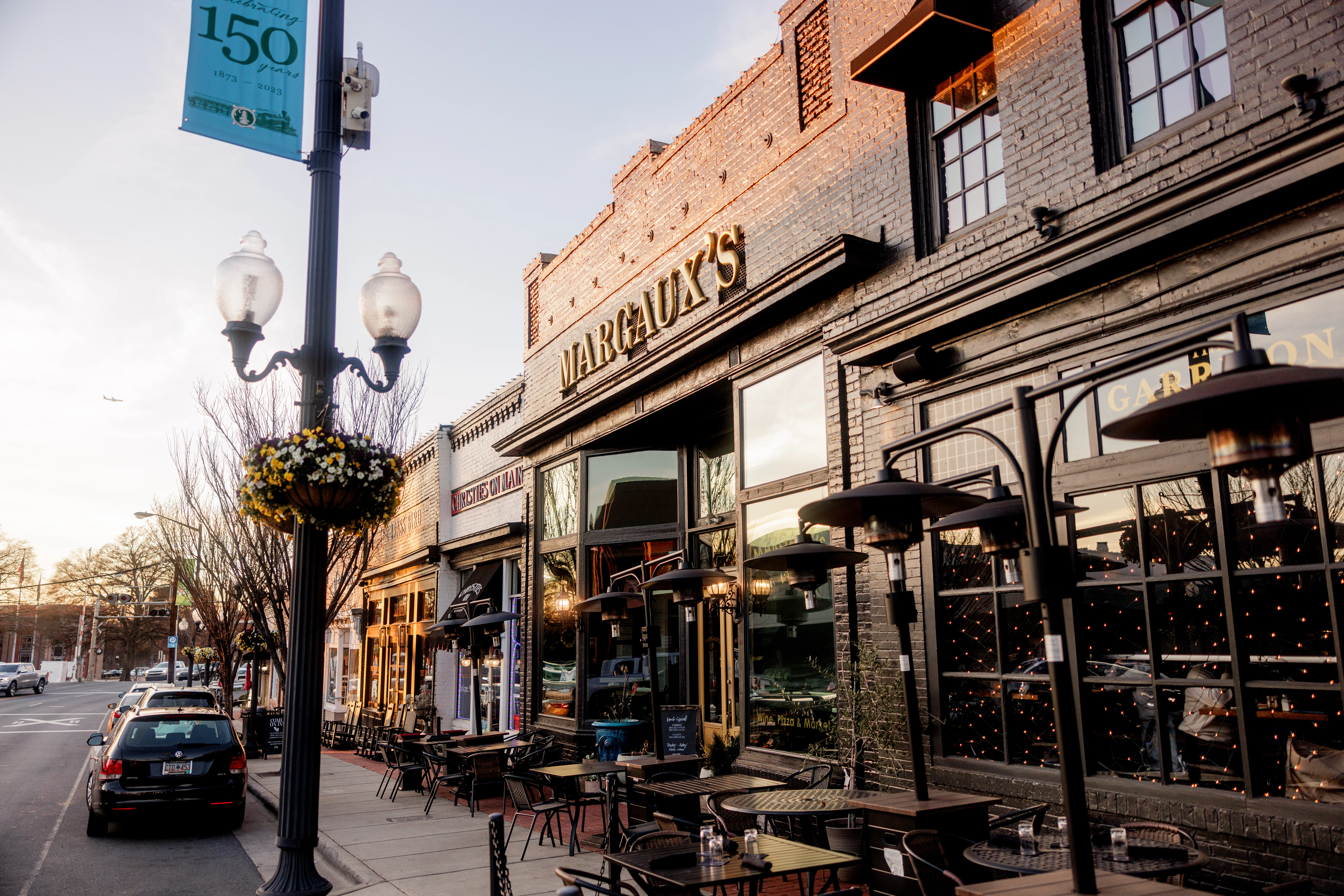
Commercial Roofers in Pineville, NC
Commercial roofers serving Pineville, NC should document leak sources, wet insulation, drainage, edge details, penetrations, and repair history before recommending a scope. Commercial roofing contractors serving Pineville, NC with commercial roof repair, replacement, coatings, maintenance programs, inspections, and documented roof reports.
Commercial Roofers Charlotte
Commercial Roofing Contractors Pineville, NC
Commercial roofing contractors serving Pineville, NC with commercial roof repair, replacement, coatings, maintenance programs, inspections, and documented roof reports.
Roof work in Commercial Roofing Contractors Pineville, NC is planned around access, response timing, commercial building mix, and the condition of the existing roof system.
Commercial roofers serving Pineville, NC should document leak sources, wet insulation, drainage, edge details, penetrations, and repair history before recommending a scope. Pineville's Carolina Place Mall corridor and the Park Road commercial strip represent a large-footprint retail and commercial inventory that was built in the 1990s and is now in active replacement cycle - first-generation TPO and EPDM systems approaching or past their original warranty terms.
Pineville is an incorporated town in southern Mecklenburg County on the North Carolina-South Carolina state line, bordered by Charlotte to the north and west and Fort Mill, South Carolina to the south. The Town of Pineville has its own Building Inspections process - commercial roofing permits in Pineville require a Town of Pineville permit, not a City of Charlotte permit, and inspections are coordinated through the Pineville building inspector's office. We file Pineville permits as part of every replacement project in the town's jurisdiction.
The commercial spine of Pineville is the Carolina Place Mall and the Park Road corridor from the I-485 interchange south to the state line. Carolina Place Mall opened in 1991 as a regional shopping destination that drew retail development to what was then the southern edge of the Charlotte metro. The mall and its surrounding commercial development - the power center anchors on Park Road, the restaurants and auto-oriented retail on Johnston Road, the commercial and light industrial buildings on Pineville-Matthews Road - were built primarily in the 1990s and early 2000s.
That 1990s and early-2000s construction wave means the Pineville commercial inventory is heavily concentrated in first-generation 60-mil TPO and EPDM systems. The 15-year warranties on the 1991-2000 construction are long expired. The 20-year warranties on construction from 1995 through 2004 have expired or are within two years of expiration. The Pineville commercial market is broadly in replacement cycle for its original roofing generation.
The first visit produces a practical roof record: current conditions, visible failure points, drainage notes, access concerns, and the repair or replacement path that fits the building.
Owners get a written scope that separates urgent water-control work from longer-term capital planning, so the roof decision is not made from guesswork.
The closeout package keeps the next decision clear with before photos, after photos, material notes, warranty coordination, and recommended maintenance timing.
For occupied buildings, staging, access, odor control, and tenant communication are part of the roof plan before crews arrive.
For portfolio owners, the goal is consistent documentation across properties, not a one-off opinion that cannot be compared later.
Carolina Place Mall and the Park Road Power Center
Carolina Place Mall itself is a large, complex roof environment: multiple roof sections at different elevations covering the anchor stores, the enclosed mall concourse, and the food court. The anchor buildings - the Belk store that anchors the south end, the former Sears footprint on the north, and the enclosed concourse between - each carry 60,000 to 100,000 square feet of roof area on systems installed in phases between 1991 and the mid-2000s. Mall owner-operators manage their own capital planning for the anchor roofs through national contracts, but the mall-adjacent pad sites, the outparcels, and the non-anchor tenants in the power center strip buildings on Park Road are in the commercial market we serve.
The Park Road power center buildings - the big-box retailers, the home improvement and home furnishings anchors, and the grocery-anchored centers east and west of Park Road - run large-footprint roofs on systems from the 1995-2005 construction window. Most of these buildings are running 45-mil or 60-mil EPDM or early TPO installed by the national contractor relationships that managed the retail build-out wave of that era. The 45-mil EPDM systems from that wave - a thinner membrane specification that was common before 60-mil became the market standard - have a shorter serviceable life and are in more urgent replacement cycle than the 60-mil systems from the same period.
The retail vacancy conditions in the Pineville power center - the buildings that have cycled through tenants or that have been dark for extended periods - create specific roof condition issues. Dark retail buildings with no active HVAC operation lose the thermal regulation that active building systems provide. The membrane and insulation assembly on a dark retail building can experience more extreme thermal cycling than an actively occupied building, accelerating seam fatigue and insulation compression. We note occupancy status on every Pineville power center roof inspection because it affects the condition assessment and the replacement urgency.
I-485 Interchange Commercial and Light Industrial
The commercial and light industrial development that has occurred at and near the I-485 / Park Road interchange and along the Pineville-Matthews Road corridor is a mix of new and older commercial. The hotel and restaurant development near the interchange - several hotel properties built in the 2005-2015 window - runs full-service hotel roof conditions: multiple rooftop HVAC systems, pool enclosure roofs, kitchen exhaust penetrations, and in some cases rooftop terraces or amenity decks that create water management challenges above the membrane.
The light industrial and flex commercial buildings along Pineville-Matthews Road and the commercial streets south of Carolina Place Mall carry a range of building ages and conditions. Some of this inventory was built in the late 1980s to serve the pre-mall commercial base that existed in Pineville before the mall opened. Those buildings are now past 30 years old and running roofing systems that have been patched, recovered, or partially replaced without full system assessment in most cases.
One geographic factor specific to Pineville: the town's position on the North Carolina-South Carolina state line means that some commercial development straddles or abuts the state boundary. South Carolina jurisdiction begins immediately south of the Pineville commercial corridor - Fort Mill and Rock Hill commercial development is immediately adjacent. We do not operate in South Carolina, but Pineville building owners whose commercial buildings are on or near the state line should confirm their building's permit jurisdiction before beginning any roofing project. The state line is not always obvious from the street address.
Do you pull permits through the Town of Pineville?
Yes. Pineville has its own Building Inspections process. We file permits with the Town of Pineville for replacement projects in the town's jurisdiction. The jurisdictional boundary between Pineville and Charlotte on the Park Road and Johnston Road corridors is not always obvious from address alone - we verify jurisdiction before filing any permit.
My Pineville big-box retail building's roofing is from 1998. What is its condition likely to be?
A 1998 retail roof in Pineville is 28 years old at this point. If it was a 45-mil EPDM system - common on large retail construction from that era - it is past the membrane's design life for the Charlotte climate's UV and thermal exposure. If it was a 60-mil system, it may have several years of serviceable life remaining depending on maintenance history. The only way to know is a moisture core survey and full condition assessment. Buildings from that construction wave are broadly in replacement cycle across the Pineville market.
Pineville commercial roof inspection or replacement scope?
We handle Town of Pineville permits and cover the Carolina Place Mall corridor and the Park Road commercial strip. Call 704-710-8487 or submit a request for a written condition report.
Request a Written Scope