

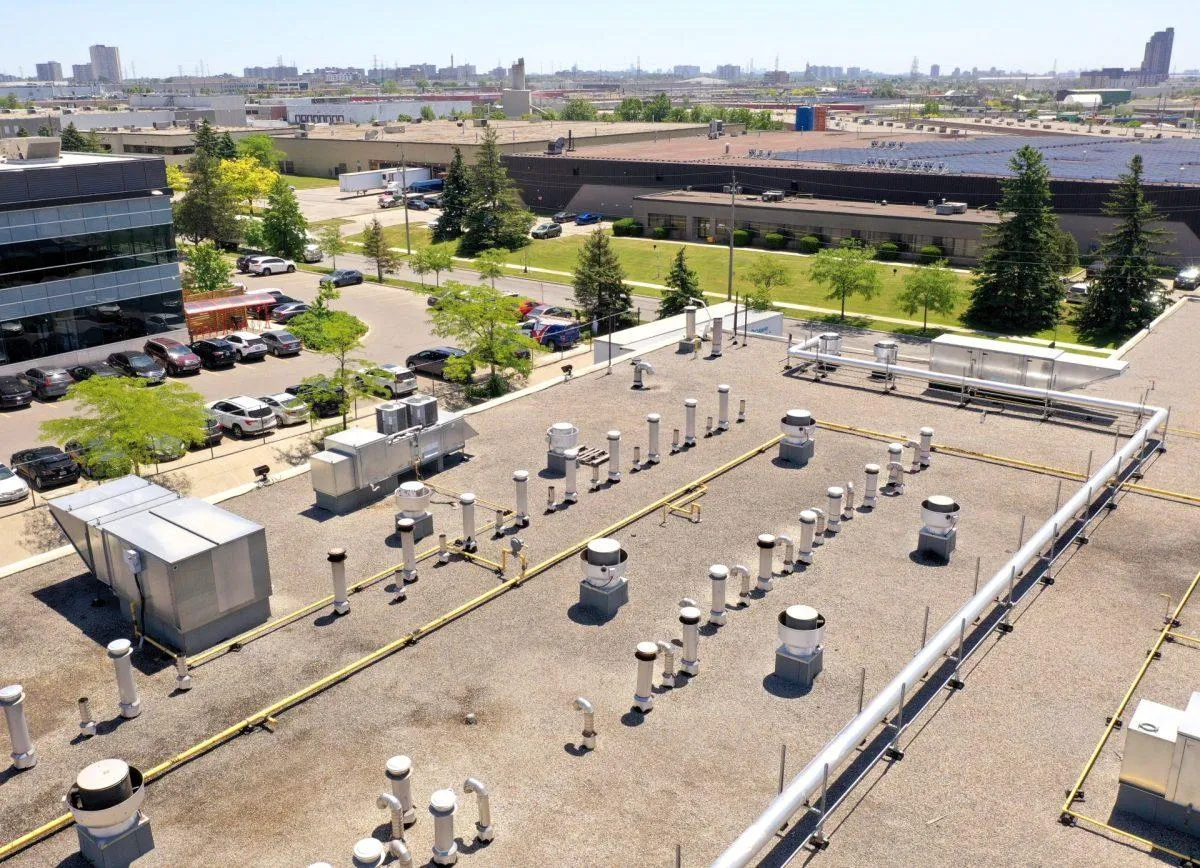
Food Processing Roofing
Charlotte food processing facility roofing - washdown humidity, refrigeration vapor drive, heavy rooftop loads, and USDA-acceptable systems sequenced around production.
Commercial Roofers Charlotte
Food Processing Roofing roof work is shaped by occupancy, access, drainage, tenant protection, and the warranty path that fits the building.
A roof over a food plant has two jobs running against each other: it has to handle heavy, vibrating, water-loaded rooftop equipment on top, and it has to stay bone-dry over a production floor where a single drip is a contamination event, not a maintenance ticket. We roof those buildings across the Charlotte region - the processors and commissaries along the Westinghouse Boulevard industrial belt south toward I-485, the cold-storage and distribution plants in Steele Creek near the airport, and the bakery and beverage operations scattered through the older industrial blocks off Statesville Avenue. These are working plants, and we plan the roof around the line, not the other way around.
Property Type Food Processing Facility Roofing in Charlotte, NC A roof over a food plant has two jobs running against each other: it has to handle heavy, vibrating, water-loaded rooftop equipment on top, and it has to stay bone-dry over a production floor where a single drip is a contamination event, not a maintenance ticket.
We roof those buildings across the Charlotte region - the processors and commissaries along the Westinghouse Boulevard industrial belt south toward I-485, the cold-storage and distribution plants in Steele Creek near the airport, and the bakery and beverage operations scattered through the older industrial blocks off Statesville Avenue.
These are working plants, and we plan the roof around the line, not the other way around.
If the assembly is not built to control it, the vapor condenses inside the roof, soaks the insulation, and corrodes a steel deck from the top side where nobody can see it - until the fasteners let go or a panel of insulation collapses.
Over a refrigerated space the vapor drive runs from the warm, humid Charlotte exterior inward toward the cold deck, and the dew point can land inside the insulation.
Get the vapor retarder on the wrong face and you build a condensation machine that ices up, rots the assembly, and drags down the refrigeration system's efficiency with standing water adding thermal load.
We design tapered insulation and the vapor control layer around the actual room temperatures and the local climate's drive direction, so the cold chain stays continuous through the roof and nothing condenses where it cannot dry.
Heavy Rooftop Loads and Drainage Food plants carry some of the densest, heaviest rooftop equipment of any building type - refrigeration racks, condensers, large make-up air and exhaust units, and the dunnage steel that supports them.
Every one of those is a cluster of penetrations and a concentrated load, and many of these roofs were framed flat and drain poorly, so water ponds right around the equipment that least tolerates a leak.
We verify the deck can carry the loads, rebuild and oversize curbs, individually flash each penetration, and add tapered insulation to drive water to drains and scuppers and off the structure.
USDA / FDA-Acceptable Materials Not every roofing product belongs over a food contact zone.
Washdown Humidity Loads the Deck From Below
Sanitation in a food plant means high-pressure hot water and caustic and acid cleaners washing down rooms every day or every shift change. That puts an enormous interior vapor load against the underside of the deck. If the assembly is not built to control it, the vapor condenses inside the roof, soaks the insulation, and corrodes a steel deck from the top side where nobody can see it - until the fasteners let go or a panel of insulation collapses. The first symptom is often a structural one, not a stain. We treat washdown rooms as high-humidity zones and detail the vapor retarder and air seal to keep that moisture from ever entering the assembly.
Refrigeration, Cold Rooms, and Vapor Drive
Coolers, freezers, and blast cells flip the physics. Over a refrigerated space the vapor drive runs from the warm, humid Charlotte exterior inward toward the cold deck, and the dew point can land inside the insulation. Get the vapor retarder on the wrong face and you build a condensation machine that ices up, rots the assembly, and drags down the refrigeration system's efficiency with standing water adding thermal load. We design tapered insulation and the vapor control layer around the actual room temperatures and the local climate's drive direction, so the cold chain stays continuous through the roof and nothing condenses where it cannot dry.
Heavy Rooftop Loads and Drainage
Food plants carry some of the densest, heaviest rooftop equipment of any building type - refrigeration racks, condensers, large make-up air and exhaust units, and the dunnage steel that supports them. Every one of those is a cluster of penetrations and a concentrated load, and many of these roofs were framed flat and drain poorly, so water ponds right around the equipment that least tolerates a leak. We verify the deck can carry the loads, rebuild and oversize curbs, individually flash each penetration, and add tapered insulation to drive water to drains and scuppers and off the structure.
USDA / FDA-Acceptable Materials
Not every roofing product belongs over a food contact zone. The membrane, and just as importantly the adhesives, primers, and sealants in the flashing details, have to be acceptable for the regulatory framework the plant operates under. Many common roofing adhesives carry solvents that are not welcome in a production environment. We confirm material acceptability with the plant's QA team before anything is specified over the floor, and we favor systems that keep solvent exposure out of the building.
White single-ply matched to the plant's food-safety plan over enclosed production.
Adhesives and sealants confirmed acceptable for the room below, not just the roof.
Vapor control engineered separately for washdown rooms and refrigerated rooms.
Pest, Bird, and Debris Control Above the Line
A food plant's roof is part of its pest-control program, and auditors know it. Standing water, debris, and gaps at the edge and penetrations invite birds and insects directly above production. We design out the ponding that draws them, seal the entry points around penetrations and at the perimeter, and keep the finished roof clean of the construction debris that becomes harborage. On reroofs we coordinate with the plant's sanitation and pest-control vendor so the work itself does not create a finding, and so the completed roof supports the audit rather than threatening it.
Coatings and Restoration as an Alternative to Tear-Off
Not every food-plant roof needs to come off, and a full tear-off over an operating line is the most disruptive option there is. Where the deck is sound and the insulation is dry, a reinforced silicone or acrylic restoration coating can extend a serviceable roof for years, seal aging seams and penetrations, and cut the cooling load on the building below with a reflective white surface - all with far less open-deck exposure over the floor. We core and moisture-survey first to confirm the assembly is dry, then give the plant an honest comparison of restoration versus replacement instead of defaulting to the bigger job.
Sequencing Around a Plant That Runs Two and Three Shifts
Most Charlotte processors run continuous shifts with one weekly sanitation window as the only time the floor below is clear. Any work that opens the envelope over an active line gets confined to that window, with the QA manager confirming the floor is protected before we cut. We phase the rest of the roof to stay clear of running lines, confirm a watertight dry-in before every shift, and keep a 24-hour line open so a sudden leak over production gets an immediate temporary dry-in and the documentation your incident report needs.
Questions Plant Managers Ask Us
Can you work without shutting the line down? Yes. Envelope work over active production goes into your sanitation window; everything else is phased to stay clear of running lines, with a dry-in confirmed before each shift.
Why does our freezer roof keep sweating and icing? The vapor retarder is almost certainly on the wrong face for a cold room in this climate. We redesign the assembly so the dew point falls where the moisture can dry, not inside wet insulation.
Are your materials okay over a food contact area? We confirm every membrane, adhesive, and sealant against your food-safety plan and QA requirements before it goes on the building.
Request a Written Scope