

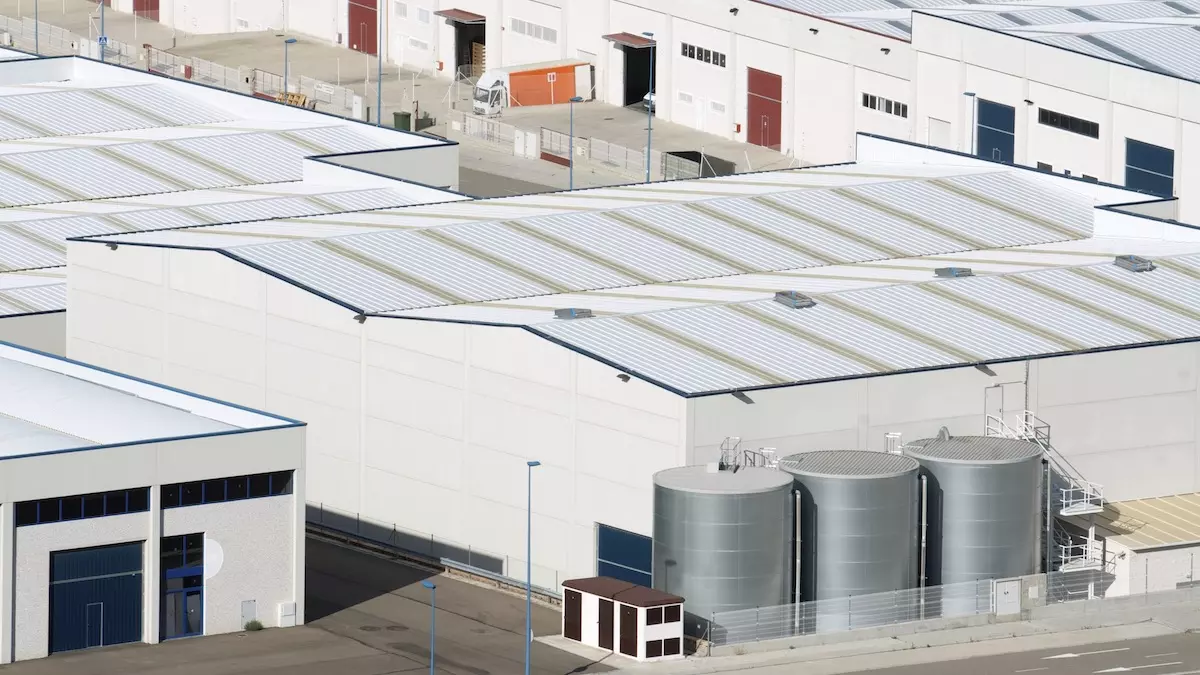
Manufacturing Facility Roofing
Commercial roofing for corporate campus, Siemens Charlotte, Albemarle Corp, and energy equipment manufacturers across the Charlotte metro industrial corridor.
Commercial Roofers Charlotte
Manufacturing Facility Roofing roof work has to respect operations, access limits, safety requirements, and the record owners need after the work is complete.
corporate campus's Charlotte headquarters, Siemens' energy systems campus, and Albemarle Corporation's research and operations facilities anchor a manufacturing sector that demands roofing contractors who understand industrial building envelopes, chemical exposure at flashing lines, and production schedules that cannot absorb roofing delays.
corporate campus International has operated significant facilities in the Charlotte metro since long before its global headquarters relocation here in 2018. Its manufacturing and operations footprint spans multiple industrial buildings across the metro, including research and development facilities that run controlled environments with specific air quality constraints. Siemens operates an energy systems campus in Charlotte that produces large electrical equipment - the buildings housing this equipment are structurally unlike standard commercial construction, with overhead crane clearances, heavy concrete slabs, and roofing systems designed around industrial thermal loads rather than office building occupancy. Albemarle Corporation, headquartered at 4250 Congress St in Charlotte, operates research and production facilities that handle specialty chemicals - creating a roofing environment where membrane selection and flashing material choices have to account for chemical exposure, not just weather.
Manufacturing facility roofing in Charlotte's industrial corridors - the Westinghouse Blvd industrial zone, the I-85 industrial corridor in Gaston and Lincoln counties, and the Highway 74 corridor into Union County - shares a common set of characteristics: large-footprint clear-span buildings with metal deck, continuous or multi-shift production operations, and facility managers whose first concern is not paying the lowest roofing bid but preventing a moisture intrusion event that shuts down a production line. The cost of a single production line shutdown at a corporate campus or Siemens facility exceeds the cost of the roofing project. That calculus drives how these facility teams make roofing decisions.
From our Uptown Charlotte office, we reach the I-85 industrial corridor in Gaston County in under 30 minutes, the Highway 74 corridor in Union County in 35 minutes, and the Westinghouse Blvd and Steele Creek industrial zones in 20 minutes. Our project managers have assessed roofing conditions on manufacturing buildings across this geography and understand the operational constraints that make manufacturing facility roofing different from standard commercial work.
Owners get a written scope that separates urgent water-control work from longer-term capital planning, so the roof decision is not made from guesswork.
The closeout package keeps the next decision clear with before photos, after photos, material notes, warranty coordination, and recommended maintenance timing.
For occupied buildings, staging, access, odor control, and tenant communication are part of the roof plan before crews arrive.
For portfolio owners, the goal is consistent documentation across properties, not a one-off opinion that cannot be compared later.
The first visit produces a practical roof record: current conditions, visible failure points, drainage notes, access concerns, and the repair or replacement path that fits the building.
Chemical Exposure and Specialty Membrane Selection
Albemarle Corporation's Charlotte operations include research facilities handling lithium compounds and specialty chemicals. Chemical exhaust at rooftop penetration flashing lines - whether from process exhaust fans, laboratory hoods, or solvent vapor discharge - creates a roofing environment where standard TPO flashing material may not be the right specification. TPO is chemically inert to most ambient-level exposure, but sustained direct exhaust contact at penetration flashing interfaces creates thermal and chemical stress that is better addressed with PVC flashing material, which carries superior resistance to hydrocarbon and acid vapor exposure.
Production Line Continuity - How We Sequence Manufacturing Facility Projects
Siemens' Charlotte energy systems campus produces high-voltage switching equipment and transformer components in clear-span manufacturing bays with overhead crane systems. A moisture intrusion event above an active manufacturing bay - whether from a rain event during production or from a poorly-sequenced tear-off - creates contamination risk for the equipment being produced and potentially for the electrical switchgear itself. We do not open more roof area than we can dry-in that same day, and we do not tear off sections above active crane bays without a facility-approved production plan that specifies exactly which bays can tolerate temporary exposure and during what weather window.
corporate campus manufacturing facilities in the Charlotte metro apply similar operational logic: roofing work is a capital maintenance event, not a reason to interrupt production. We present our production sequencing plan to the facility manager during pre-construction, get written approval on the section sequence and daily production limits, and adhere to that plan. Changes to the plan - if weather, equipment availability, or building conditions require adjustment - go through the facility manager's approval, not through our foreman's judgment on the job site.
Overhead crane systems in manufacturing facilities create a specific sequencing constraint. Material hoisting for roofing on a building with an active interior overhead crane requires coordination between the exterior crane or boom lift we are using for material staging and the interior crane schedule. We identify this coordination requirement in pre-construction and build the interface into the production schedule - roofing material does not get hoisted over an active crane bay without the facility engineering team's knowledge and approval.
Metal Roof Restoration on Charlotte Industrial Buildings
The I-85 industrial corridor in Gaston and Lincoln counties carries a significant inventory of 1980s and 1990s metal-panel manufacturing buildings - many originally built for textile mills and since repurposed for light manufacturing and distribution. Standing seam and R-panel metal roofs on these buildings are typically 30 to 40 years old and showing rust progression at laps and fastener points, lap sealant failure, and in some cases structural deterioration at purlin attachment points.
Metal roof restoration - rust treatment, re-fastening at failed laps, urethane seam sealing, and elastomeric or silicone topcoat - is often the cost-effective approach for these buildings when the structural metal is intact. A 200,000 sq ft metal-panel manufacturing building can often be restored for 25 to 40 percent of the cost of full metal roof replacement, with a 10 to 15-year manufacturer warranty on the coating system. We assess structural condition - pulling back representative laps to check for corrosion at the structural layer - before recommending restoration versus panel replacement. Restoration on a structurally failing roof is not a cost savings - it is a deferred replacement that fails faster than a properly specified system.
How do you prevent production line disruption during a manufacturing facility reroof?
Sequenced tear-off with same-day dry-in, section size agreed with the facility manager, and no unilateral deviation from the approved sequence. Any scope change that affects the production sequence - deck condition discovered, equipment interference, weather delay requiring section adjustment - goes through the facility manager's approval before we change the plan.
Can you restore the metal roof on an older Gaston County manufacturing building?
Possibly. The right answer depends on a structural condition assessment - we pull back representative laps and inspect for corrosion at the structural layer before recommending restoration versus replacement. If the structure is sound, restoration with elastomeric or silicone topcoat is cost-effective. If we find structural corrosion, restoration is not the right answer.
Do you handle overhead crane coordination for material hoisting on manufacturing roofs?
Yes. Interior crane and exterior hoist coordination is identified in pre-construction and built into the production schedule. We do not hoist material over an active crane bay without the facility engineering team's knowledge and written approval for that specific hoisting window.
Roofing scope for a Charlotte manufacturing or industrial facility?
Our project managers understand the production continuity requirements, chemical exposure considerations, and structural constraints at corporate campus, Siemens, Albemarle, and comparable Charlotte-area manufacturing facilities.
Request a Written Scope