

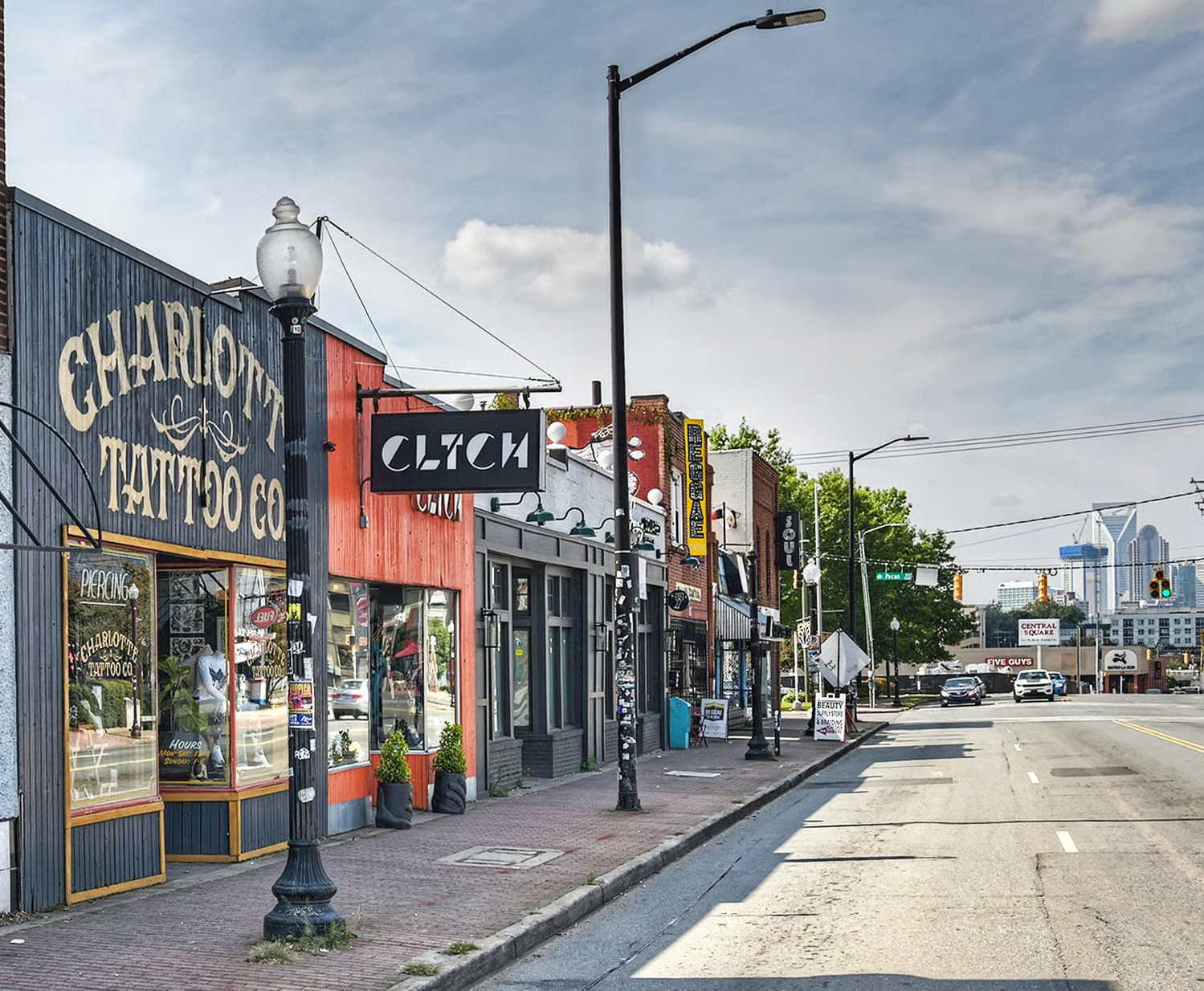
Commercial Roofers in Plaza Midwood, NC
Commercial roofing in Plaza Midwood, NC should begin with a documented assessment of membrane condition, seams, flashings, drainage, penetrations, and moisture before repair, coating, or replacement is selected. Commercial roofing contractors serving Plaza Midwood, NC with commercial roof repair, replacement, coatings, maintenance programs, inspections, and documented roof reports.
Commercial Roofers Charlotte
Commercial Roofing Contractors Plaza Midwood, NC
Commercial roofing contractors serving Plaza Midwood, NC with commercial roof repair, replacement, coatings, maintenance programs, inspections, and documented roof reports.
Roof work in Commercial Roofing Contractors Plaza Midwood, NC is planned around access, response timing, commercial building mix, and the condition of the existing roof system.
Commercial roofing in Plaza Midwood, NC should begin with a documented assessment of membrane condition, seams, flashings, drainage, penetrations, and moisture before repair, coating, or replacement is selected. Plaza Midwood's Central Avenue corridor carries a commercial building stock from the 1940s through 1960s that has been continuously occupied but not always continuously maintained - a combination that produces complex existing roof conditions requiring assessment before any scope is written.
Plaza Midwood is one of Charlotte's oldest intact commercial corridors. Central Avenue from the Midwood neighborhood east to Commonwealth Avenue anchors a commercial district that developed as a streetcar suburb in the 1920s and 1930s, with most of the surviving commercial building stock dating from the 1940s through the 1960s. These are one- and two-story masonry commercial structures - retail fronts, small office buildings, the occasional former auto garage or light-industrial building that has been converted to restaurant or creative use.
The commercial buildings along Central Avenue, Commonwealth Avenue, and the Pecan Avenue side streets are not the large-footprint commercial inventory that drives the biggest replacement projects in the Charlotte market. Most of them are 2,000 to 8,000 square feet of roof area. But small square footage does not mean simple conditions - the roof histories on these buildings are often more complicated than a 200,000-square-foot warehouse replacement because each building has been owned by several successive parties who each made roof decisions in isolation from the prior work.
The retail and restaurant activation of Central Avenue over the past 15 years has created a density of food-and-beverage tenants - the cluster around The Common Market, Midwood Smokehouse, and the Commonwealth Avenue bar district - that has put commercial kitchen exhaust loads on buildings originally designed for retail and light office. Managing penetration flashings in Plaza Midwood's aging commercial stock is ongoing work for any building that has added a food-and-beverage tenant in the past decade.
For portfolio owners, the goal is consistent documentation across properties, not a one-off opinion that cannot be compared later.
The first visit produces a practical roof record: current conditions, visible failure points, drainage notes, access concerns, and the repair or replacement path that fits the building.
Owners get a written scope that separates urgent water-control work from longer-term capital planning, so the roof decision is not made from guesswork.
The closeout package keeps the next decision clear with before photos, after photos, material notes, warranty coordination, and recommended maintenance timing.
For occupied buildings, staging, access, odor control, and tenant communication are part of the roof plan before crews arrive.
The Central Avenue Commercial Building Condition Profile
The typical Plaza Midwood commercial building along Central Avenue was built between 1945 and 1965 on unreinforced masonry or concrete block with a flat or very low-slope BUR roof on wood plank or steel bar-joist deck. The BUR on these buildings has been replaced or recovered at least once - sometimes twice - with combinations of modified bitumen and, in the last two decades, torch-applied cap sheets or TPO. The original drainage in most of these buildings uses through-wall scuppers into downspout leaders attached to the facade - internal drains are less common in this building class than in the larger commercial stock.
Through-wall scupper conditions in the Plaza Midwood commercial stock are a consistent problem. The original through-wall scupper sleeves on masonry buildings from the 1950s are steel - and they are rusted in most cases. The connection between the scupper sleeve and the membrane termination at the parapet wall has been repaired and re-repaired by successive contractors without addressing the sleeve condition. We replace through-wall scupper sleeves on every Plaza Midwood project where the original sleeve is more than 30 years old - the sleeve is the failure point, and patching over a rusted sleeve produces a recurring repair cycle.
The parapet wall coping conditions in Plaza Midwood masonry commercial buildings vary. The original cast-stone coping caps on the 1940s and 1950s buildings are in better condition than the precast concrete caps from the 1960s, which have delaminated on many buildings. EIFS coping cap replacements from the 1990s are universally failing at the termination - the EIFS-to-masonry interface on parapet tops is a notoriously short-lived detail. We specify cast aluminum or prefinished steel coping cap systems on Plaza Midwood parapet replacements - they last longer and do not require the maintenance attention that EIFS transitions demand.
Restaurant and Bar Roofs on Central Avenue
The fire suppression system penetrations on the food-and-beverage buildings in Plaza Midwood are a specific inspection item we do not skip. Restaurants on Central Avenue that added suppression systems in the 2000s often had penetrations made through the existing roof membrane by a plumbing or fire suppression contractor who patched the penetration with a pitch pocket and mastic that has now dried and cracked. We document every fire suppression penetration flashing condition on Plaza Midwood restaurant buildings and replace any pitch pocket that shows cracking or separation.
Do you work on small commercial buildings in Plaza Midwood?
Yes. Most of the Plaza Midwood commercial stock is under 10,000 square feet of roof area, which is below the project size that some commercial roofing contractors are set up for. We work on buildings of this size routinely - the approach is the same as a larger project, including a documented condition assessment before any scope is written and permit filing with the City of Charlotte for replacement work.
My Central Avenue building has through-wall scuppers that keep leaking. Can you fix them permanently?
The recurring scupper leak in Plaza Midwood masonry buildings is almost always a rusted or deteriorated through-wall sleeve - the patch over it gets replaced by successive contractors, but the sleeve itself is the problem. Permanent repair means replacing the sleeve, reestablishing the masonry seal around it, and detailing the membrane termination to the new sleeve. That is a half-day repair on most Central Avenue buildings, not a multi-day project.
Plaza Midwood commercial roof inspection or repair?
We work on the Central Avenue commercial corridor and the surrounding Plaza Midwood building stock. Call 704-710-8487 or submit a request for a written condition report.
Request a Written Scope