Third-Party Quality Inspection
Independent quality inspections for commercial roof installations and repairs in Charlotte - field compliance verification, seam testing, and documented findings for building owners and lenders across Mecklenburg County.
Commercial Roofers Charlotte
Third-Party Quality Inspection gives owners a clearer way to compare roof conditions, budget timing, warranty requirements, and repair priorities.
A roofing contractor's quality control inspection is conducted by the contractor. A third-party quality inspection is conducted by someone with no financial interest in the installation passing. Those are different things, and the difference matters when the roof is a $1.5 million capital project on a Charlotte commercial building.
Third-party quality inspection on a Charlotte commercial roof project is not an adversarial process. It is a verification process - confirming that the installation complies with the manufacturer's published installation standard, the project specification, and the building code requirements for Mecklenburg County and the relevant jurisdiction. Most commercial roofing installations in Charlotte pass that verification. The ones that do not are better found during installation than after the warranty is issued and a leak has caused interior damage.
Building owners who request third-party inspection are not signaling distrust of their contractor. They are documenting a process standard that institutional lenders, REIT governance frameworks, and commercial property insurance underwriters increasingly require on capital projects above defined size thresholds. CMBS lenders in particular have tightened capital project documentation requirements for Charlotte commercial properties in the wake of several large-portfolio roofing deficiency claims - third-party inspection reports are now a condition of draw authorization on some loan structures.
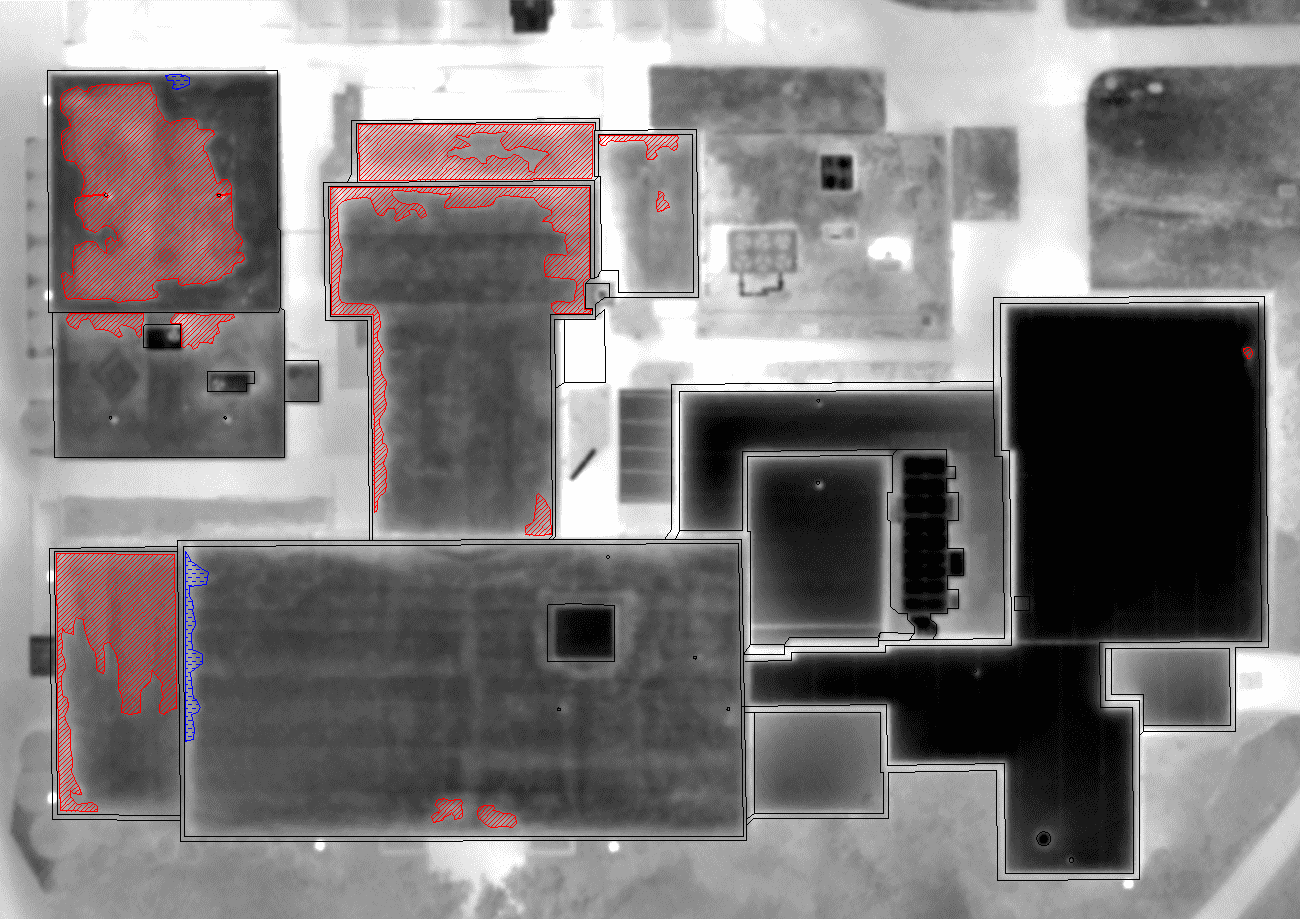
The first visit produces a practical roof record: current conditions, visible failure points, drainage notes, access concerns, and the repair or replacement path that fits the building.
Owners get a written scope that separates urgent water-control work from longer-term capital planning, so the roof decision is not made from guesswork.
The closeout package keeps the next decision clear with before photos, after photos, material notes, warranty coordination, and recommended maintenance timing.
For occupied buildings, staging, access, odor control, and tenant communication are part of the roof plan before crews arrive.
For portfolio owners, the goal is consistent documentation across properties, not a one-off opinion that cannot be compared later.
Production-Phase Inspection - What We Check and When
Substrate verification: Before membrane installation begins on each section, we verify that the existing deck condition in that section matches the scope - no concealed deck deterioration that should trigger a scope modification. On Charlotte buildings with steel deck and prior moisture intrusion history, concealed corrosion is the most common substrate finding that requires a scope change. We document deck condition at every tear-off section and report any deviation from the assumed scope condition immediately, before new insulation is installed over a compromised deck.
Insulation verification: Cover board type and density, polyiso R-value per manufacturer label, board orientation and stagger, mechanical fastener type and count per board. Insulation substitution - lower-density cover board in place of specified high-density, standard-weight polyiso in place of heavy-duty - is the most common material substitution we identify on Charlotte commercial projects. It is not visible after the membrane is installed, and it affects warranty validity and long-term membrane performance.
Fastener pattern verification: We count and document fastener spacing in representative locations across each roof zone and compare against the engineered fastener pattern drawing. Charlotte's ASCE Wind Zone II requirements - 115 mph basic wind speed for most Mecklenburg County locations, higher for open-exposure buildings near CLT airport and the Steele Creek corridor - define minimum fastener densities that cannot be trimmed for production speed.
Pre-Warranty Inspection - Before the Manufacturer's Field Representative Arrives
The manufacturer's field inspection at the end of a Charlotte commercial roofing project is a high-stakes visit. If the manufacturer's representative identifies a significant installation deficiency, the warranty may be withheld or conditioned on rework that the contractor then disputes. The worst outcome for the building owner is being in the middle of that dispute - the project is complete, the contractor has been paid, and the warranty is contingent on work that nobody wants to fund.
We conduct a pre-warranty inspection after mechanical completion and before the manufacturer's field visit. Our inspection uses the manufacturer's published inspection protocol - the same criteria the manufacturer's representative will apply - to identify any issues that need correction before that visit. Catching and correcting a seam or flashing problem at the pre-warranty inspection stage, when the contractor is still mobilized on the Charlotte project, costs a fraction of what it costs to remobilize after closeout.
The pre-warranty inspection report is provided to the building owner and, with their authorization, to the contractor. It is not adversarial documentation - it is a correction list that keeps the project moving toward a clean warranty closeout.
Post-Closeout Inspection for Lender or Acquisition Due Diligence
Charlotte's commercial real estate transaction volume creates a recurring need for independent roof quality assessments in the context of acquisition due diligence or lender re-inspection after a roof replacement. A buyer acquiring a Charlotte commercial building where a roof was replaced 18 months ago needs more than the contractor's closeout package to understand what they are buying. A lender re-inspecting a building after a CMBS draw for roof replacement needs an independent confirmation that the installed work is code-compliant and warranty-qualified.
We conduct post-closeout inspections against the scope-of-work document, the manufacturer's installation standard, and the warranty document on file. Our report identifies any conditions that diverge from the standard and provides an opinion on whether the divergence is a warranty risk, a maintenance item, or a condition that requires correction before the transaction closes. We do not provide opinions on value - we provide facts about condition.
Does the contractor know you are conducting a third-party inspection?
Yes. We do not conduct covert inspections. The building owner informs the contractor that a third-party inspector will be conducting production-phase visits, and we introduce ourselves to the foreman on the first site visit. Transparency is more useful than surprise - a contractor who knows a third-party inspector is active on the project has an additional incentive to comply with the spec, and our field observations are more useful to the building owner if the contractor has had the opportunity to respond to them in real time rather than after the fact.
Can a third-party inspection report be used in a warranty dispute with the manufacturer?
Yes, if the inspection was conducted during the relevant production phase and documented to the applicable standard. Installation-phase inspection reports that document fastener pattern deviation, material substitution, or seam welding deficiencies are usable in a warranty dispute because they document conditions at the time of installation - before the manufacturer's field representative conducted the warranty inspection. Post-completion inspection reports are more limited in a warranty dispute because they document current condition, which the manufacturer may characterize as maintenance-related regardless of what the inspection report says about installation quality.
Do you provide third-party inspection for repair projects, not just replacements?
Yes. Repair projects that justify third-party inspection are typically those above $100,000 in scope value, those involving warranty-affecting repairs on manufacturer-warranted systems, and those where the building owner has had prior contractor performance issues on the same building. A $15,000 drain repair does not need third-party inspection. A $300,000 membrane re-cover on an active warranty system does.
Independent quality inspection for your Charlotte roof project.
We provide production-phase, pre-warranty, and post-closeout inspection reports for commercial roofing projects across Charlotte and the Mecklenburg County market - with no financial interest in the installation outcome.
Request a Written Scope